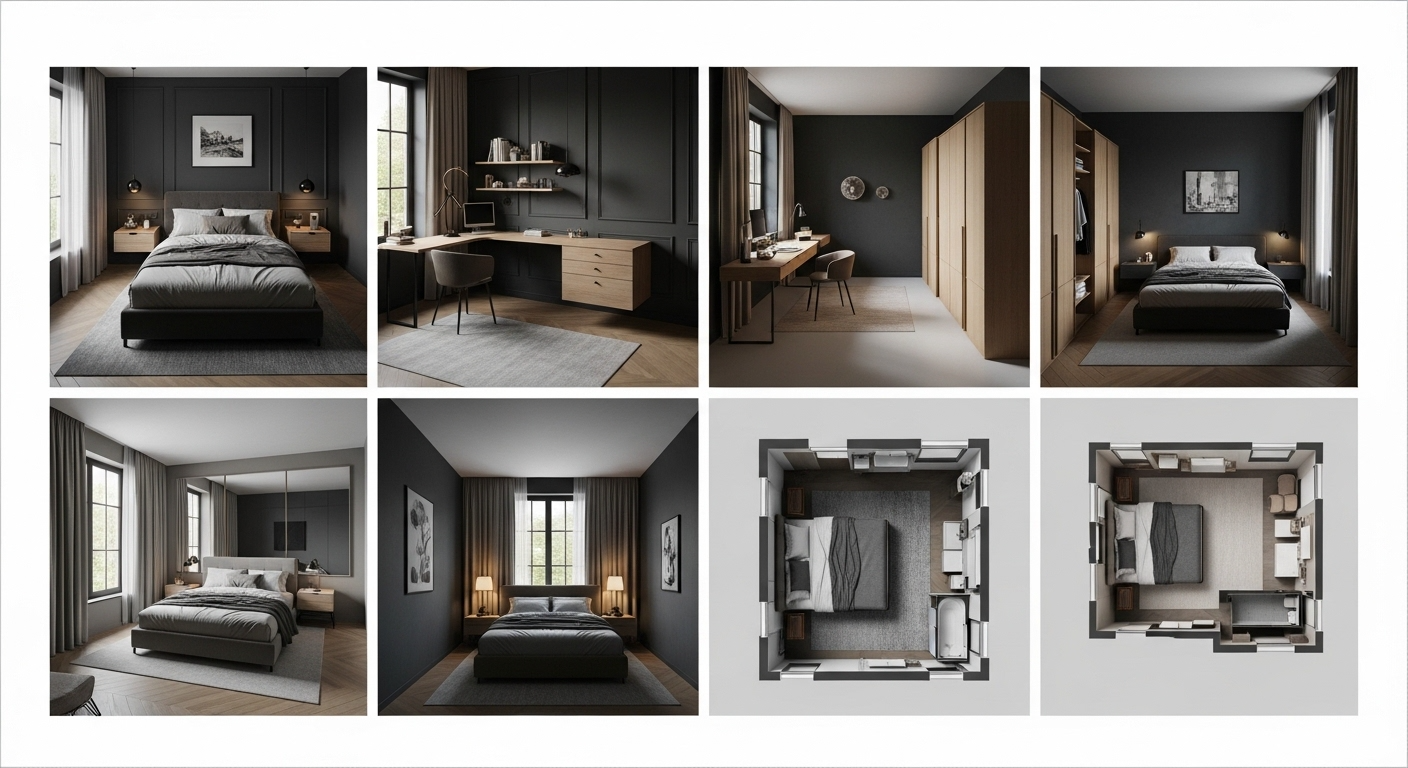
6 Small Bedroom Furniture Placement: Blueprint for Optimized Flow

Small Bedroom Furniture Placement

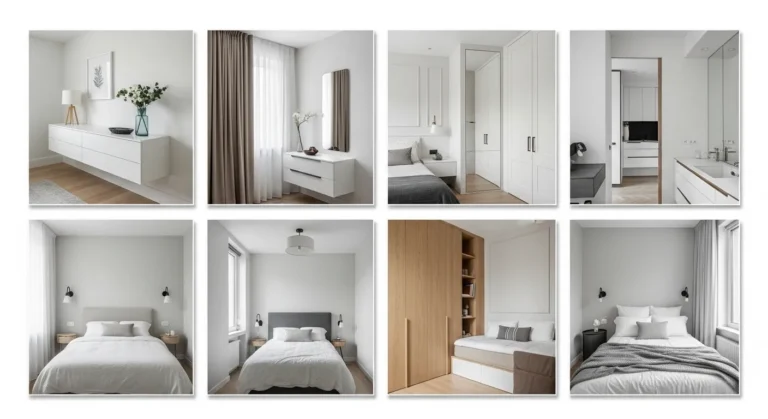
Mastering the architectural layout of a limited footprint requires a disciplined transition from cramped utility to a state of “Visual Silence.” In 2026, small bedroom furniture placement has evolved beyond mere arrangement; it is an exercise in “Zero-Waste Geometry,” ensuring the “bones” of the space remain expansive and optimistic despite the physical constraints. By prioritizing “Hard Architecture”—such as seamless built-in wardrobes and low-profile frames—against a backdrop of sand-toned Roman clay, you can transform a restrictive square footage into a restorative “Quiet Sanctuary.” We focus on the intersection of Grounded Materiality and structural flow, anchoring the room with sensory details like a rustic wooden box of specialized bulbs or a single long-stemmed white tulip in a glass half-filled with water. This guide provides the high-fidelity strategies needed to cultivate a “Warm Modern” environment where every walnut side table and linen-draped bed is placed with singular, high-intent precision.

1. The Anchor Strategy: Structural Bed Alignment
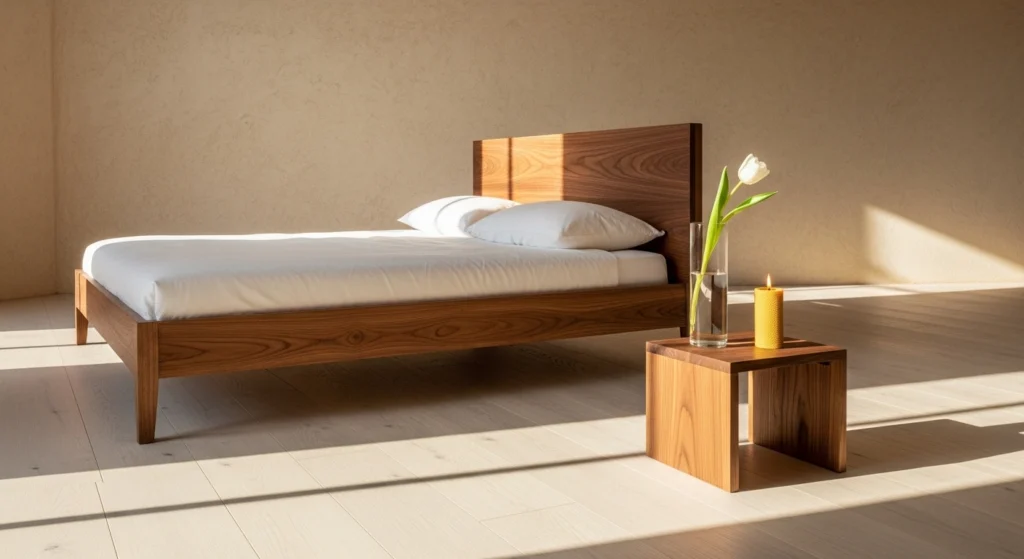
The bed is the primary architectural anchor of the Living Room-adjacent sanctuary, and its placement dictates the entire “Visual Flow” of the space. In a small room, we move away from the traditional center-wall placement if it disrupts the room’s structural bones, opting instead for a “Grounded” alignment against the longest solid wall. This creates a sense of Stately Permanence and allows the sun-washed morning light to hit the wide-plank white oak floors uninterrupted. To maintain “Visual Silence,” the bed frame should be a low-profile design, finished in a matte lacquer or raw timber, ensuring it doesn’t overwhelm the room’s vertical volume. We style the headboard area with a glass half-filled with water and a single dahlia to emphasize a lifestyle of curated discipline and restorative peace.

2. Navigating the Threshold: Mastering Spatial Clearance

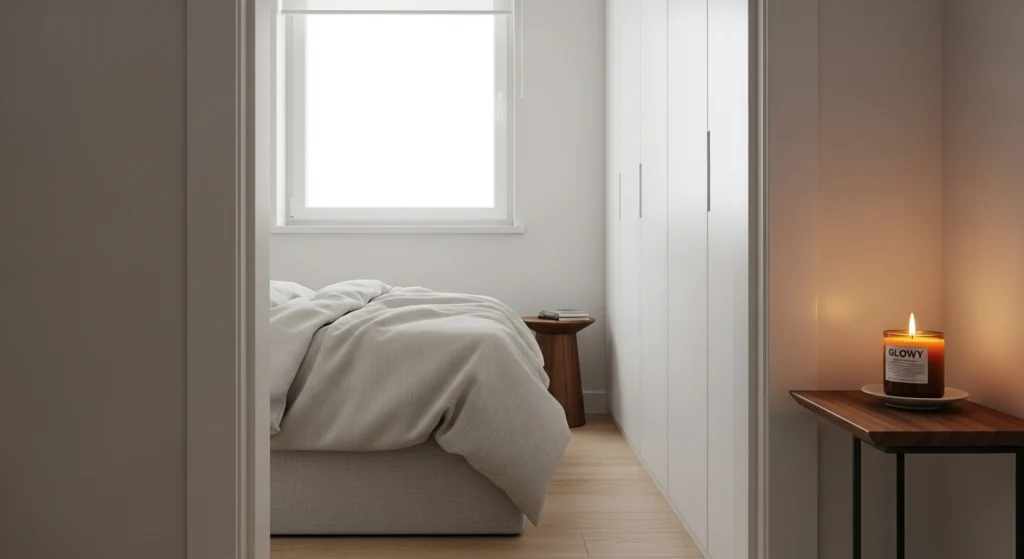
Maintaining clear walking paths is the invisible “Background Architecture” that prevents a small bedroom from feeling cluttered or chaotic. We utilize the principle of “Singular Intent” to ensure that the transition from the doorway to the Home Essentials storage area remains unburdened by heavy furniture. This involves maintaining a minimum of 30 inches of “Visual Silence” around the bed’s perimeter, allowing the room’s Roman clay textures to breathe. Selecting a “Warm Modern ” walnut side table with a slim silhouette provides essential surface area for a beeswax candle without encroaching on the room’s structural flow. This disciplined layout ensures that the movement through the room is as smooth and rhythmic as the design itself, reflecting a commitment to professional architectural standards.

3. The Symmetry Equation: Achieving Proportional Balance
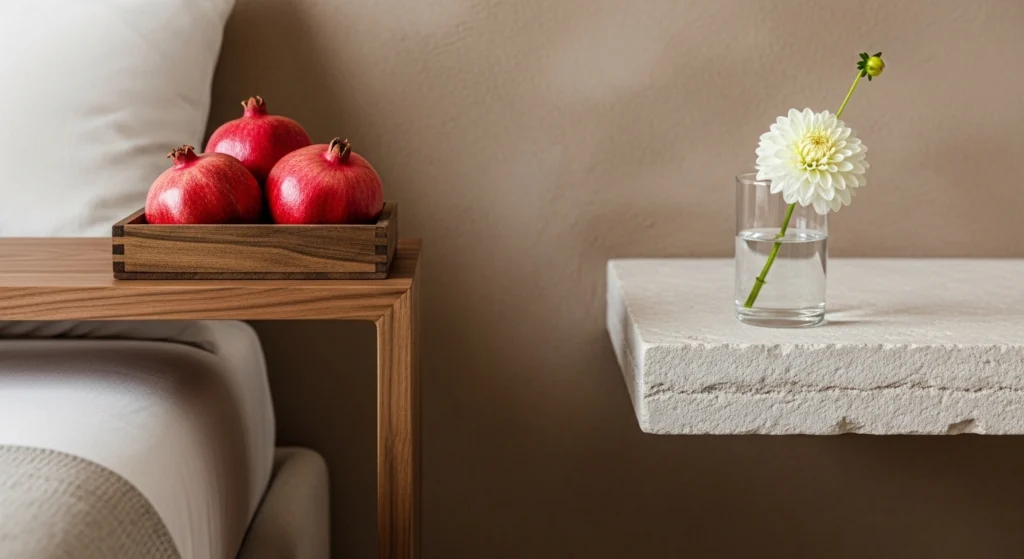
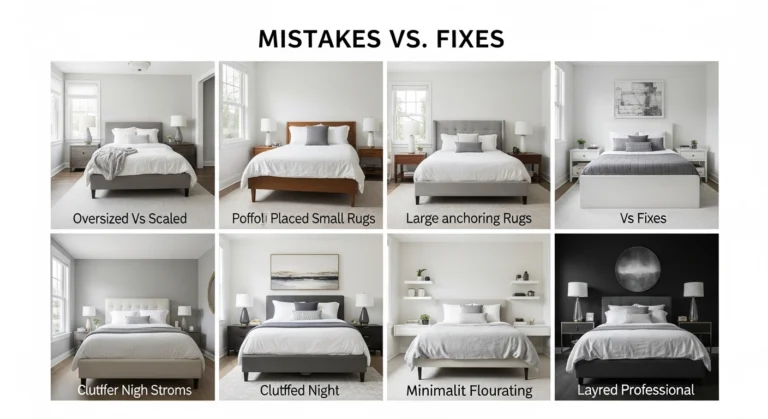
Visual balance in a small footprint is achieved through a mastery of symmetry and the strategic layering of Grounded Materiality. Instead of two oversized nightstands, which create “Visual Noise,” we might pair a single walnut side table with a floating stone ledge on the opposite side to maintain a “Clean and Calm” horizon. This asymmetrical balance reflects a “Collected and Creative” soul, allowing for the inclusion of a rustic wooden box holding fresh spring pomegranates to add a touch of organic warmth. By balancing the weight of a heavy wardrobe with the “Soft Soul” of sheer linen drapes on the opposite wall, you create a harmonious Hard Architecture that feels intentional and high-end. This approach ensures that the room’s proportions are optimized for both aesthetics and the technical integrity of modern living.

4. The Vertical Frontier: Utilizing Height as Hard Architecture

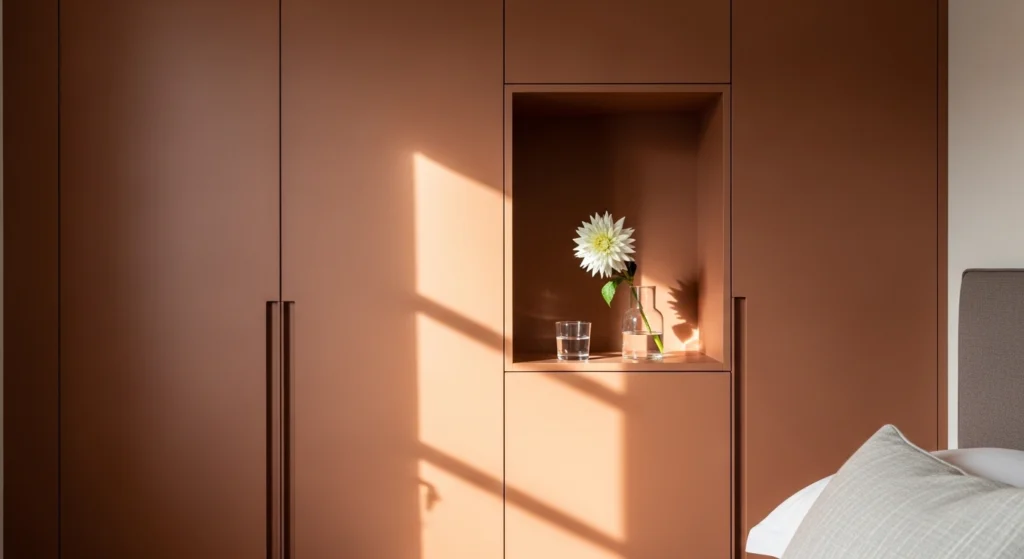
When floor space is at a premium, we shift our focus to the vertical plane, treating the walls as a canvas for “Zero-Waste Geometry.” Installing floor-to-ceiling seamless built-in wardrobes finished in the same tone as the Roman clay walls allows you to hide “life clutter” while drawing the eye upward. This architectural move creates a sense of Stately Permanence and maximizes the room’s potential without sacrificing the “Visual Flow” of the floor. We style a high-level integrated niche with a single beeswax candle and a glass half-filled with water to highlight the room’s height. This “think vertical” philosophy is the cornerstone of bedroom mastery, ensuring that even the most intimate spaces feel curated, professional, and architecturally expansive.

5. Zone Partitioning: Creating Multi-Functional Flow
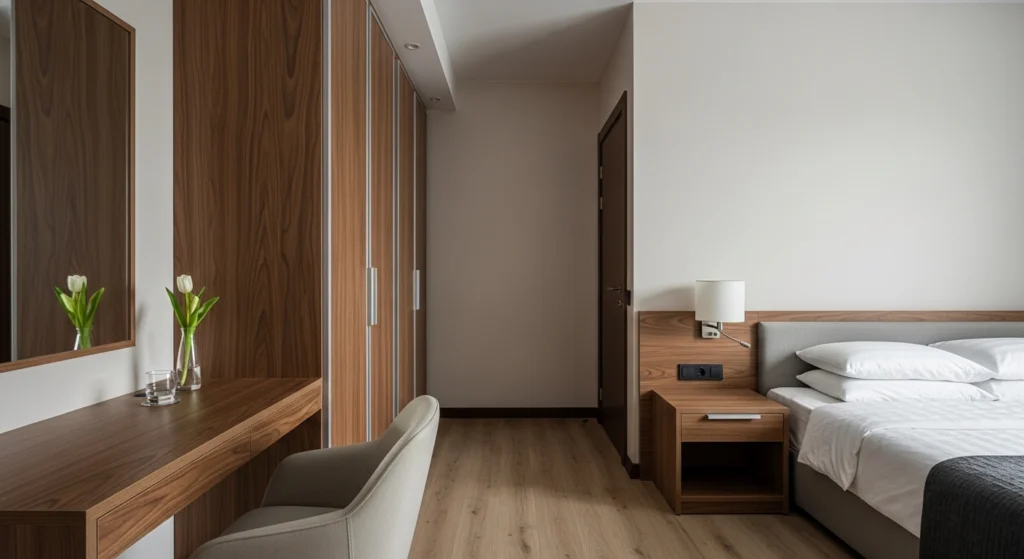
In 2026, the small bedroom must often function as a multi-purpose sanctuary, requiring a disciplined approach to zone partitioning. By aligning a low-profile desk and the bed along the same wall, you leave the opposite wall entirely dedicated to storage with a sliding-door wardrobe, keeping the center of the room clear for movement. This layout utilizes Home Essentials like a “Warm Modern” walnut chair that tucks neatly away, preserving the “Visual Silence” of the sleeping area. We anchor the desk zone with a single glass of water and a white tulip, mirroring the styling of the nightstand to create a cohesive architectural soul. This zoning strategy ensures that even in a limited footprint, the room can support both high-intent work and deep, restorative rest without feeling cramped.

6. Mirror Magic: Bouncing Light and Depth
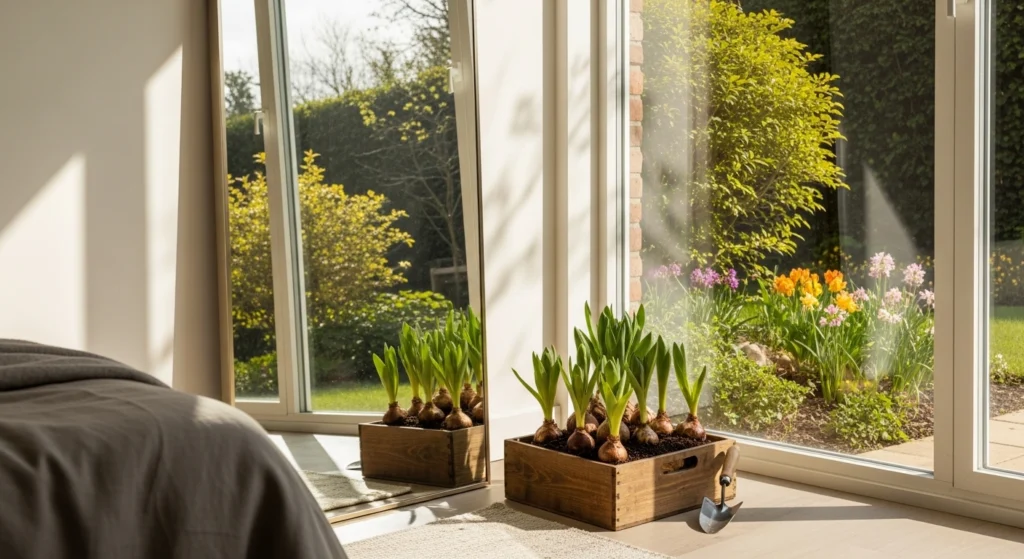
The strategic placement of a large, high-fidelity mirror is an essential architectural trick to double the perceived depth of a small sanctuary. Positioning a floor-to-ceiling mirror opposite a window allows the “Sun-Washed” light to bounce across the Roman clay walls, making the room feel significantly more expansive and optimistic. This creates a state of “Visual Flow” that connects the interior with the Outdoor Garden or city views beyond. To maintain the room’s “Clean and Calm” aesthetic, we avoid heavy frames, opting for thin, unlacquered brass or frameless edges that vanish into the background. We style the area near the mirror with a rustic wooden box of specialized bulbs to catch the light, ensuring that the reflection serves as a polished and intentional extension of your curated lifestyle.

Similar Posts

Leave a Reply

Your email address will not be published. Required fields are marked *