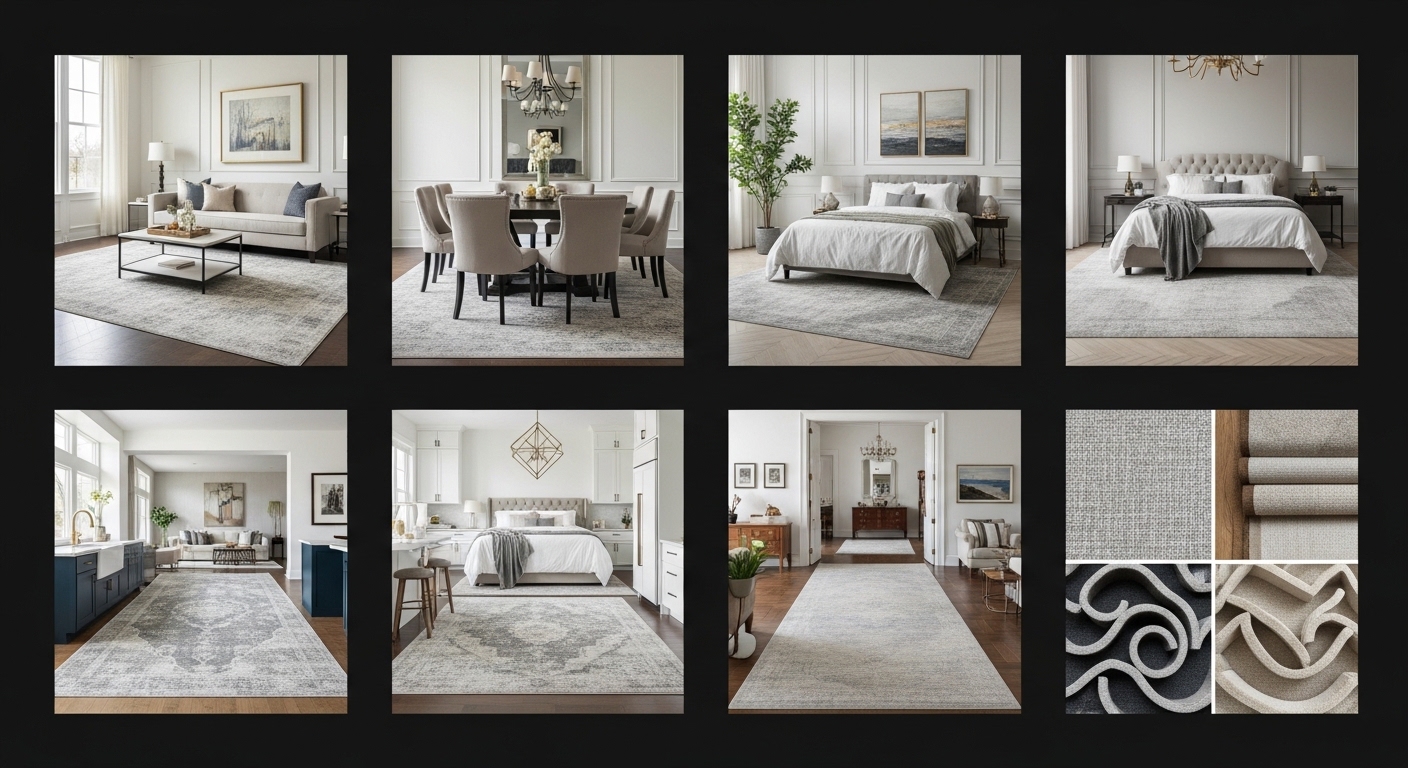
The right rug size changes how a room feels at once. Too small, and the room looks choppy. Too big, and it swallows the floor.
This rug size guide gives you simple rules for every room. Measure once, then pick with confidence.
The Living Room Anchor Strategy
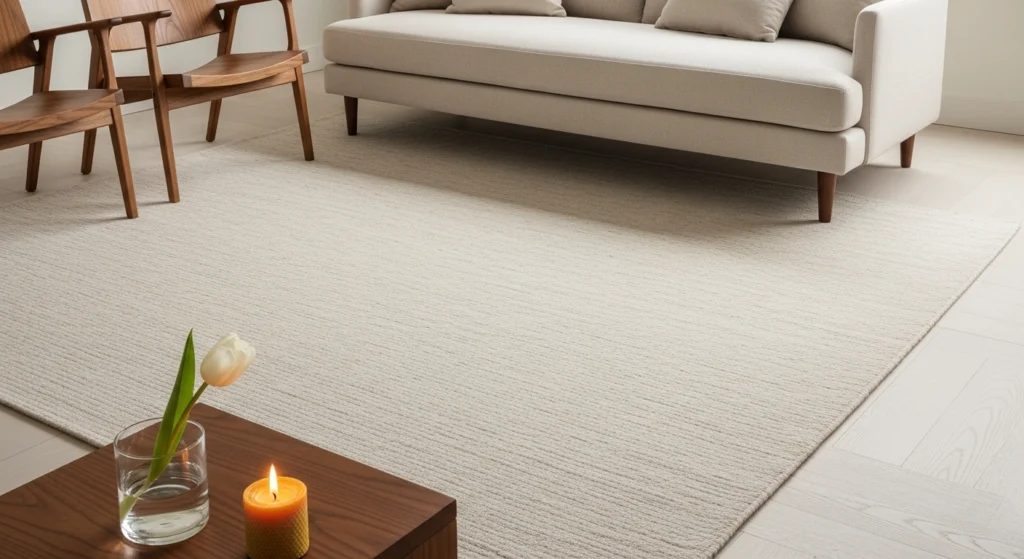
A living room rug ties all the seats together. It should sit under at least the front legs of every chair and sofa.
An 8 by 10 rug fits most rooms well. For large or open rooms, a 9 by 12 rug defines the zone better.
Skip the 5 by 7 rug in a big room. It looks small and the seats feel unconnected.
Best for: living rooms that need one clear seating zone.
The Bedroom Tactile Cocoon
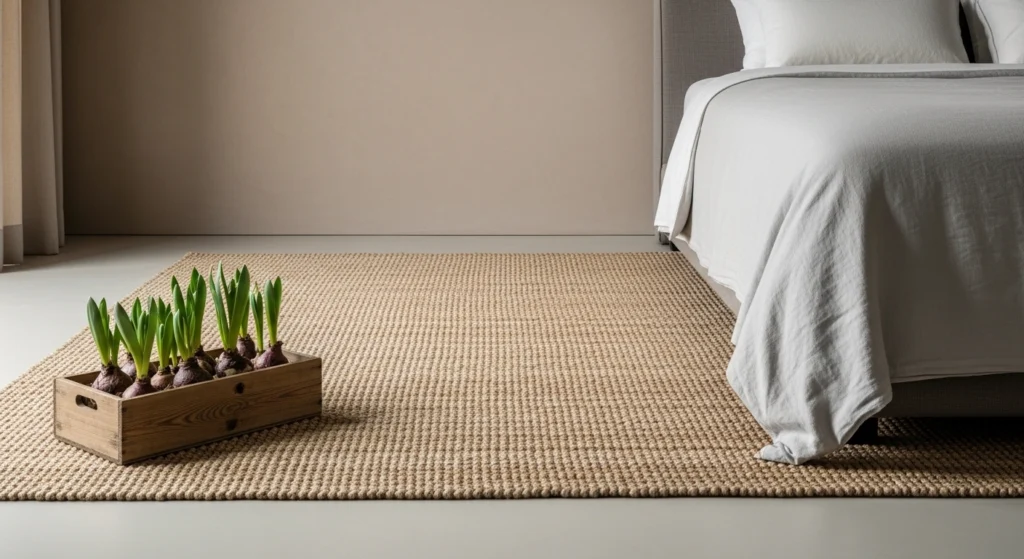
A bedroom rug is about soft feet in the morning. It should reach past the bed frame on both sides.
A 9 by 12 rug suits a king bed. An 8 by 10 fits a queen, and a 6 by 9 works for a full bed.
In a narrow room, use runners on both sides instead. They keep the soft landing without crowding the floor.
Best for: bedrooms that need a soft start to the day.
The Dining Room 24-Inch Rule
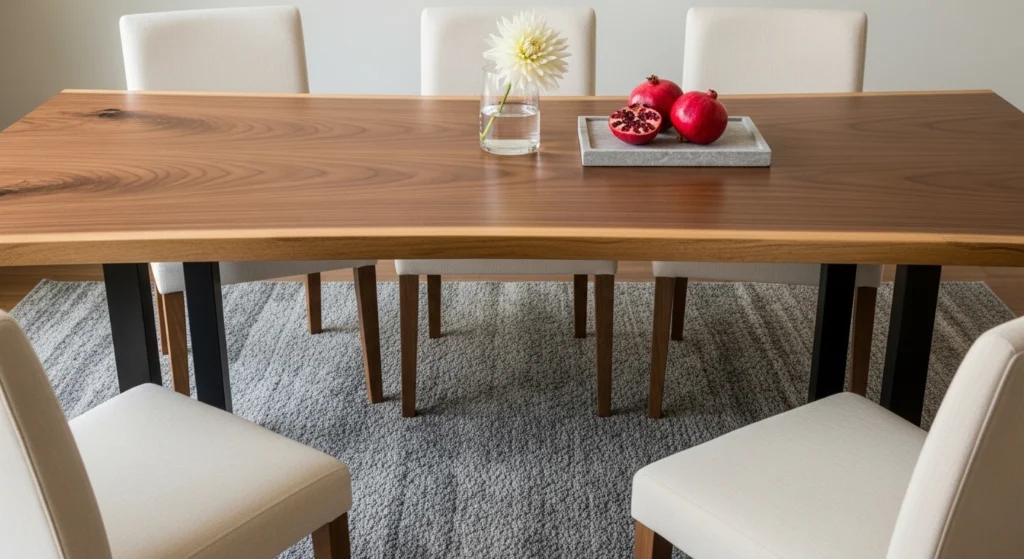
Dining rugs follow one hard rule. The rug must extend 24 inches past the table on every side.
That gap keeps chair legs on the rug when pulled out. No catching, no wobble.
An 8 by 10 rug fits most tables. A 6 by 9 suits small tables, and a 9 by 12 fits grand dining rooms.
Best for: dining rooms that host often.
The Entryway and Hallway Threshold
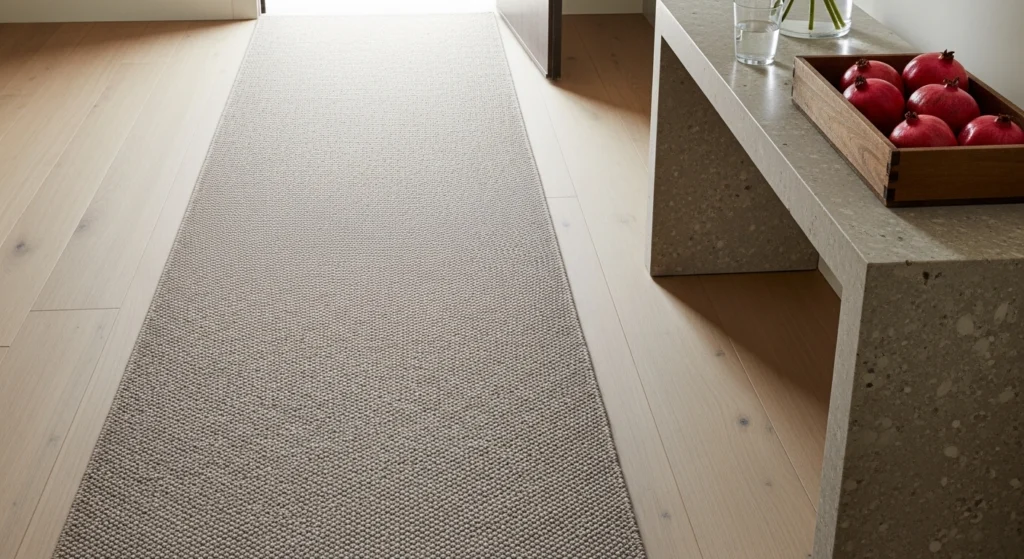
Entry and hall rugs need to be slim and tough. They guide the eye and catch daily wear.
Pick a runner that is 6 to 12 inches narrower than the hall. Leave floor showing on both edges.
Use a rug pad under every runner. It stops slips and keeps the runner flat.
Best for: halls and entry doors that take daily foot traffic.
Pick the Right Rug Size Once
The best rug size fits your furniture and your habits. Measure your room, then follow the room rules above.
For more ideas, browse our fresh living room styling ideas and these cozy living room ideas.