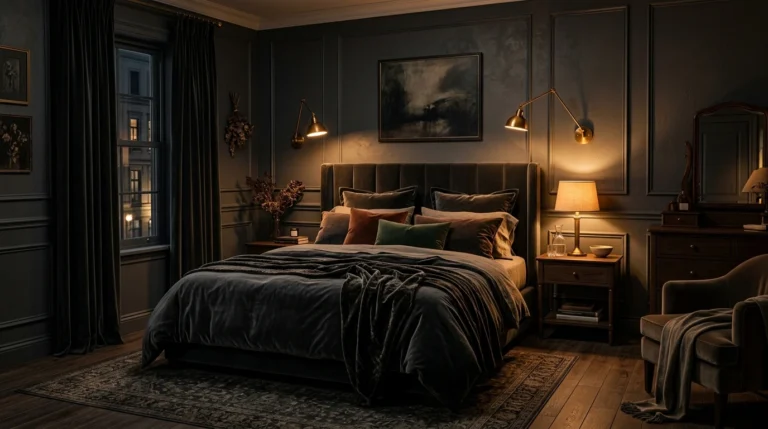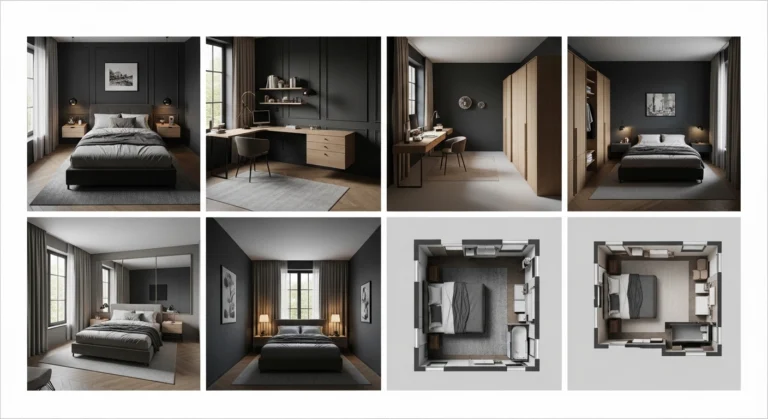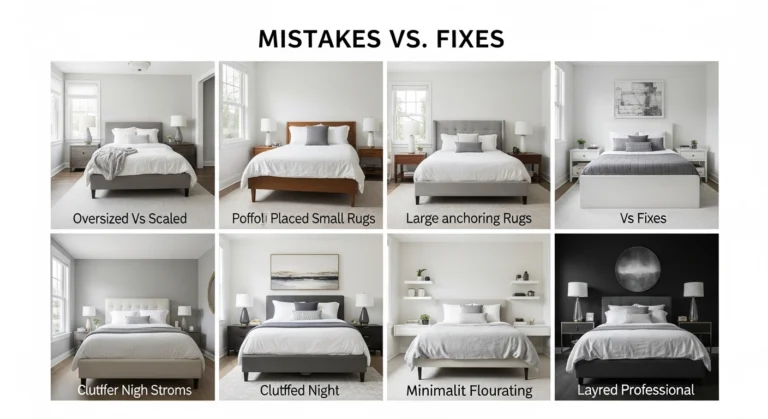
Designing a compact sleeping sanctuary requires a transition from traditional decorating to a high-intent focus on “Background Architecture” and spatial efficiency. In 2026, the most effective Small Bedroom Layout Ideas prioritize the elimination of “Visual Noise” by integrating furniture into the structural bones of the room. By utilizing seamless built-in wardrobes, Roman clay plaster, and intentional “Zero-Waste Geometry,” you can transform a cramped footprint into a “Warm Modern” retreat that feels both expansive and deeply restorative. This masterclass guide explores the specific layout strategies high-end designers use to manipulate the perceived volume of a space, ensuring every square inch serves an architectural purpose. We ground these layouts with sensory anchors—fresh pomegranates in wooden boxes, burning beeswax candles, and the singular elegance of a long-stemmed flower in a half-filled glass—to create a home that feels like a curated, high-end sanctuary.
Layout Idea #1: The Symmetrical Masterpiece

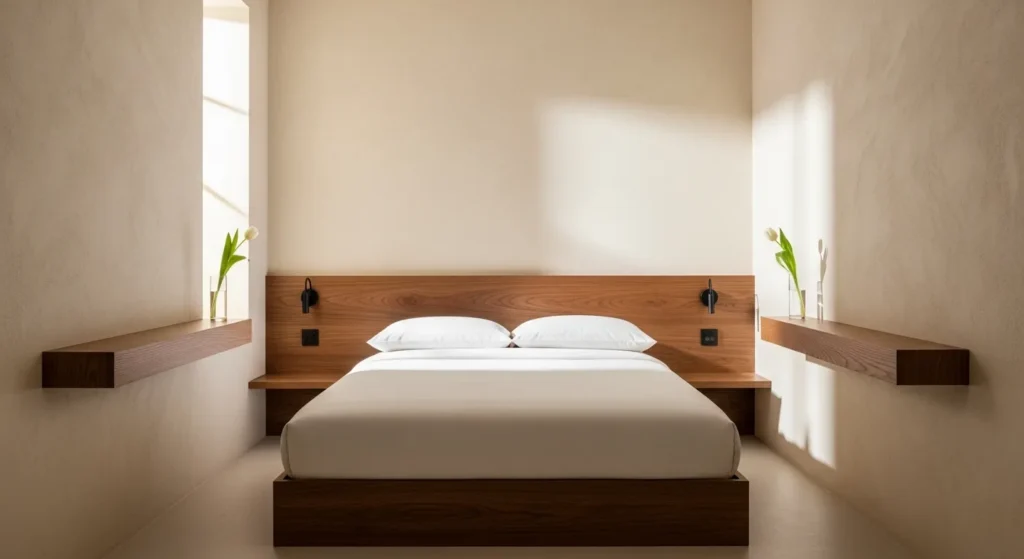
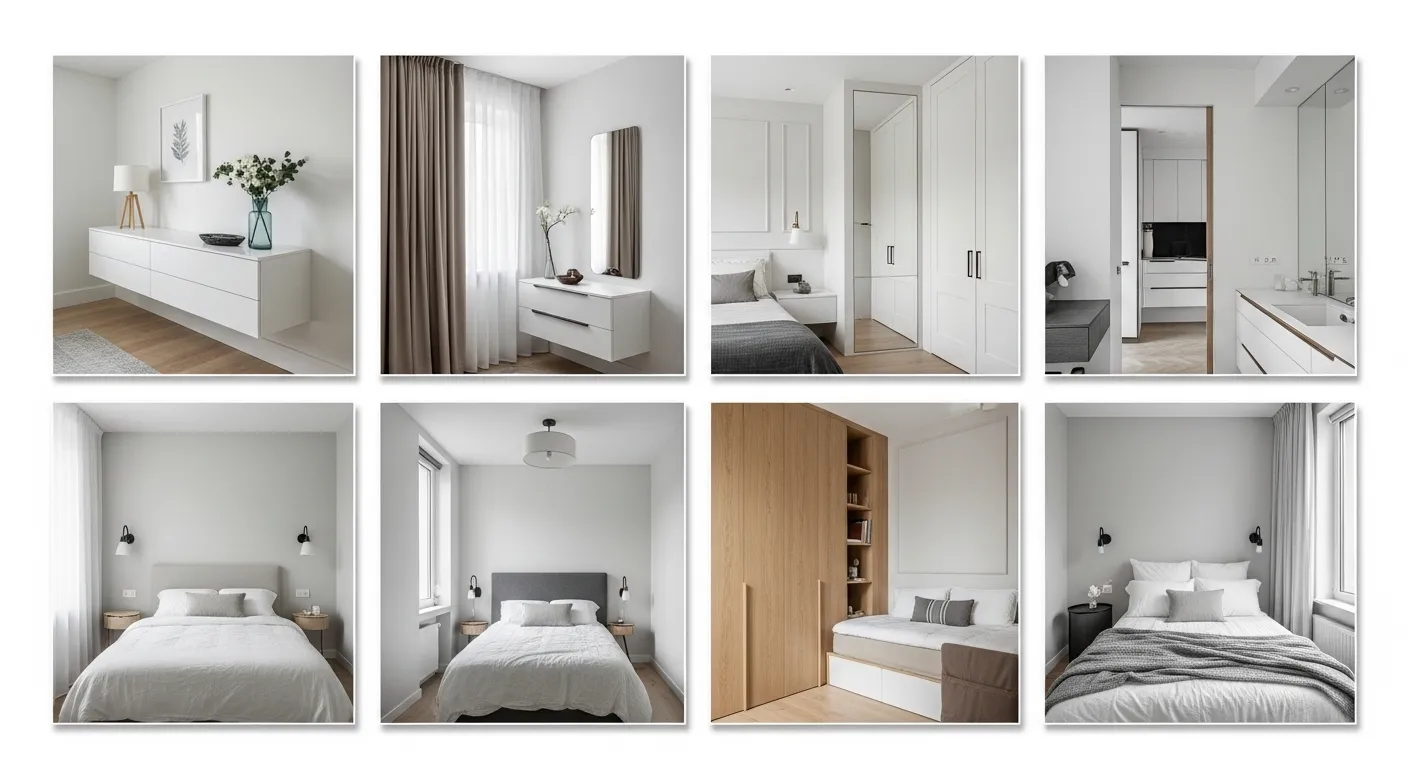
The Symmetrical Layout is a classic designer strategy used to create a sense of order and “Visual Silence” in a compact room. By centering a low-profile walnut or white oak bed against the primary wall and flanking it with identical bedside ledges, you establish a clear architectural axis that balances the room’s energy. To maximize the effect, utilize the “Shadow-on-Shadow” technique with Roman clay walls in a soft bone or sand tone, which catches the light and adds tactile depth without clutter. We style the bedside ledges with “Singular Intent”: a single glass half-filled with water and a long-stemmed white dahlia. This layout prioritizes a “Clean and Calm” horizon, making the walls feel further apart and the ceiling appear higher, ultimately creating a stately and grounded retreat for rest.
Layout Idea #2: The Window-Centered Horizon

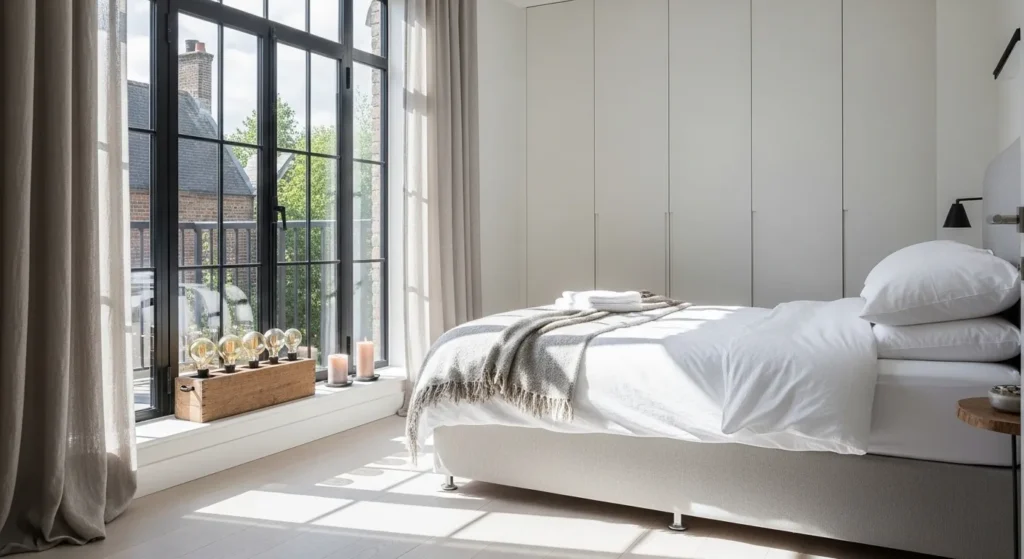
Positioning the bed directly under or in front of a window is a bold move that designers use to create a “Sun-Washed” focal point and maximize floor space. This Window-Centered Layout utilizes the natural light as a structural element, blurring the boundaries between the interior and the garden or city skyline outside. To prevent the room from feeling closed in, use sheer linen drapes that reach from the ceiling to the floor, adding a layer of “Soft Soul” and vertical height. The “Background Architecture” should feature a seamless built-in wardrobe on the opposite wall to hide “life clutter,” ensuring the primary focus remains on the light. Style the windowsill with a rustic wooden box holding specialized bulbs and a single burning candle to anchor the view in a state of optimistic, seasonal revitalization.
Layout Idea #3: The Integrated Storage Wall

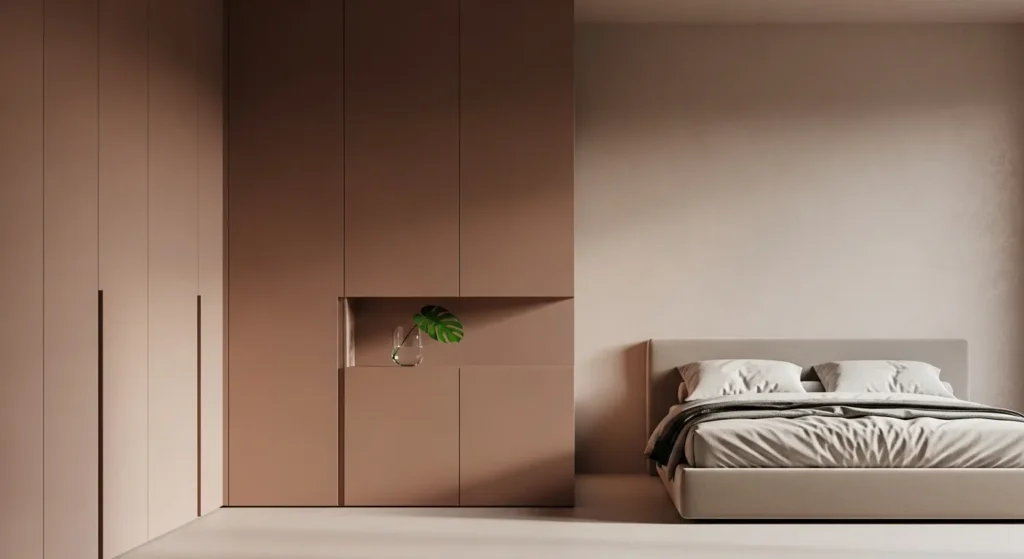
The Integrated Storage Wall layout is the ultimate solution for those seeking “Zero-Waste Geometry” and total visual clarity. This strategy involves dedicating one entire wall to a floor-to-ceiling, seamless built-in wardrobe finished in a matte lacquer that matches the Roman clay of the other three walls. By consolidating all storage—clothes, electronics, and books—into this single architectural plane, the rest of the bedroom is freed from the heavy footprint of dressers and chests. This allows for a much larger bed or a dedicated “Quiet Sanctuary” reading nook without the room feeling crowded. We style a small integrated niche within the wardrobe with a glass half-filled with water and a single green leaf, creating a “Collected and Creative” moment that feels high-end and deeply intentional.
Layout Idea #4: The Floating Furniture Logic

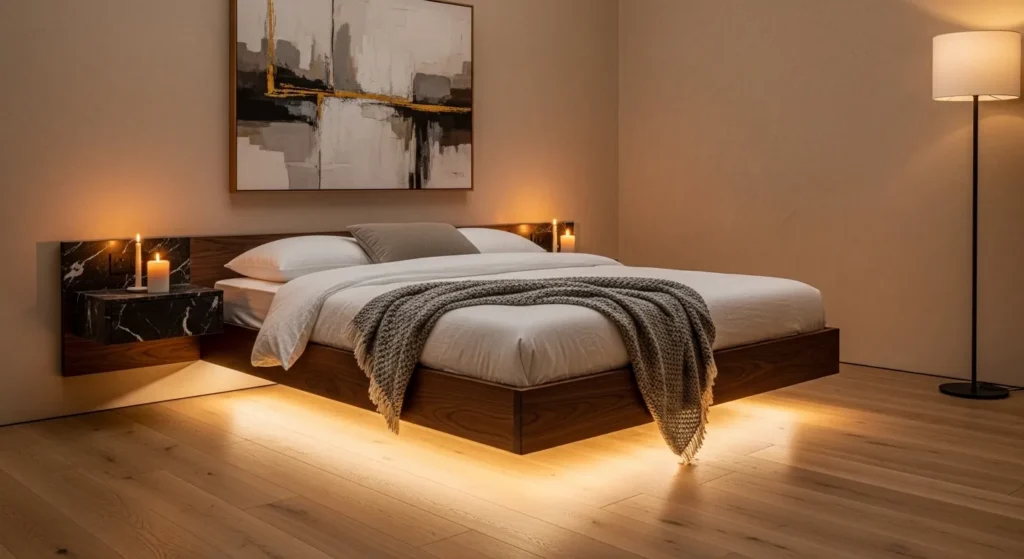
For the most compact rooms, the Floating Furniture layout utilizes “Negative Space” to create the illusion of an expansive floor plane. By selecting a bed frame with a recessed plinth or “floating” bedside ledges that are wall-mounted, you keep the perimeter of the room visible and clear. This strategy emphasizes the grain of your wide-plank white oak floors and allows for “Layered Lighting” to be installed underneath the bed for a “Glowy” evening effect. The background architecture is kept minimal, with Roman clay walls providing a sueded texture that absorbs the shadows and adds a sense of “Hard Architecture” value. Style a floating shelf with a wooden box of fresh pomegranates and a slow-burning beeswax candle to ground the modern, airy aesthetic in organic materiality and sensory warmth.
Layout Idea #5: Focus on Flow Over Furniture

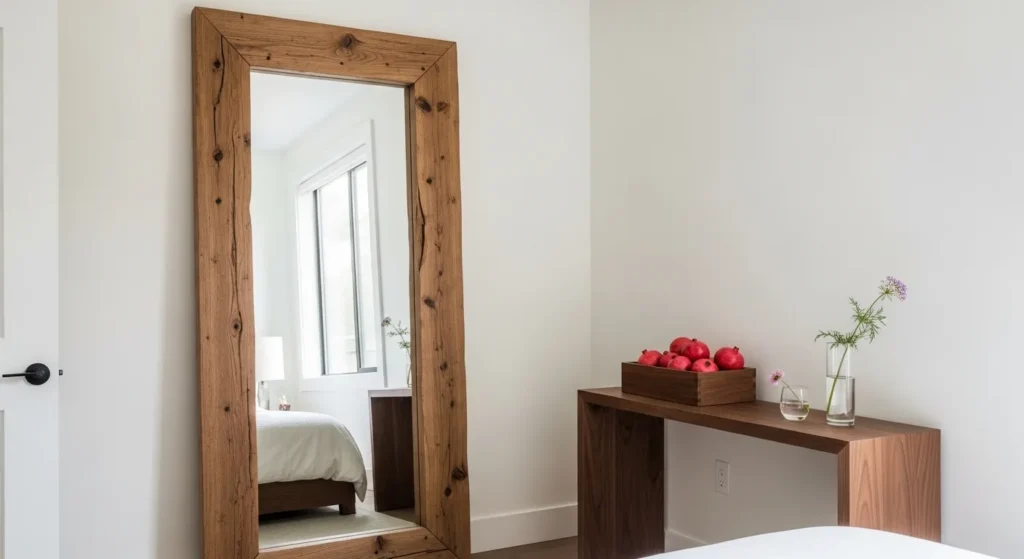
The most important rule in small bedroom design is to prioritize “Visual Flow” over the number of furniture pieces. Designers often sacrifice a second nightstand or a chair to ensure there is a clear, unobstructed path around the bed, which immediately makes the room feel twice its size. Use large leaning mirrors with rustic timber frames to reflect the “Sun-Washed” light and double the perceived visual volume of the hallways and corners. This commitment to “Visual Silence” ensures the room remains a sanctuary rather than a storage unit. By focusing on the quality of your materials—walnut, stone, and linen—and leaving plenty of “breathing room,” you create a high-end environment that reflects a lifestyle of curated sophistication, discipline, and modern architectural soul.