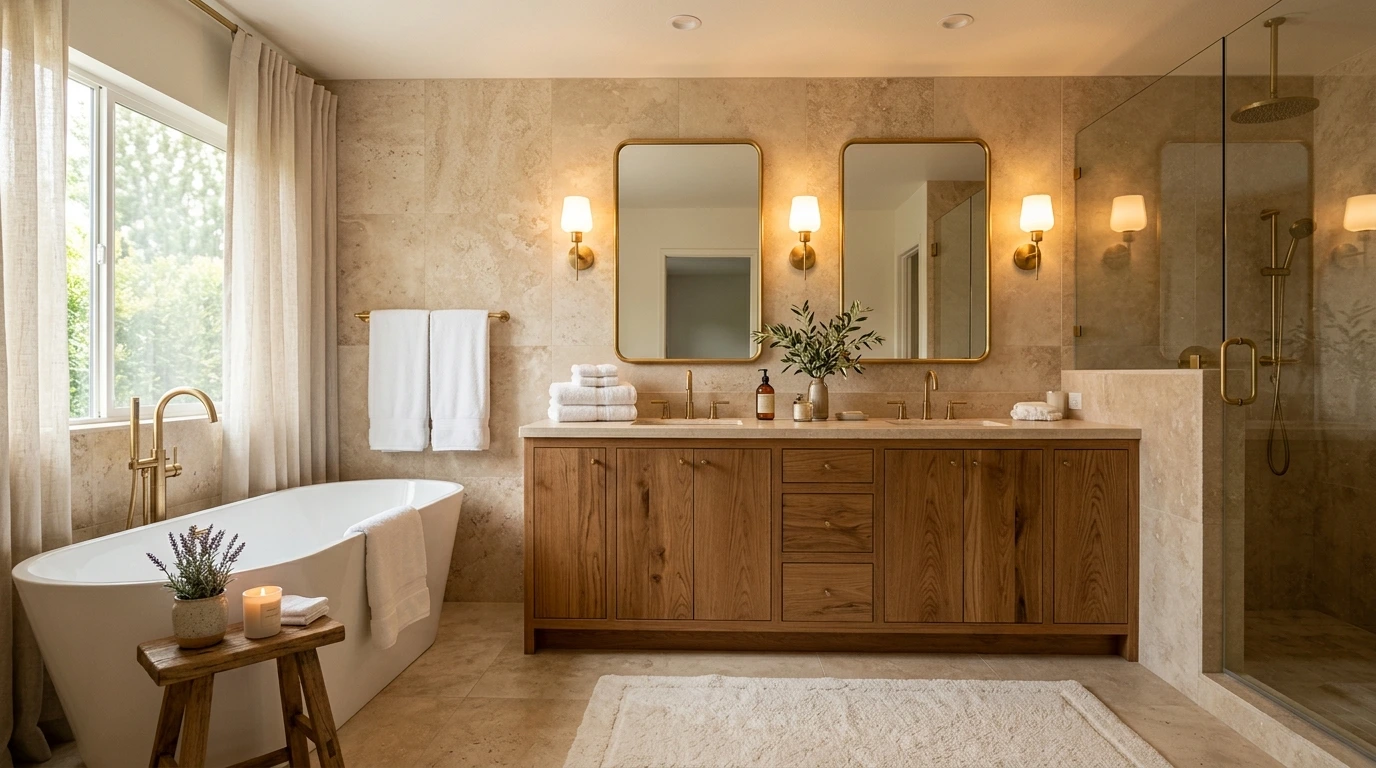
Warm neutrals are everywhere right now. But what actually makes a bathroom feel warm and neutral? It is not just beige paint. It is a careful mix of warm tones, natural textures, and soft light. This guide explains the look and shows you exactly how to get it.
Understand Warm vs Cool Neutrals
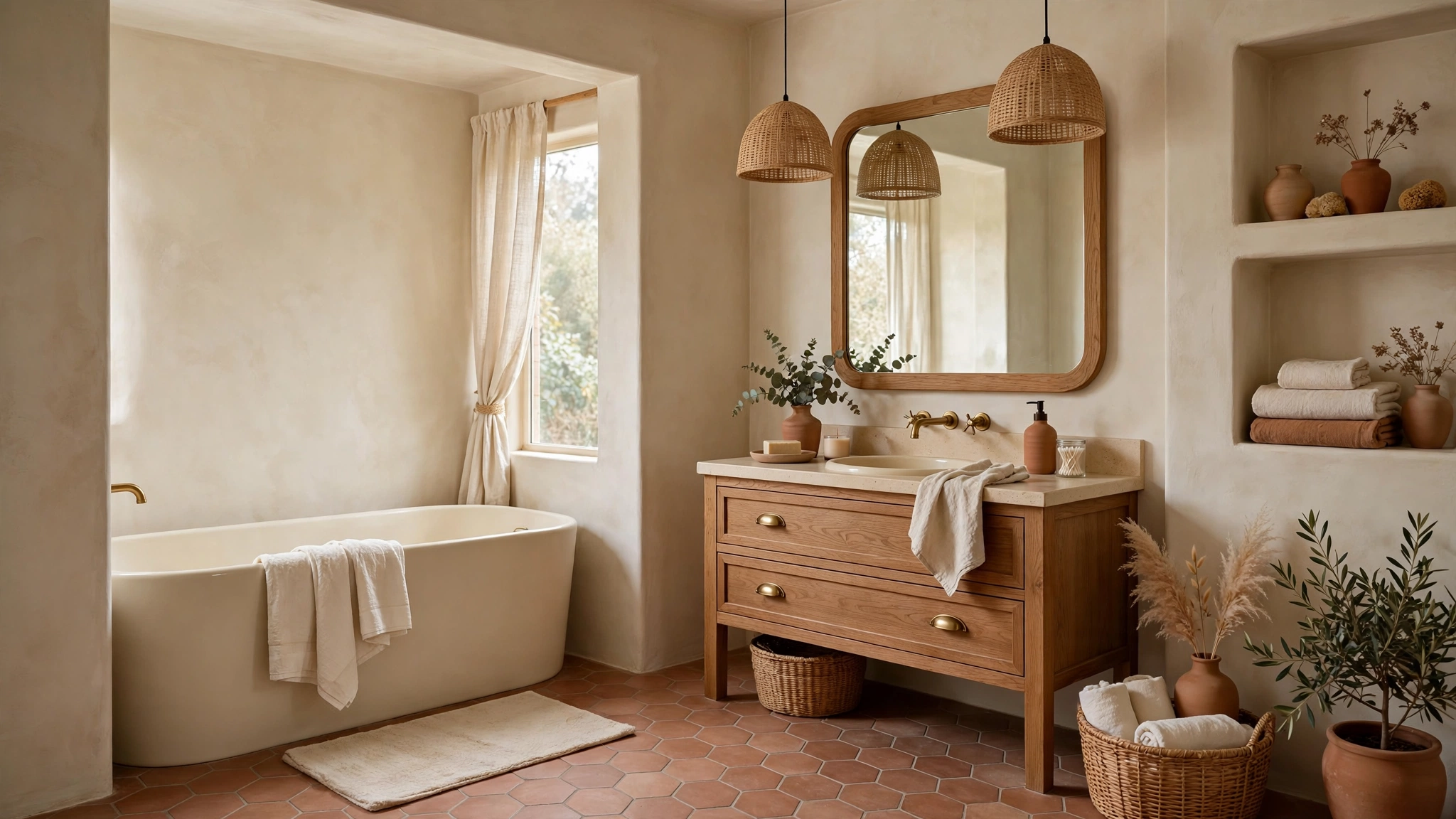
Warm neutrals have yellow and red undertones. Think cream, oatmeal, terracotta, and warm greige. Cool neutrals lean gray and blue. Warm tones feel cozy and inviting. Best for: knowing the difference.
Start with Warm Wall Color
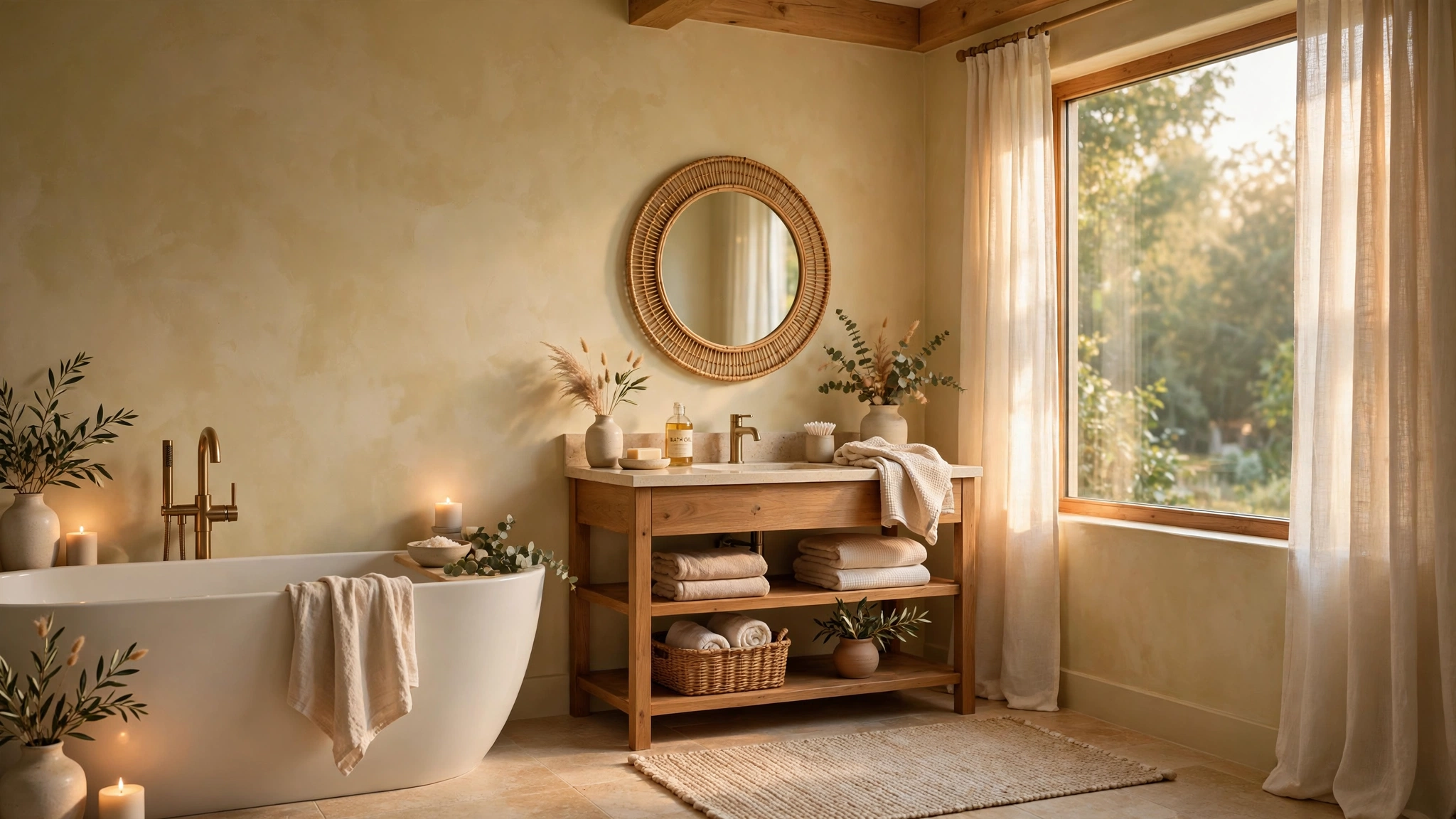
Walls set the temperature. Creamy whites and warm beiges glow softly. Avoid stark white, which feels cold. Limewash adds beautiful depth. Best for: cozy backdrop.
Layer Natural Stone and Tile
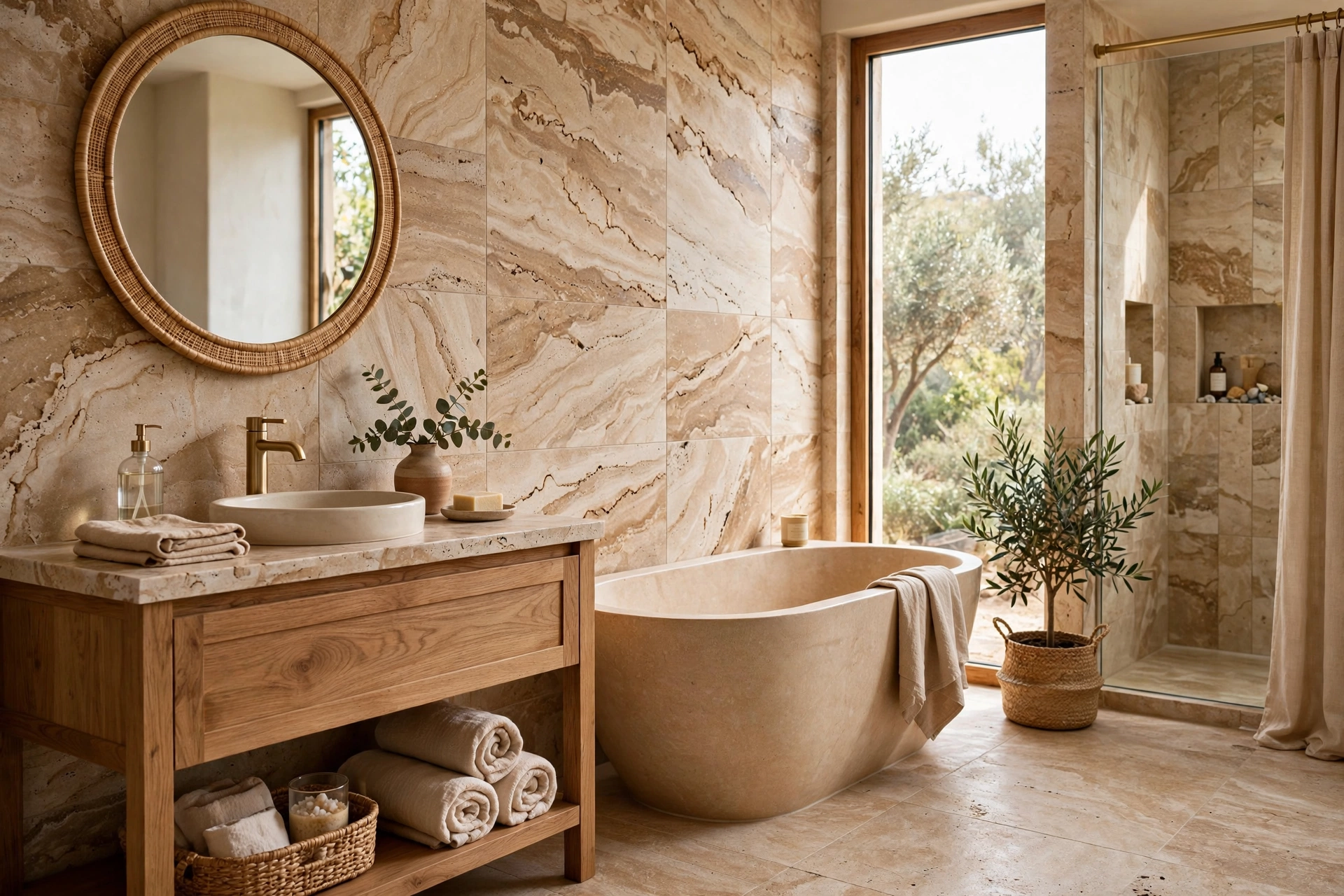
Natural stone is warmth in material form. Travertine, limestone, and warm marble bring earthy tones. Their veining adds organic pattern. Stone keeps neutrals from feeling flat. Best for: organic richness.
Add Wood Accents
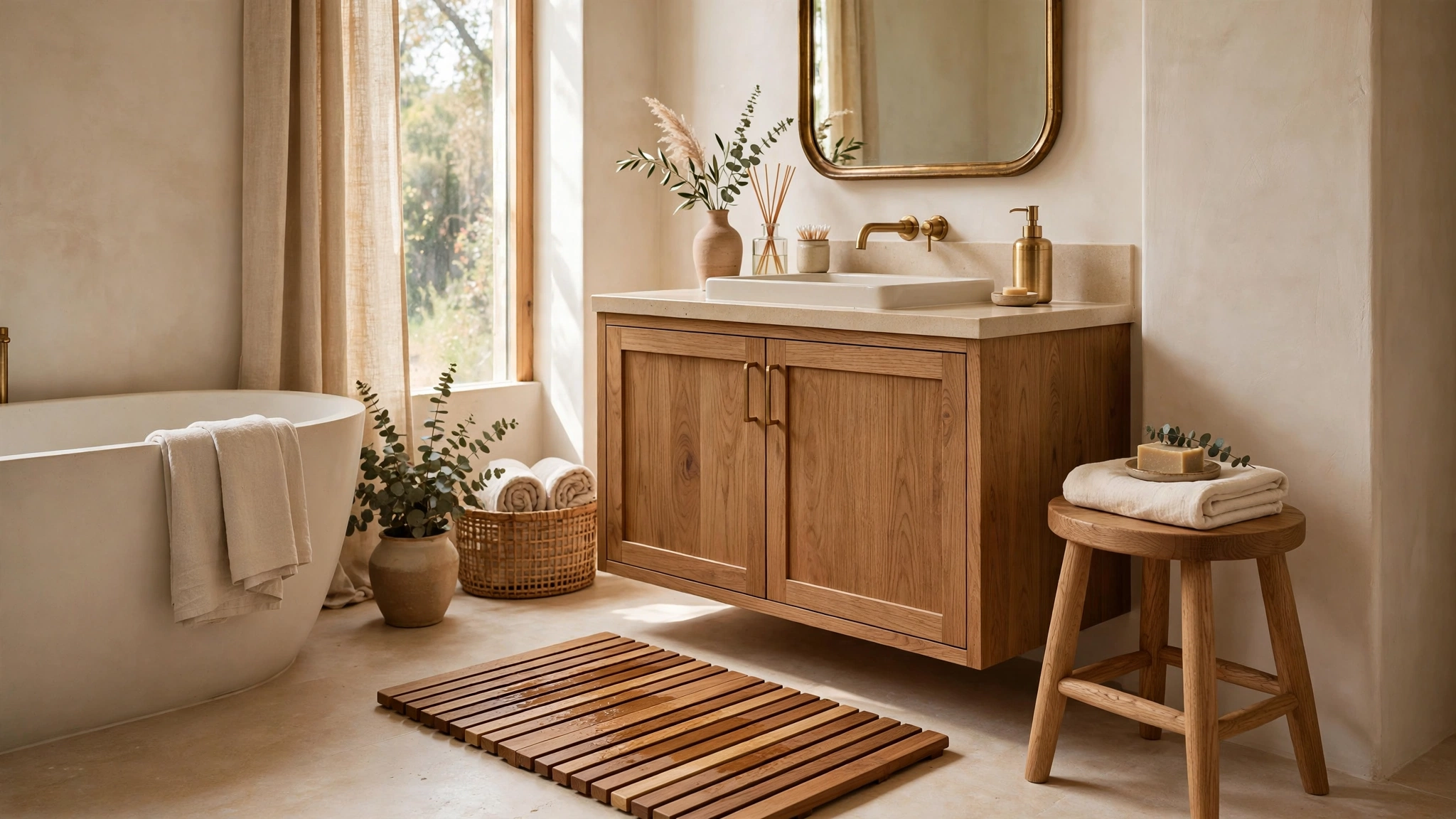
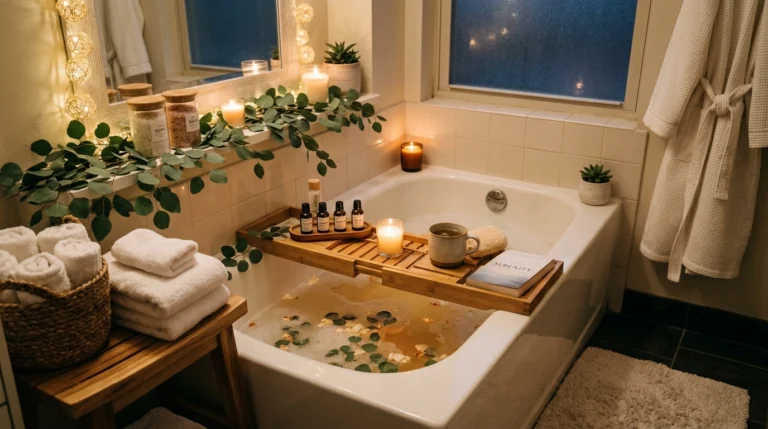
Wood is the quickest warm up. A teak bath mat, oak stool, or walnut shelf. Natural grain adds visual warmth instantly. Even small wood pieces change the feel. Best for: instant coziness.
Choose Brushed Brass Fixtures
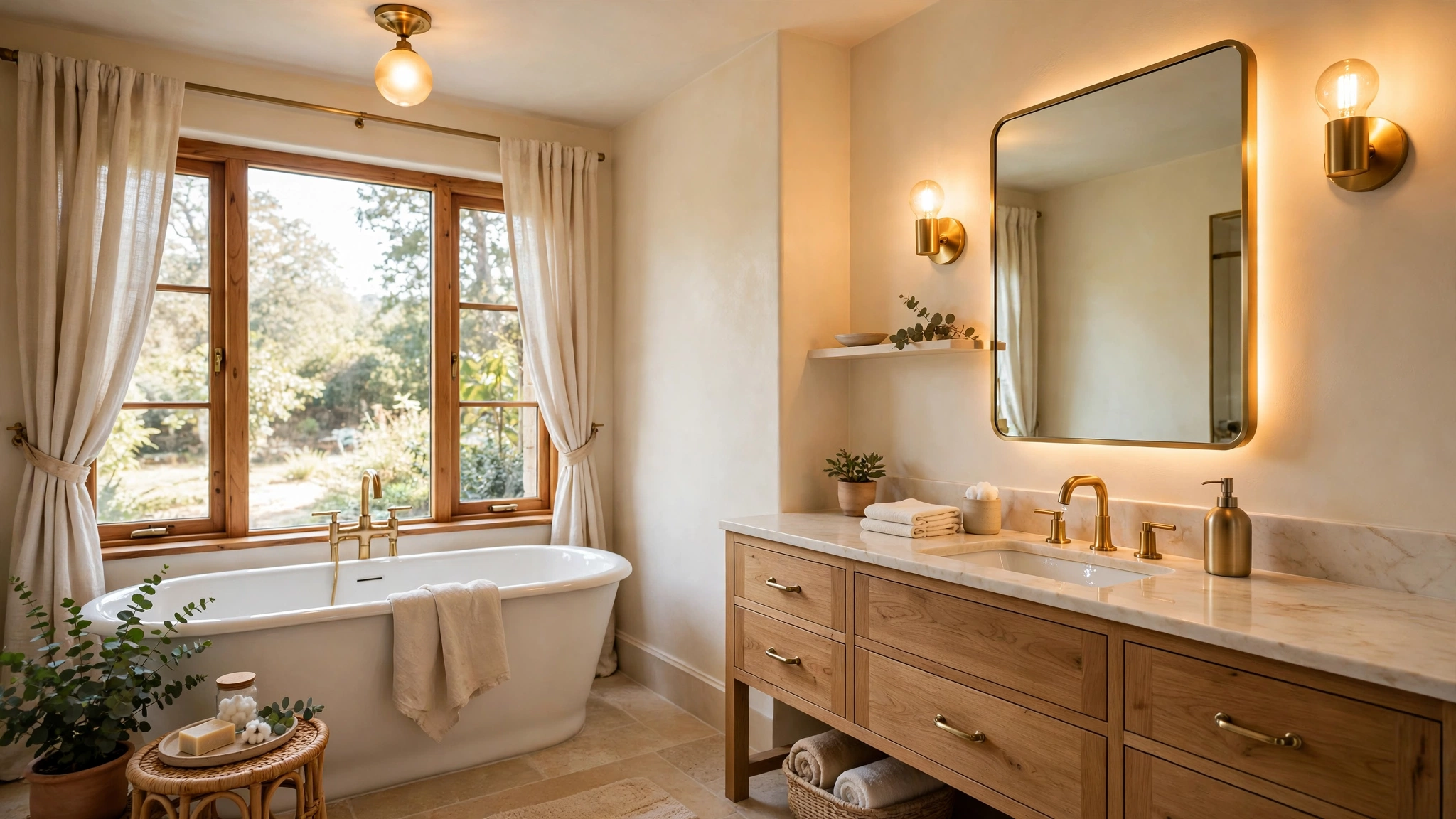
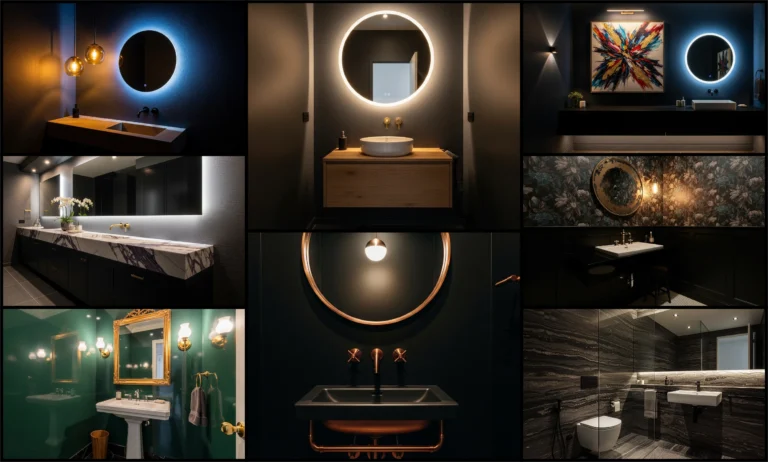
Brass glows against warm neutrals. It beats cold chrome for cozy bathrooms. Faucets, towel bars, and mirrors in brushed brass. The warm metal ties everything together. Best for: golden harmony.
Layer Soft Textiles
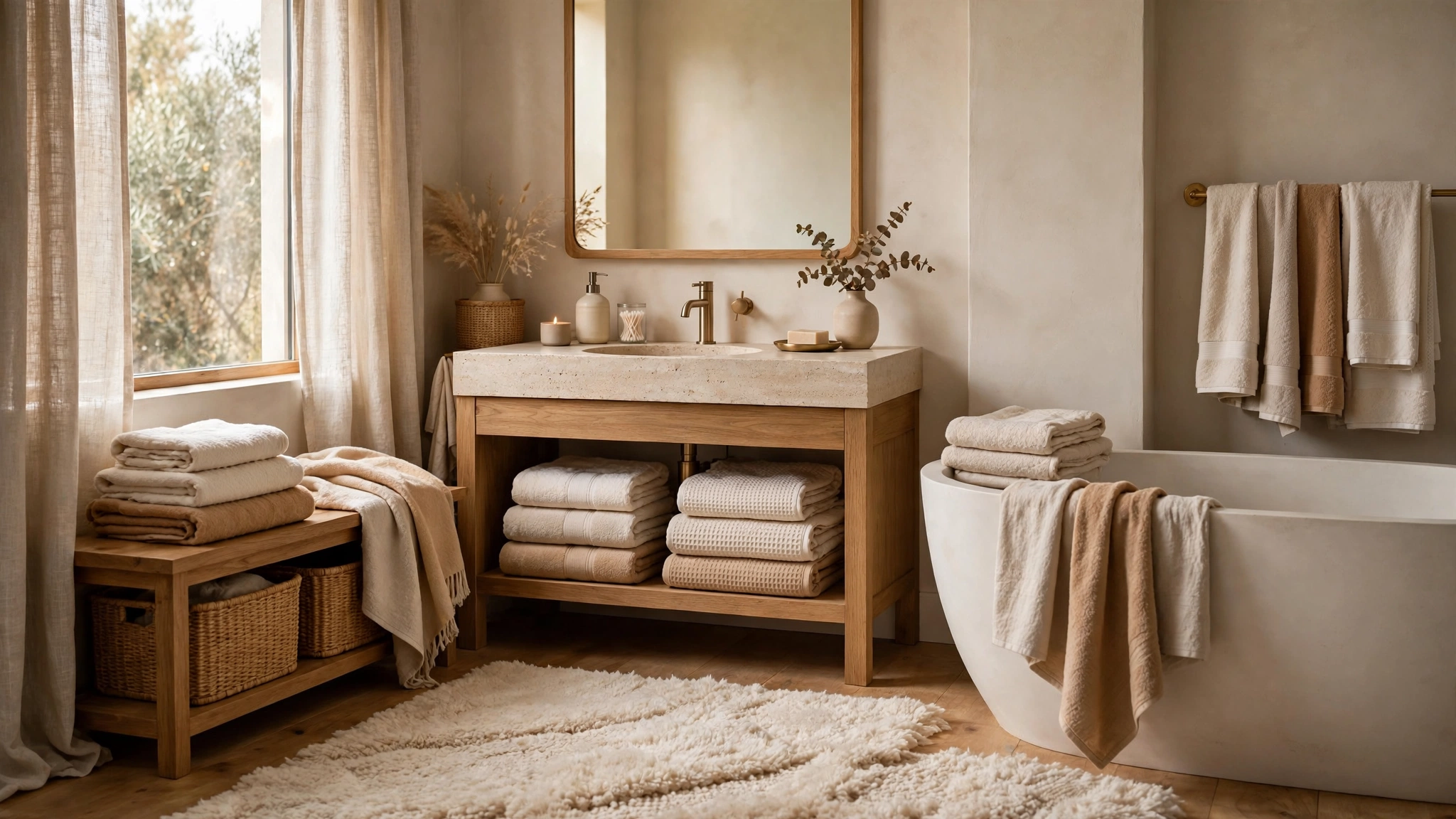
Textiles add softness and warmth. Turkish cotton towels, a plush rug, and linen curtains. Layer cream, oatmeal, and caramel tones. Touch should feel as warm as the colors look. Best for: tactile comfort.
Finish with Warm Lighting
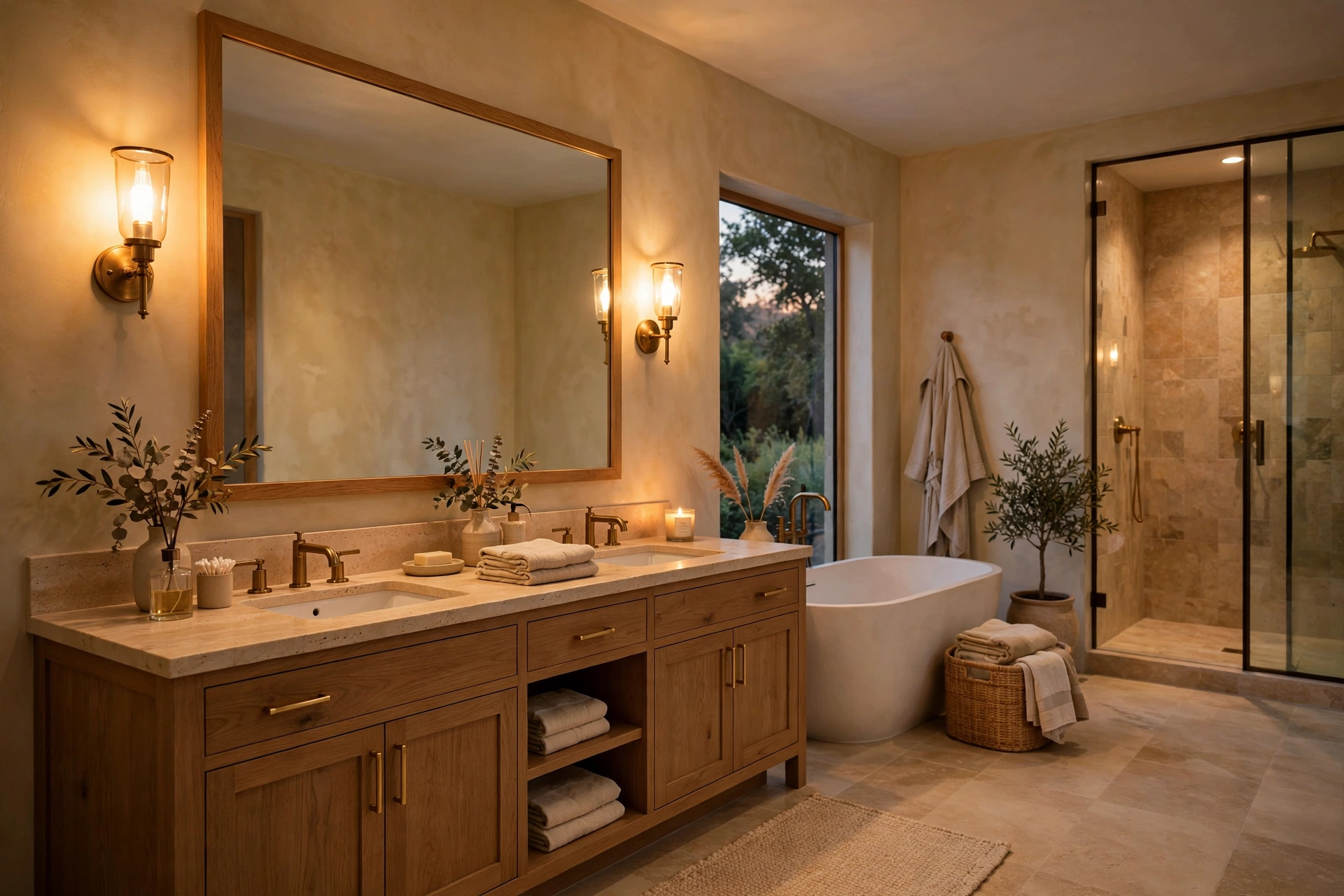
Light temperature makes or breaks warmth. Choose 2700K warm white bulbs. Sconces flatter better than overheads. Candlelight adds the final cozy layer. Best for: golden glow.
A warm neutral bathroom is cozy by design. Warm wall color, natural stone, wood accents, brass fixtures, and soft light. Layer these elements and your bathroom feels like a calm retreat. Explore more bathroom styling guides on our site.