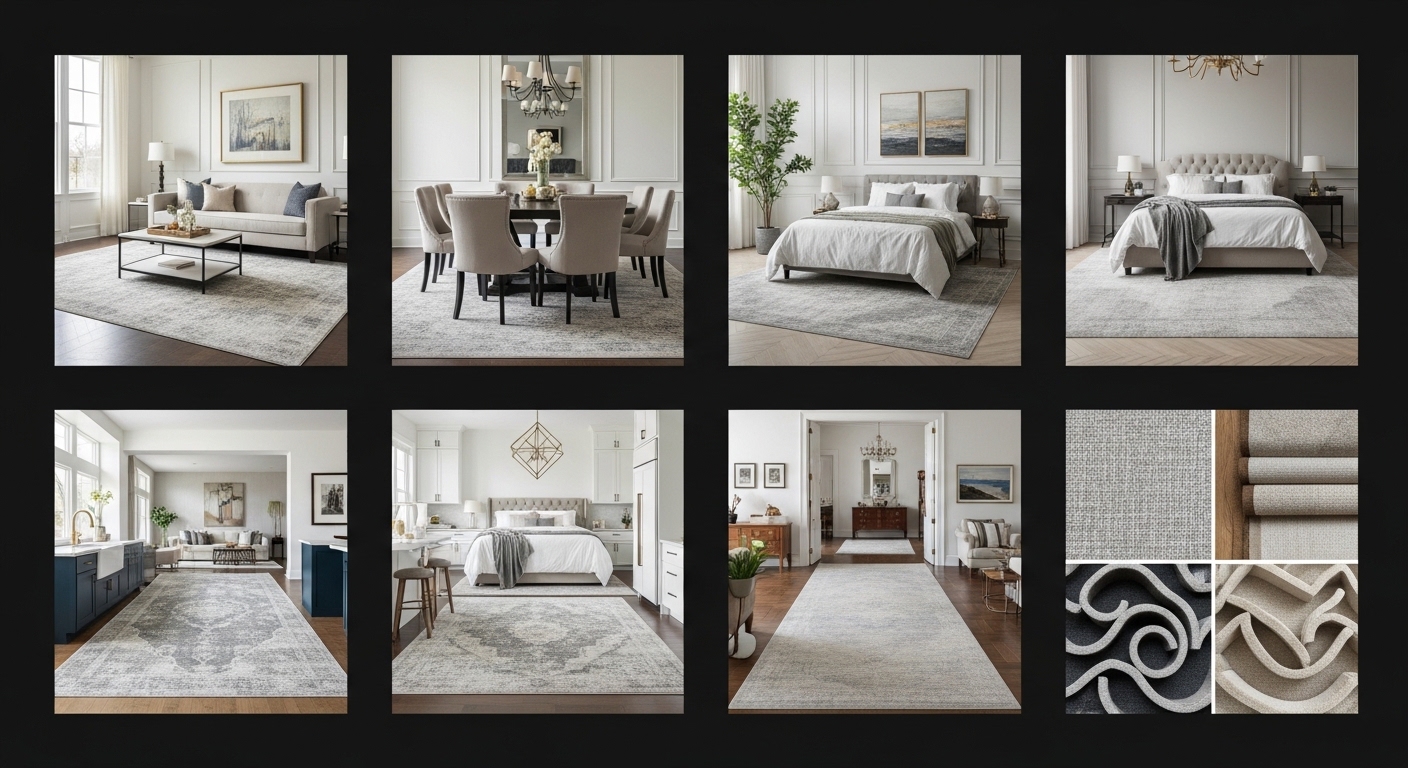
How to Choose the Perfect Rug Size for Every Room

Rug Size Guide

Mastering the foundational elements of a home requires a disciplined transition from guesswork to a state of Stately Permanence. In 2026, the rug is no longer viewed as a mere accessory; it is the primary “Hard Architecture” of the floor, providing a structural anchor that defines the boundaries of your sanctuary. A rug that is too small creates “Visual Noise,” making a room feel disconnected and unanchored, whereas a properly scaled piece fosters “Visual Silence” and a sense of curated discipline. By prioritizing Grounded Materiality—choosing high-fidelity wools, jutes, or silks—you establish a “Clean and Calm” horizon that allows your furniture to sit with architectural grace. This masterclass guide will navigate you through the technical “Bones” of rug placement, ensuring every room in your home, from the Living Room to the restorative Bedroom, feels intentionally and professionally designed.

Living Room Rug Size Guide: The Anchor Strategy

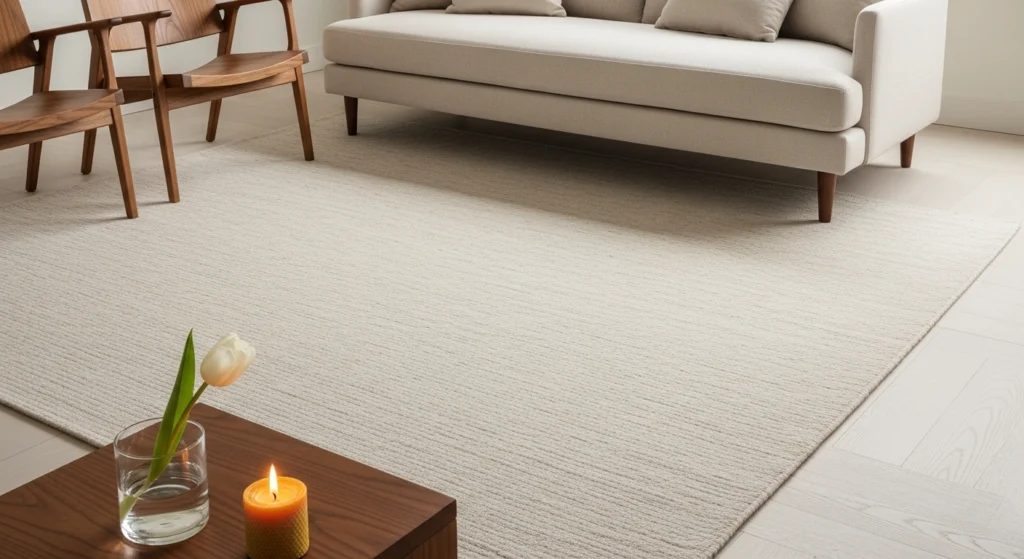
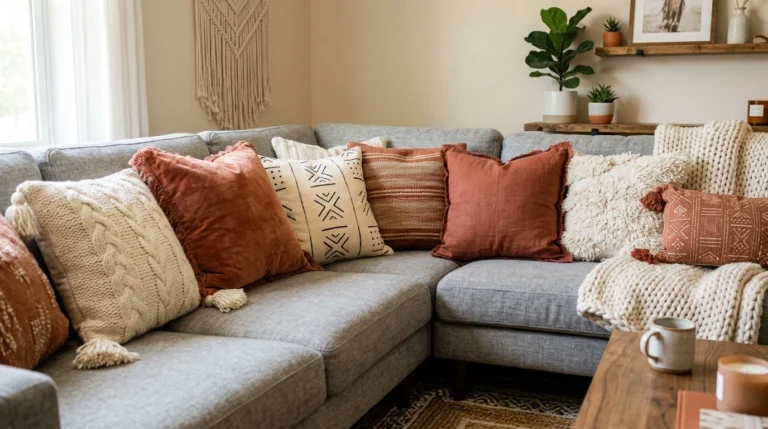
In the living room, the rug serves as the invisible glue that holds your Social Sanctuary together, facilitating a seamless “Visual Flow” between seating elements. The “Golden Rule” of modern architectural styling dictates that at least the front legs of all primary seating—sofas, walnut side chairs, and ottomans—must sit firmly on the rug to prevent it from “floating” in a state of disconnected chaos. For an average-sized room, an 8×10 rug provides the necessary scale, while a 9×12 rug is the preferred choice for larger spaces or open-concept layouts where Stately Permanence is required to define the zone. We avoid the beginner mistake of using a 5×7 rug, which often feels like a “postage stamp” in a high-end environment, disrupting the room’s structural integrity. To ground this foundation, we style the space with “Singular Intent”: a single walnut side table holding a glass half-filled with water and a long-stemmed white tulip, ensuring the space feels optimistic and unburdened.

Bedroom Rug Size Guide: The Tactile Cocoon

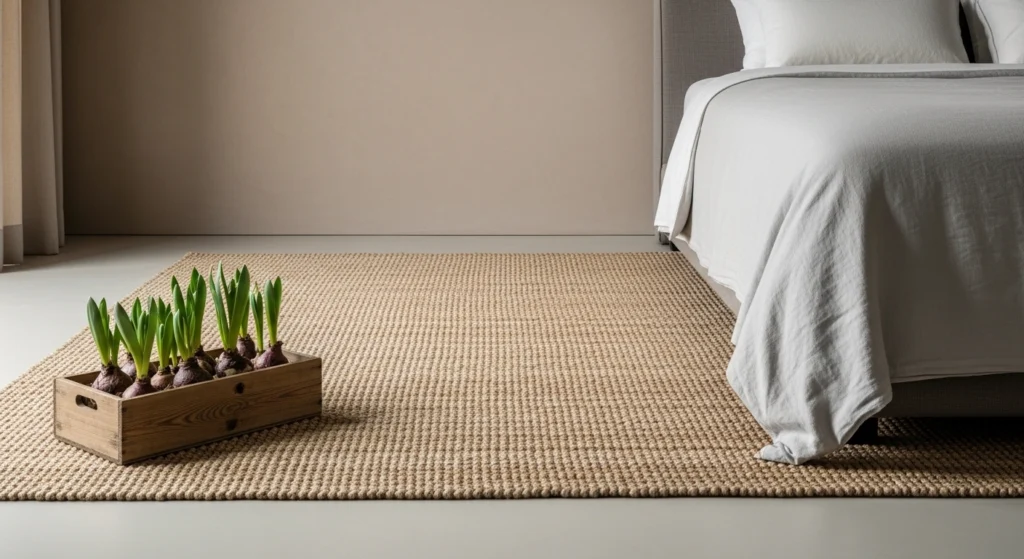
The primary purpose of a rug in the bedroom is to enhance the room’s “Soft Soul,” providing a protective and tactile cocoon for your feet as you transition from sleep to the day’s discipline. To achieve a state of “Visual Silence,” the rug should ideally anchor the bed and the nightstands together, or at the very least, extend from the lower two-thirds of the bed frame to offer a warm landing. For a King-sized bed, a 9×12 rug offers the expansive, “Sun-Washed” energy required for a luxury sanctuary, while an 8×10 works perfectly for a Queen, and a 6×9 is suitable for a Full bed. If your room is narrow or restrictive, an alternative option is to utilize runners on each side of the bed to maintain the “Visual Flow” without overwhelming the floor. We anchor this restorative environment by placing a rustic wooden box of specialized bulbs near the rug’s edge and styling a nearby stone ledge with a burning beeswax candle.

Dining Room Rug Size Guide: The 24-Inch Discipline

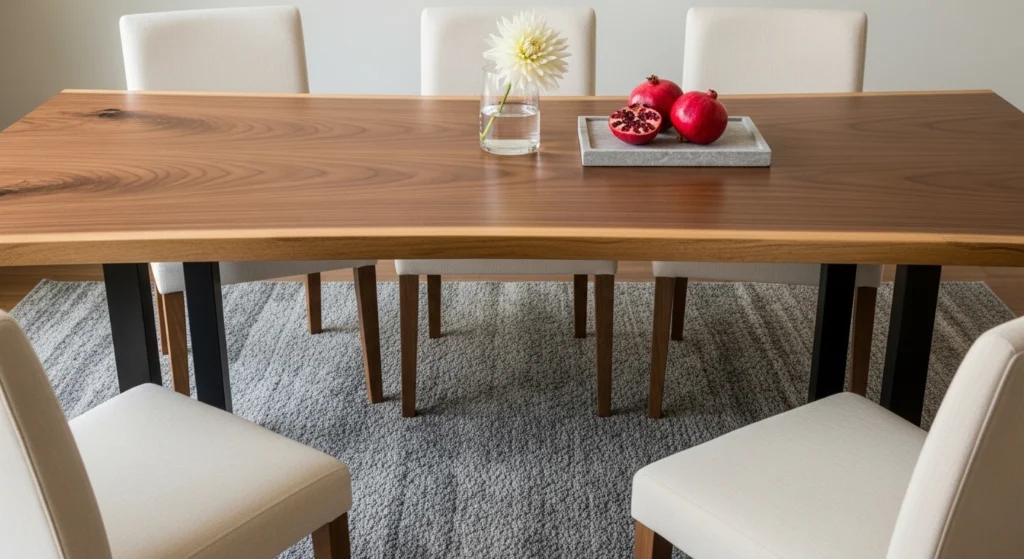
The Dining Room rug is governed by a strict rule of “Zero-Waste Geometry” known as the 24-Inch Rule, which solves the most common sizing frustrations. To maintain professional architectural integrity, your rug must extend at least 24 inches beyond the table on all sides, ensuring that chairs remain grounded on the rug even when pulled out for guests to sit. This prevents the “Visual Noise” of chair legs catching on edges and reinforces the room’s structural bones as a permanent space for connection. For most standard dining rooms, an 8×10 rug is the baseline, while smaller tables can accommodate a 6×9, and grander areas require a 9×12 to feel truly stately. We style the raw-edge walnut table above with a glass half-filled with water and a single dahlia, celebrating the joy of curated hosting within a perfectly scaled and disciplined foundation.

Entryway & Hallway Rug Tips: The Transition Threshold

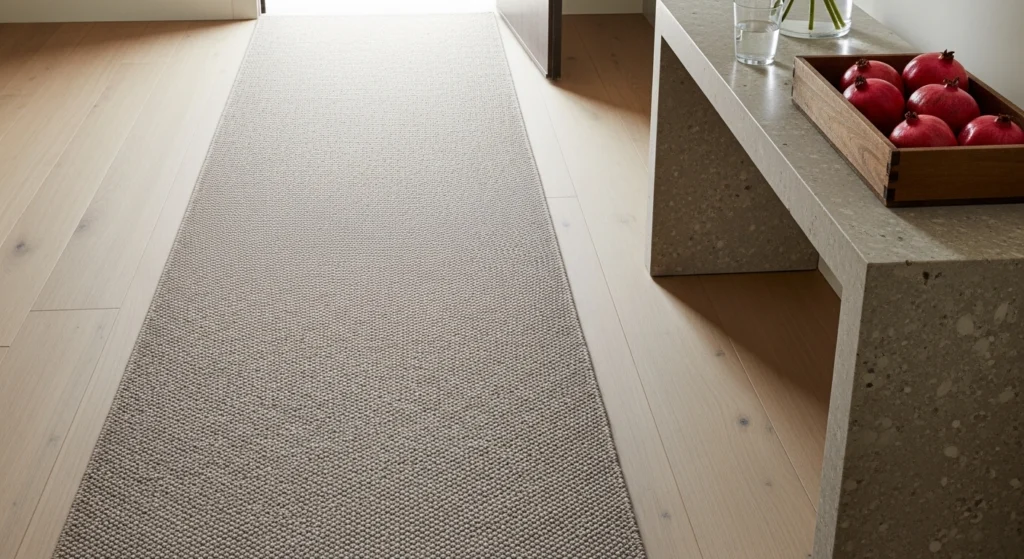
Entryways and hallways represent the threshold of the home, where the rug must establish a “Clean and Calm” flow that welcomes the inhabitant into the sanctuary with Singular Intent. For entry rugs, it is essential to leave 4–6 inches of the wide-plank white oak floor visible around the perimeter to maintain the room’s “Visual Flow” and respect the “Background Architecture.” In narrow passages, standard runners in sizes like 2×6, 2×8, or 2×10 act as a rhythmic guide through the home’s Home Essentials, providing a soft soul to the harder structural lines. We choose durable, low-pile materials to ensure longevity and ease of movement, styling these transit zones with a rustic wooden box of fresh spring pomegranates on a stone console to ensure even functional paths feel like a curated extension of the home.

Quick Rug Size Cheat Sheet & Common Mistakes

When navigating the complexities of Grounded Materiality, a disciplined cheat sheet serves as your technical blueprint for success across all interior pillars. For the Living Room, prioritize 8×10 or 9×12; for a Queen Bedroom, use 8×10; and for a King Bedroom, the 9×12 is the only choice for Stately Permanence. Common mistakes often stem from choosing the smallest rug to save money, which ultimately costs the room its sense of balance and luxury. Using tiny rugs under large beds or letting rugs “float” away from furniture creates a disjointed atmosphere that lacks the “Hard Architecture” needed for a professional feel. Always remember the designer rule: a larger rug anchors the room, acting as the foundation that makes every other piece of furniture feel connected and intentional.

FAQ: Rug Size Questions People Always Ask

A common inquiry within our “Social Sanctuary” is whether all furniture must sit on the rug; while a full-on placement is the most stately, having the front legs anchored is the professional minimum for a cohesive layout. Regarding the exposure of the floor, maintaining 6–18 inches of wood or stone around the rug’s edge ensures that the “Background Architecture” of the room remains visible and respected. People also frequently ask if it is better to go bigger or smaller, and the USA Home Bloom philosophy always advocates for bigger. A larger rug provides a “Sun-Washed” and expansive foundation that celebrates “Visual Silence,” whereas a smaller rug will always feel like a mistake in a world of high-intent design and material integrity.

Final Thoughts: Designing a Foundation That Works for You

Choosing the right rug size doesn’t have to feel like a compromise; it is an exercise in intentionality and the mastery of your home’s structural soul. Once you move past the phase of guessing and embrace the technical rules of placement, your rooms will instantly feel more cohesive, restorative, and professionally styled. Rugs are not just accessories; they are the “Hard Architecture” that defines your lifestyle and anchors your daily rituals in a state of Visual Silence. By starting with the right foundation and layering in sensory details—like a single dahlia in a half-filled glass or the scent of a beeswax candle—you create a “Warm Modern” home that is as architecturally sound as it is deeply soulful.

Similar Posts

Leave a Reply

Your email address will not be published. Required fields are marked *