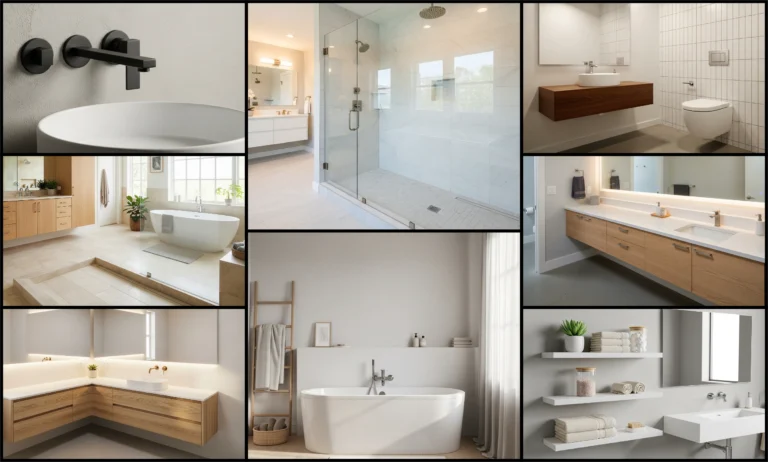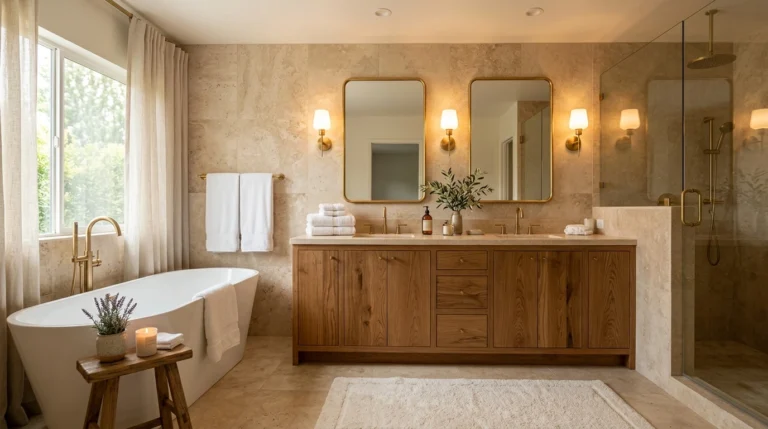
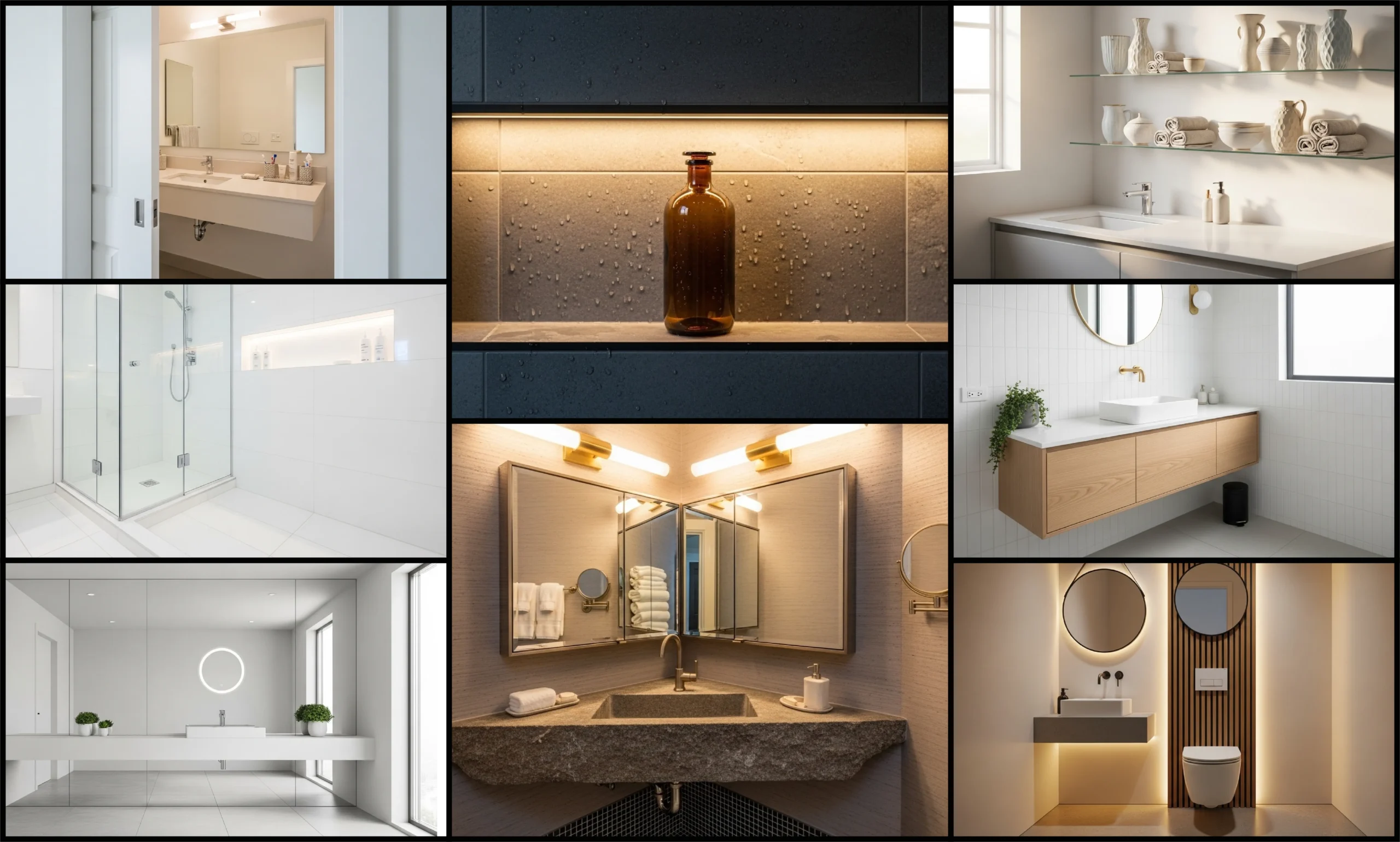
A small bathroom can still feel open and calm. Smart layout choices and light colors do most of the work.
These clever bathroom ideas cover fixtures, storage, light, and color. Each one makes a tight room work harder. Pick the ideas that fit your small space.
Floating Vanities
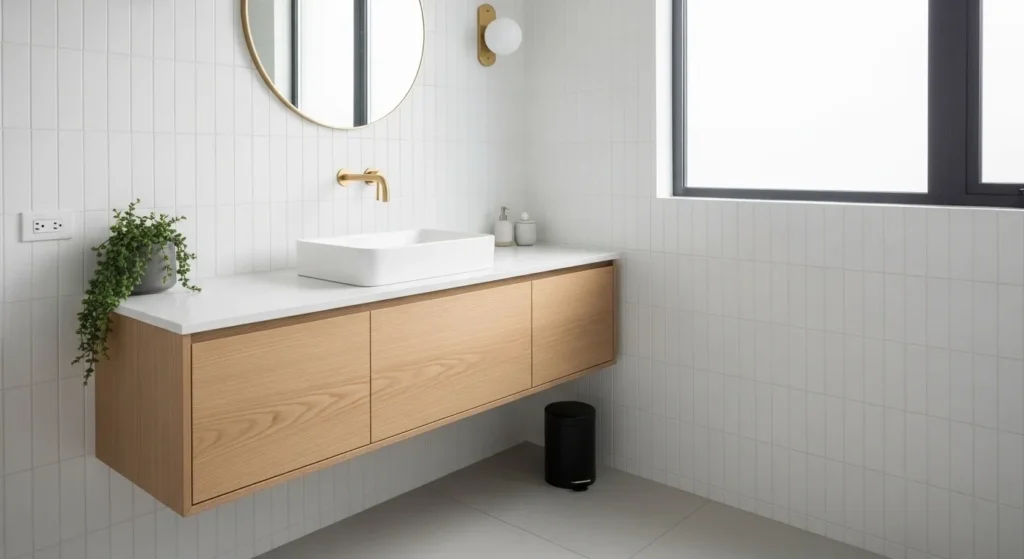
A floating vanity lifts the cabinet off the floor. The visible floor below makes the room look bigger.
It also makes cleaning simple. You can mop right under it with no legs in the way.
Choose a wall-hung model rated for your wall type. Solid blocking behind the wall holds the weight best.
Best for: small rooms that need more visual floor space.
Wall-Mounted Toilets
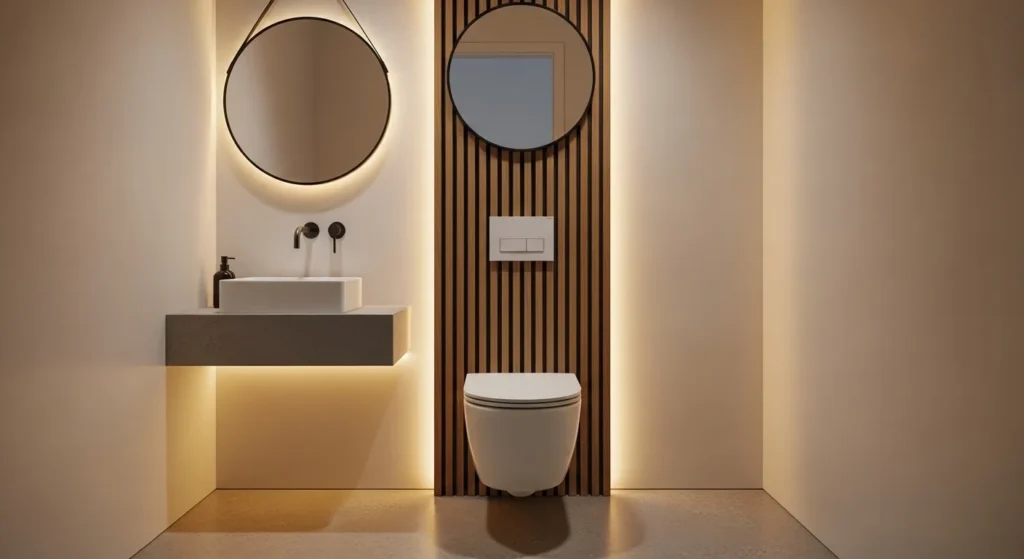
A wall-hung toilet hides the tank inside the wall. Only the clean bowl shows in the room.
The floor stays fully open below it. This makes the room look larger and simpler to clean.
Plan for in-wall plumbing before you start. It needs a sturdy carrier frame set in the wall.
Best for: tight rooms that want a clean, open floor.
Corner Sinks and Vanities
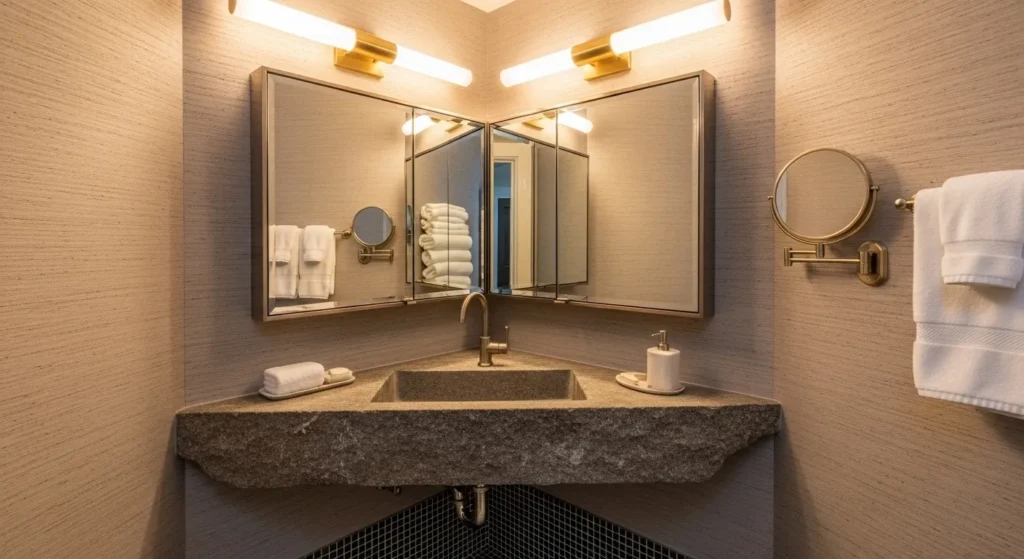
Corner sinks put dead corners to work. They free up the main walkway in tight rooms.
Small corner vanities add storage without blocking doors. Many come with a compact round sink.
Measure the corner twice before you buy. Plumbing lines should already sit near that wall.
Best for: tiny rooms where every inch counts.
Frameless Glass Shower Enclosures
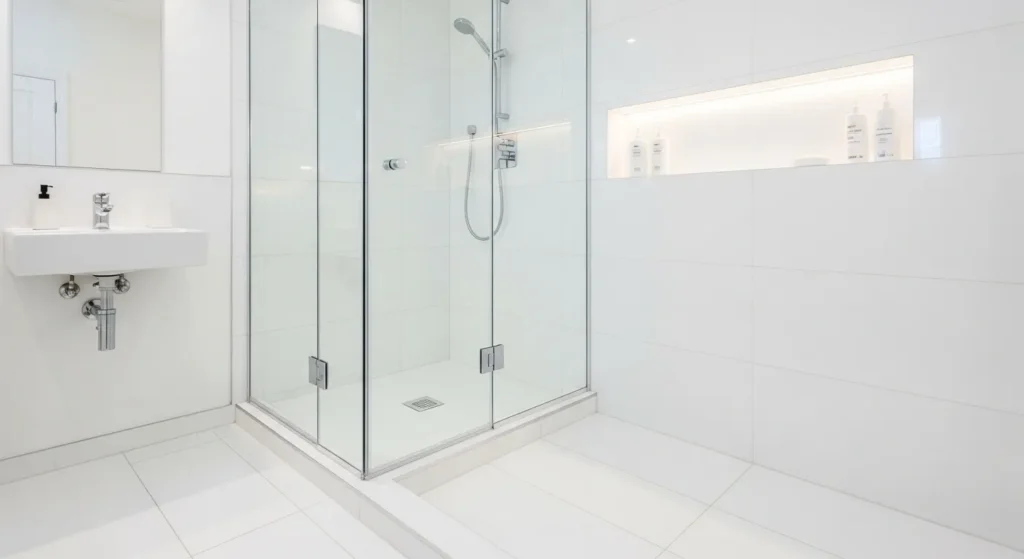
A frameless shower removes visual walls from the room. The space reads as one open area.
Clear glass shows off the tile inside. It turns the shower into a design feature, not a closed box.
Use tempered glass panels with minimal hardware. Keep a squeegee handy to keep panels clear.
Best for: small rooms that want an unbroken sight line.
Sliding or Pocket Doors
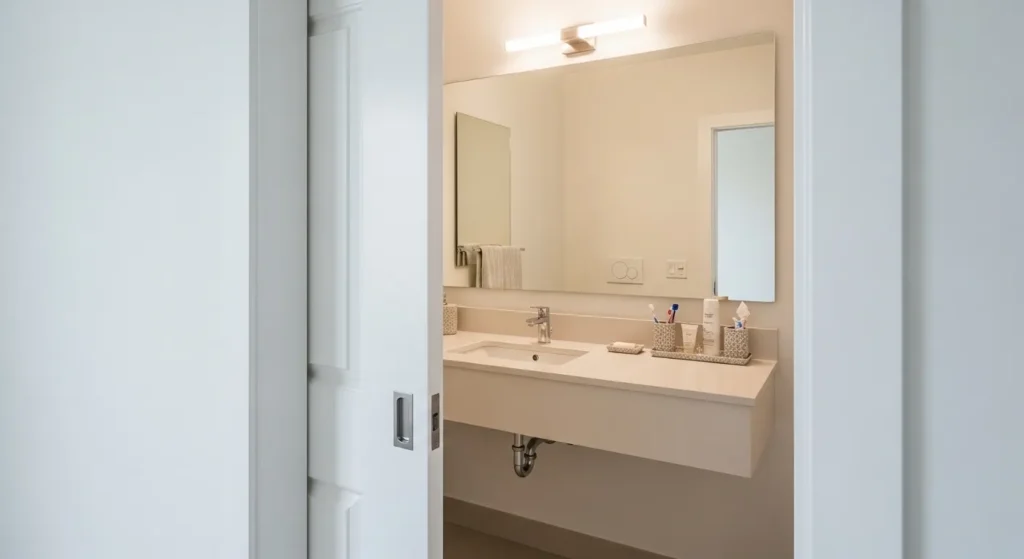
A pocket door slides into the wall instead of swinging out. It saves the full swing space of a normal door.
This frees up room for a vanity or storage. The doorway stays clear on both sides.
Plan the wall framing before you start. The pocket needs a hollow wall section to slide into.
Best for: tight layouts where a door swing blocks fixtures.
Open Shelving
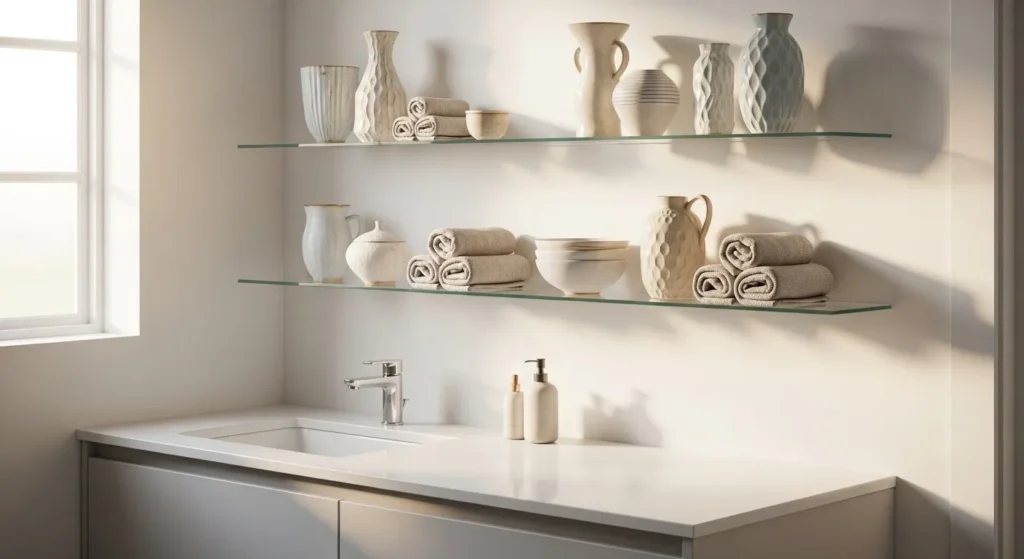
Open shelves keep daily items within reach. Rolled towels and jars look neat on display.
Wood or bamboo shelves add warmth to tile walls. Two short shelves beat one long one.
Keep the shelves tidy since everything shows. Baskets hide the less pretty items.
Best for: rooms that want easy access without bulky cabinets.
Wall Niches
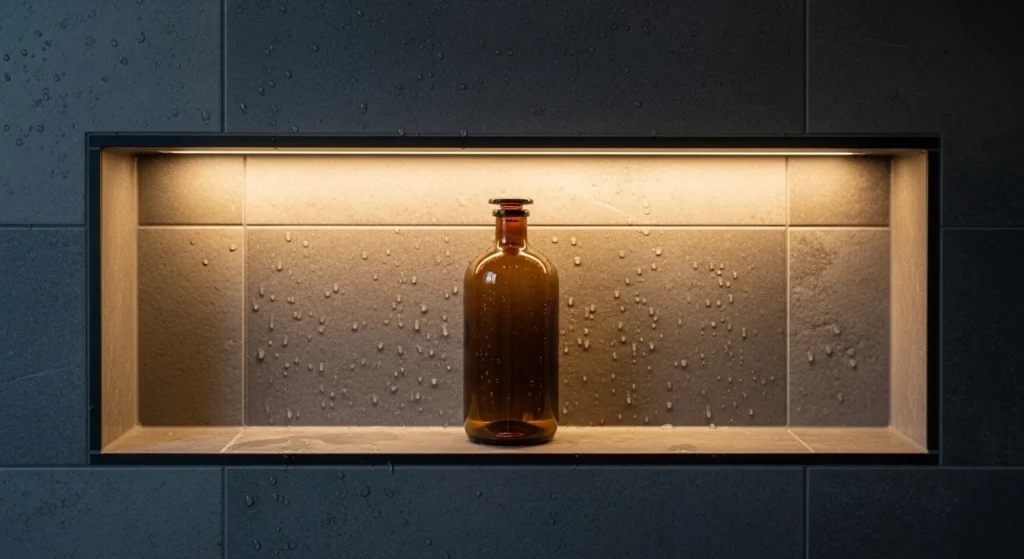
A wall niche carves storage into the wall itself. Bottles sit flush instead of on a caddy.
Tiled niches look built in and clean. They hold shampoo without taking floor or shelf space.
Plan niches before tiling starts. The framing must sit between wall studs.
Best for: showers that need built-in, clutter-free storage.
Over-Toilet Storage
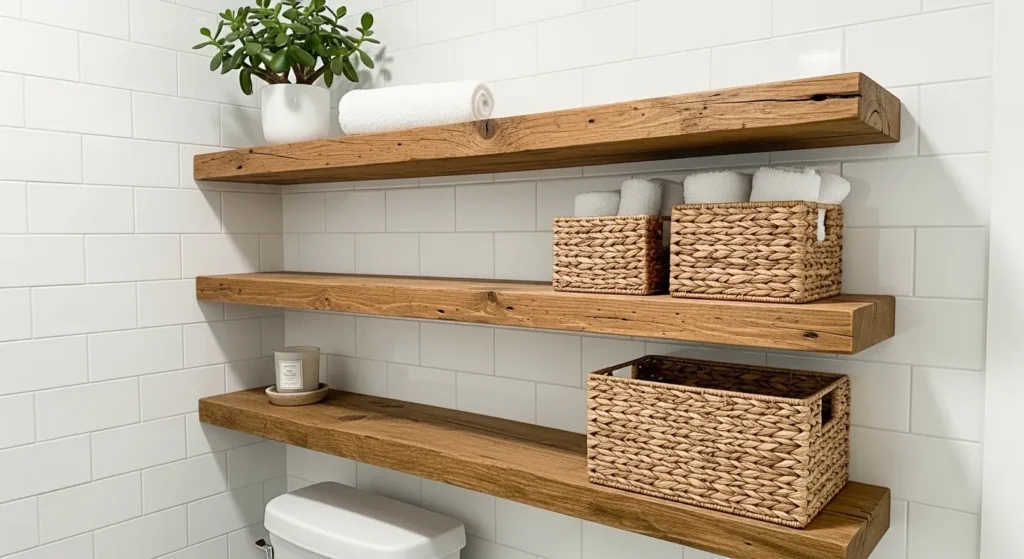
The wall above the toilet is free real estate. A slim cabinet there adds storage without using floor space.
Choose a shallow unit so it does not crowd the room. Open shelves keep it feeling light.
Anchor it well to wall studs. It will hold towels, jars, and spare rolls.
Best for: rooms with zero spare floor space.
Multipurpose Furniture
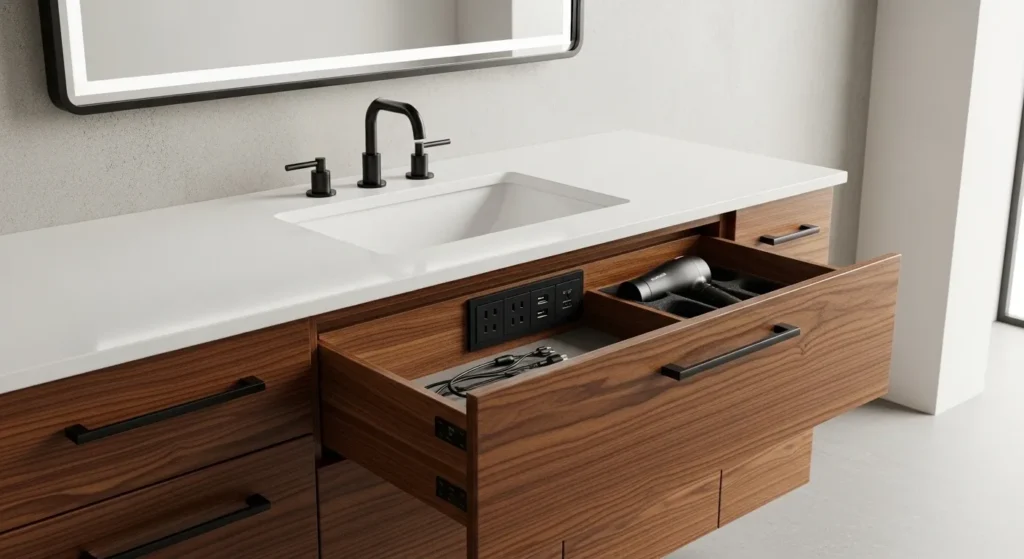
One piece that does two jobs saves real space. A vanity with deep drawers beats a plain pedestal sink.
Look for stools with hidden storage inside. A mirror cabinet adds storage above the sink too.
Pick pieces sized for small rooms. Oversized furniture crowds the layout fast.
Best for: small rooms where each piece must earn its place.
Hooks and Wall-Mounted Holders
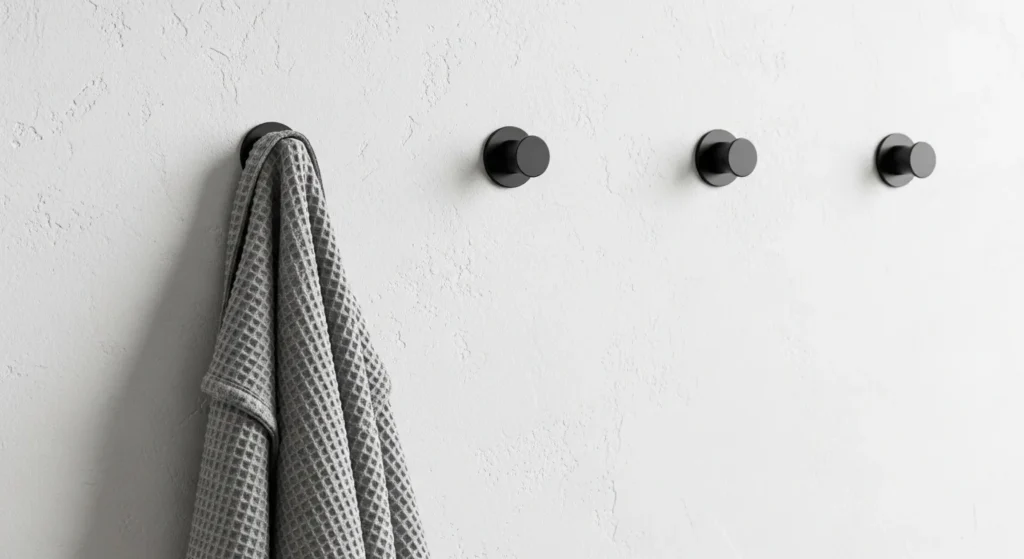
Hooks use wall space that bars waste. One hook holds a towel in half the space of a bar.
Place them near the shower and sink. Short walks keep floors dry and safe.
Use strong anchors rated for damp walls. A falling hook is no help at all.
Best for: rooms that need towel space without towel bars.
Mirrors to Expand Space
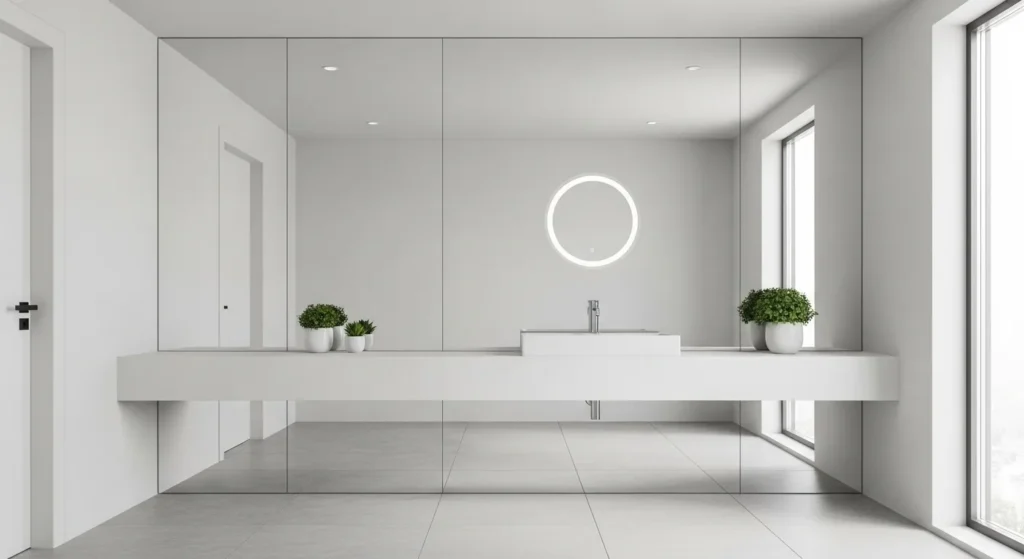
A large mirror doubles what the eye sees. The room feels twice as wide at a glance.
Hang it across from a window if you can. It bounces daylight deep into the room.
Keep the frame thin or go frameless. A heavy frame eats the effect.
Best for: dark rooms that need more light and depth.
Layered Lighting
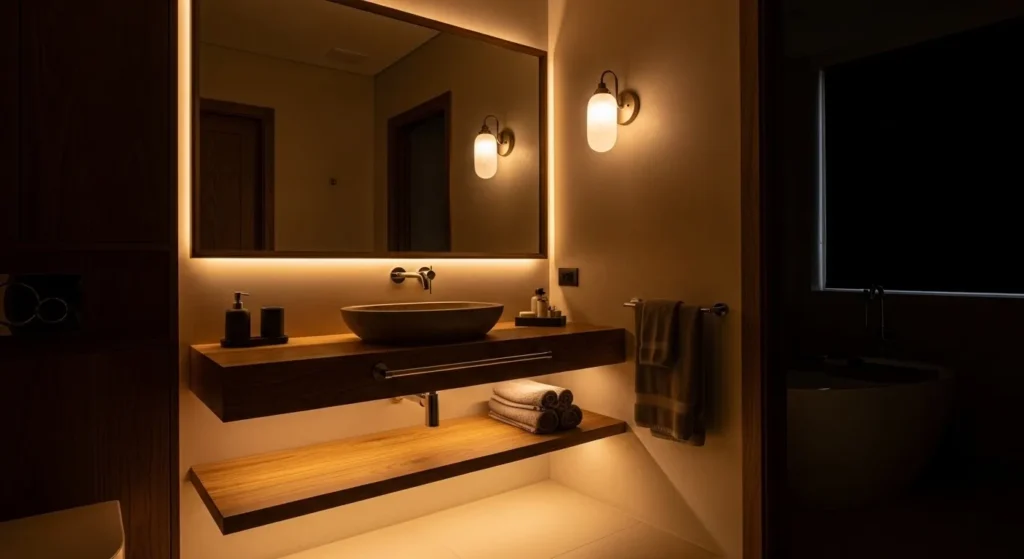
Layered light flatters both the room and you. Sconces, ceiling light, and a night glow work together.
Put sconces at eye level beside the mirror. Side light beats harsh overhead light for faces.
Add a dimmer to each layer. You can set bright for mornings and low for evening soaks.
Best for: small rooms that feel shadowy with one light.
Minimalist Fixtures
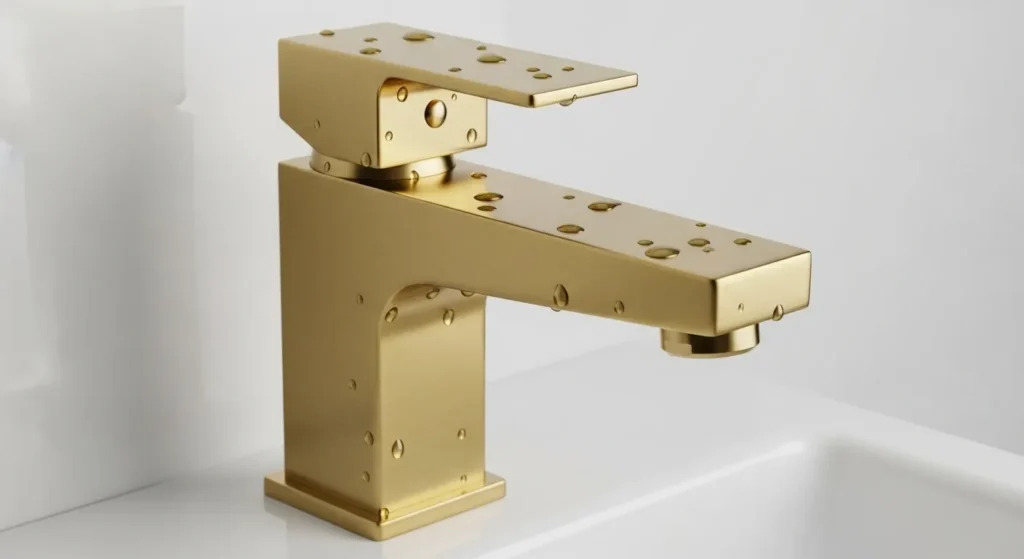
Slim fixtures leave more room to move. A narrow faucet and small handles suit tight vanities.
Wall-mounted taps free the counter fully. The deck stays clear for soap and cups.
Match the finish across all fixtures. One finish keeps the small room pulled together.
Best for: tiny vanities that feel crowded fast.
Bright and Light Colors
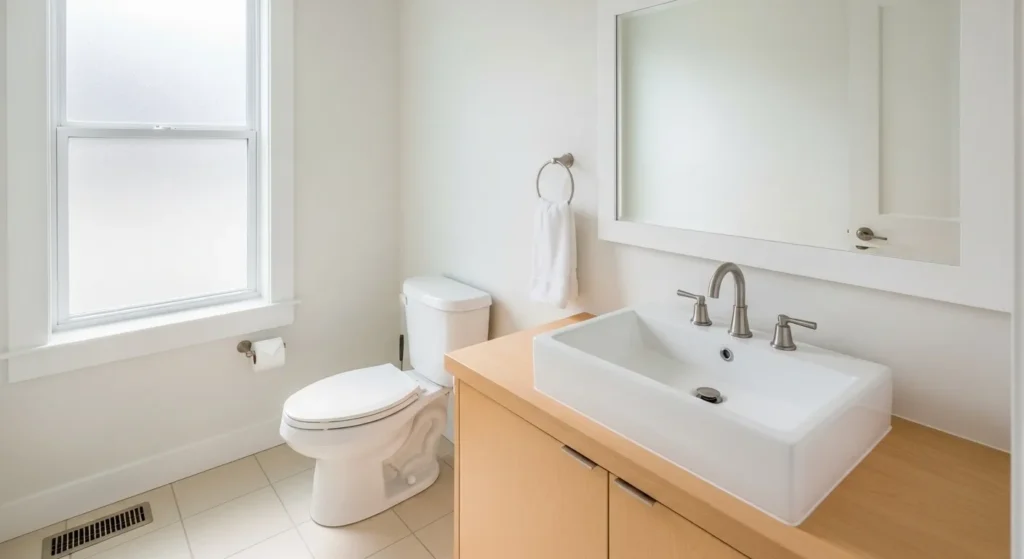
Light colors push the walls back visually. White and pale tones make a small room feel open.
Use the same light tone on walls and ceiling. The unbroken color reads as one larger space.
Add warmth with wood or brass accents. All-white rooms can feel cold without them.
Best for: small rooms that need to feel bigger fast.
Vertical Storage Solutions
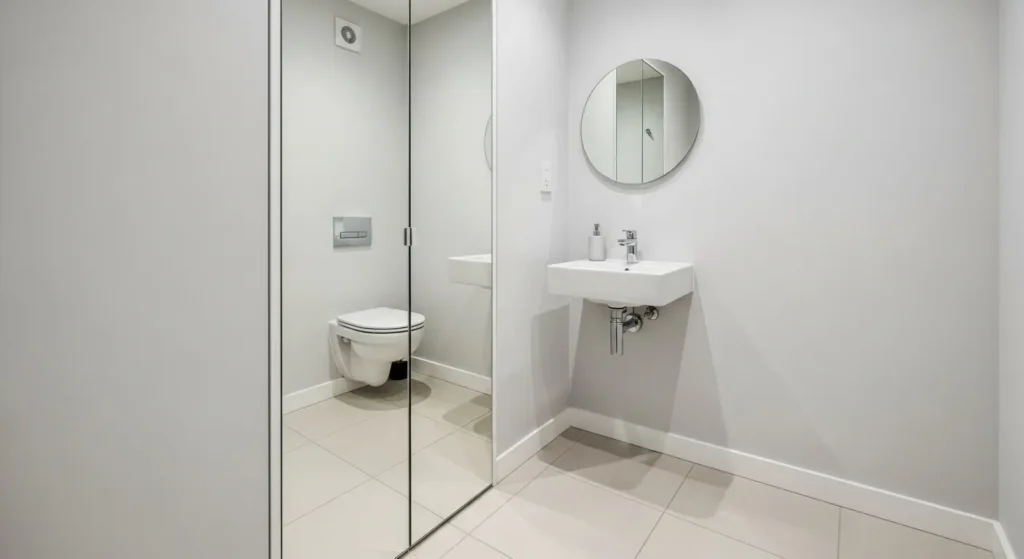
Tall narrow cabinets use wall height, not floor width. They store a lot in a slim footprint.
Place one in an unused corner. It holds towels, cleaning supplies, and spare rolls.
Anchor tall units to the wall. Safety matters most in a wet room.
Best for: rooms with high walls and narrow floors.
Frameless Glass Partitions
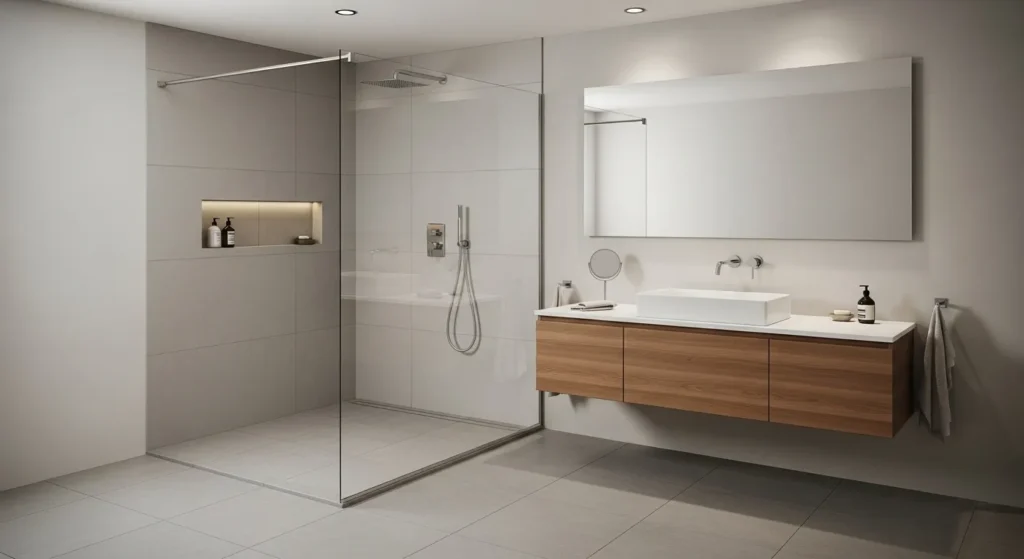
A single glass panel splits wet and dry zones. It keeps the room open while blocking spray.
Fixed panels need no door to swing. They suit small rooms where doors would hit fixtures.
Keep the panel at least waist height. Taller panels block more water.
Best for: wet rooms that want simple separation.
Indoor Plants for Freshness
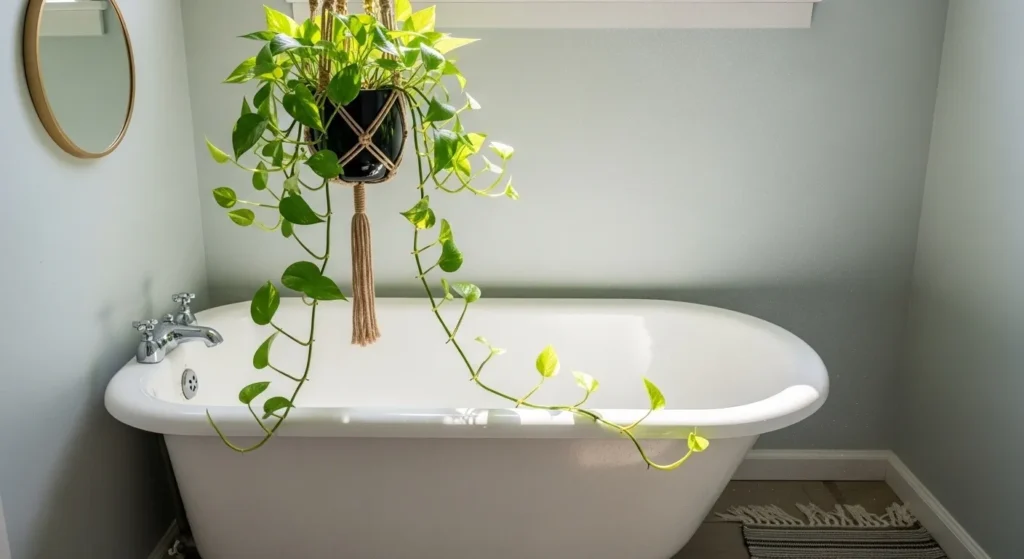
Plants bring fresh life to tile and stone. Green leaves pop against white walls.
Bathrooms suit plants that like steam. Pothos, ferns, and snake plants do well.
Hang a plant if counter space is short. One or two pots are enough for calm.
Best for: plain rooms that want living color.
Make Your Small Bathroom Work Harder
The best small bathroom ideas fit your layout and your routine. Start with one change like a floating vanity or a large mirror. Small details will follow.
For more ideas, browse our small space decorating tips and see these modern bathroom ideas.