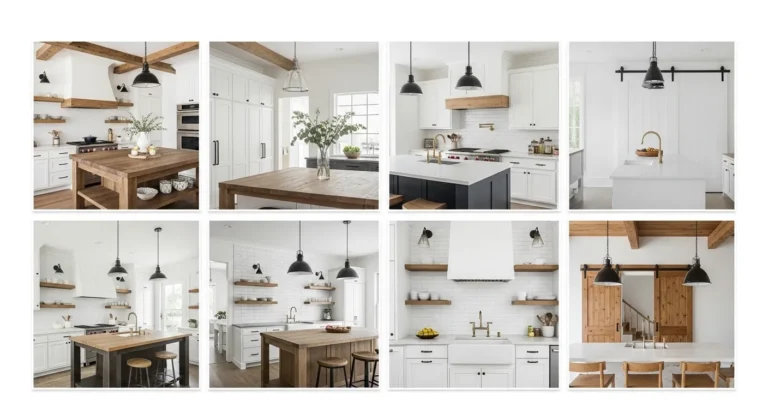
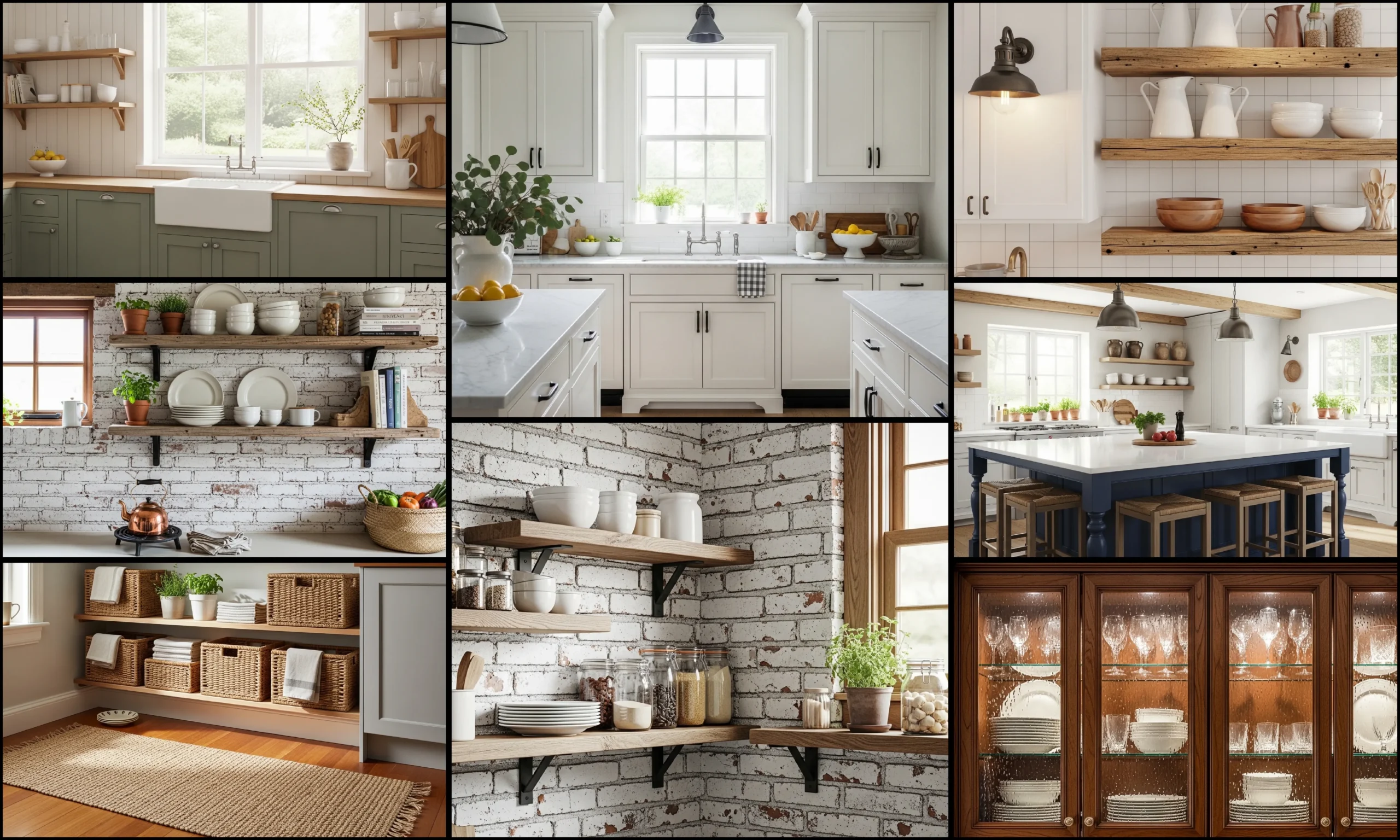
A farmhouse kitchen is more than just a place to prepare meals; it is a sanctuary of comfort that celebrates the beauty of simplicity and the warmth of home. This style is defined by its ability to feel both fresh and storied, blending clean lines with rugged, rustic textures that stand the test of time. Inspired by the practical elegance of country living, a farmhouse-style kitchen focuses on natural materials, light-filled spaces, and a “lived-in” atmosphere where every imperfection tells a story. Whether you are living in a busy city apartment or a sprawling rural estate, the farmhouse aesthetic brings a sense of groundedness and peace to the busiest room in the house. By focusing on cozy details, functional layouts, and a neutral, airy palette, these 20 farmhouse kitchen ideas will help you design a space that feels deeply personal, welcoming, and full of timeless rustic charm.
1. Classic White Shaker-Style Cabinetry

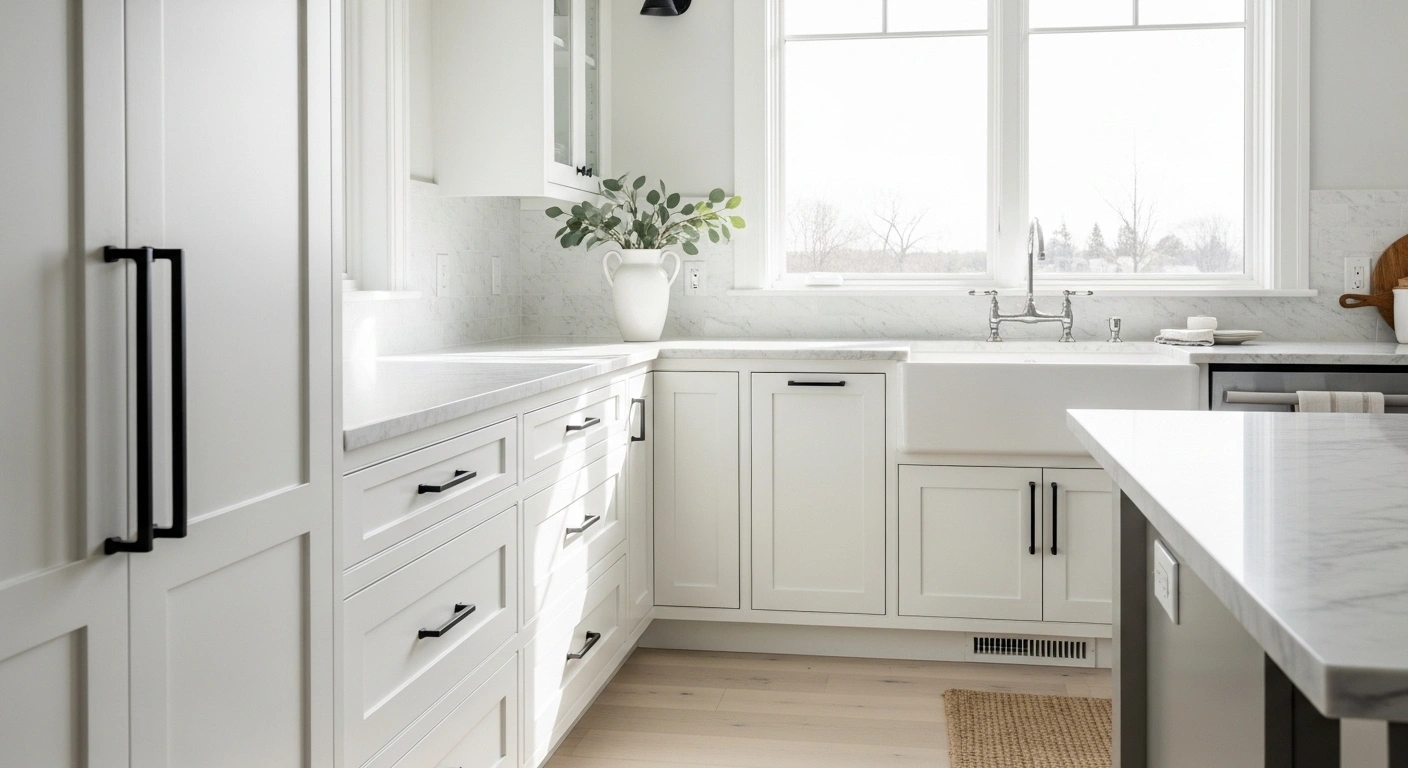
The backbone of the farmhouse kitchen is almost always the Shaker-style cabinet. Known for its clean, recessed center panels and simple square edges, this cabinetry offers a timeless look that works in nearly any home. Choosing a crisp white or soft cream finish for these cabinets helps to bounce natural light around the room, making even a small kitchen feel expansive and airy. The simplicity of the Shaker design allows the other rustic elements, like wooden beams or stone floors, to truly shine without competing for attention. It is a design choice that prioritizes longevity over trends, ensuring your kitchen looks just as stylish ten years from now as it does today.
Where to apply: Use Shaker cabinets for both upper and lower units to create a seamless, uniform backdrop. Everyday usability: White cabinets are easy to touch up with paint if they get nicked, making them very family-friendly. Materials & Texture: Pair white cabinets with matte black hardware to add a touch of modern contrast to the traditional wood.
Pro Tip: Use a soft white instead of a stark hospital white to keep the kitchen feeling warm and cozy rather than cold.
2. Over-Sized Apron-Front Farmhouse Sink
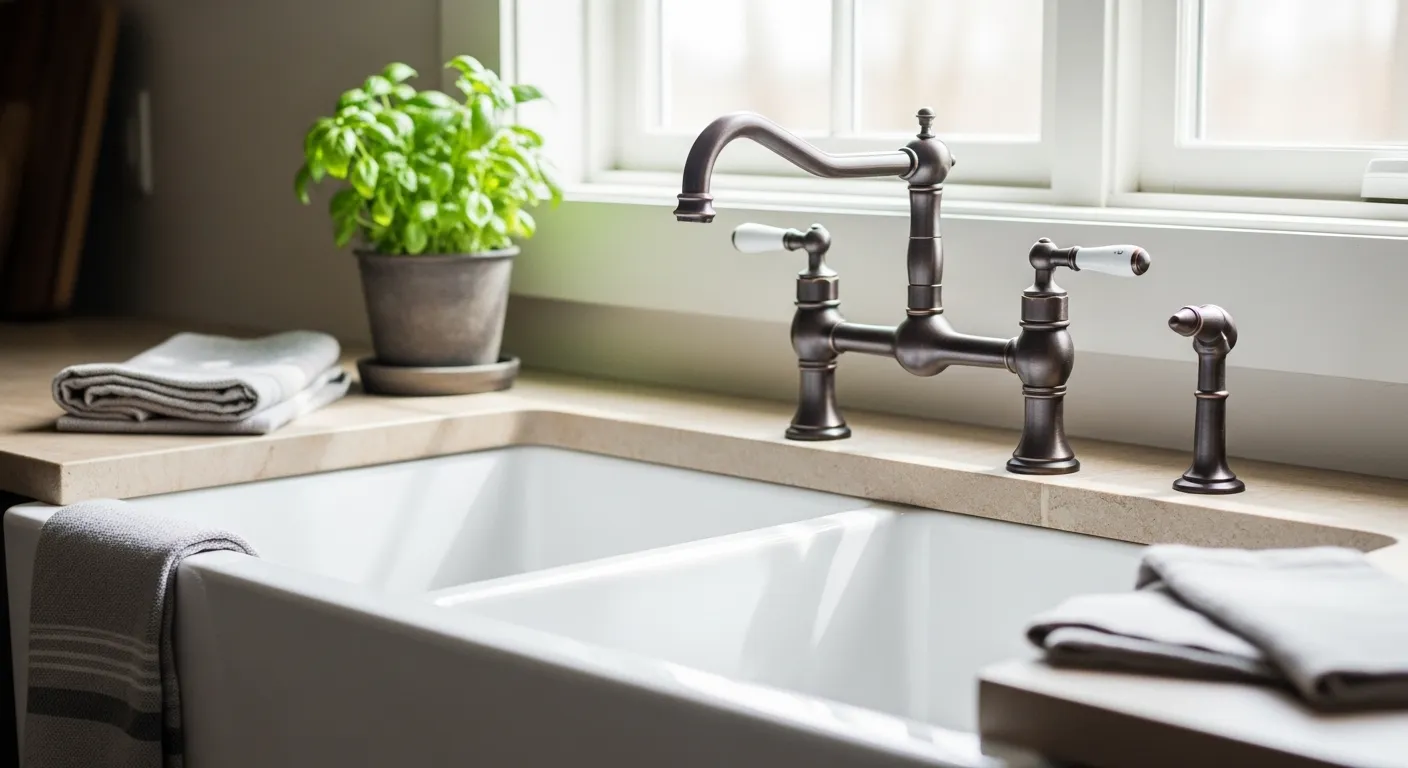
If there is one item that defines this style, it is the deep, apron-front farmhouse sink. These sinks are designed to be a focal point, extending slightly past the edge of the cabinetry to showcase their thick, beautiful front wall. While classic white fireclay is the most popular choice for its clean and durable finish, you can also find them in hammered copper or natural stone for a more rugged look. The sheer size of these sinks makes them incredibly practical for washing large pots or preparing garden-fresh vegetables. Paired with a high-arc bridge faucet, the farmhouse sink becomes a statement of both utility and classic country elegance.
Where to apply: Install as the central feature of your kitchen island or directly under a window for a traditional look. Maintenance & Durability: Fireclay is resistant to scratches and stains, but always use a sink grid to protect the bottom from heavy cast iron pans.
Pro Tip: Choose a double-bowl farmhouse sink if you prefer to separate soaking dishes from food preparation tasks.
3. Reclaimed Wood Floating Shelves

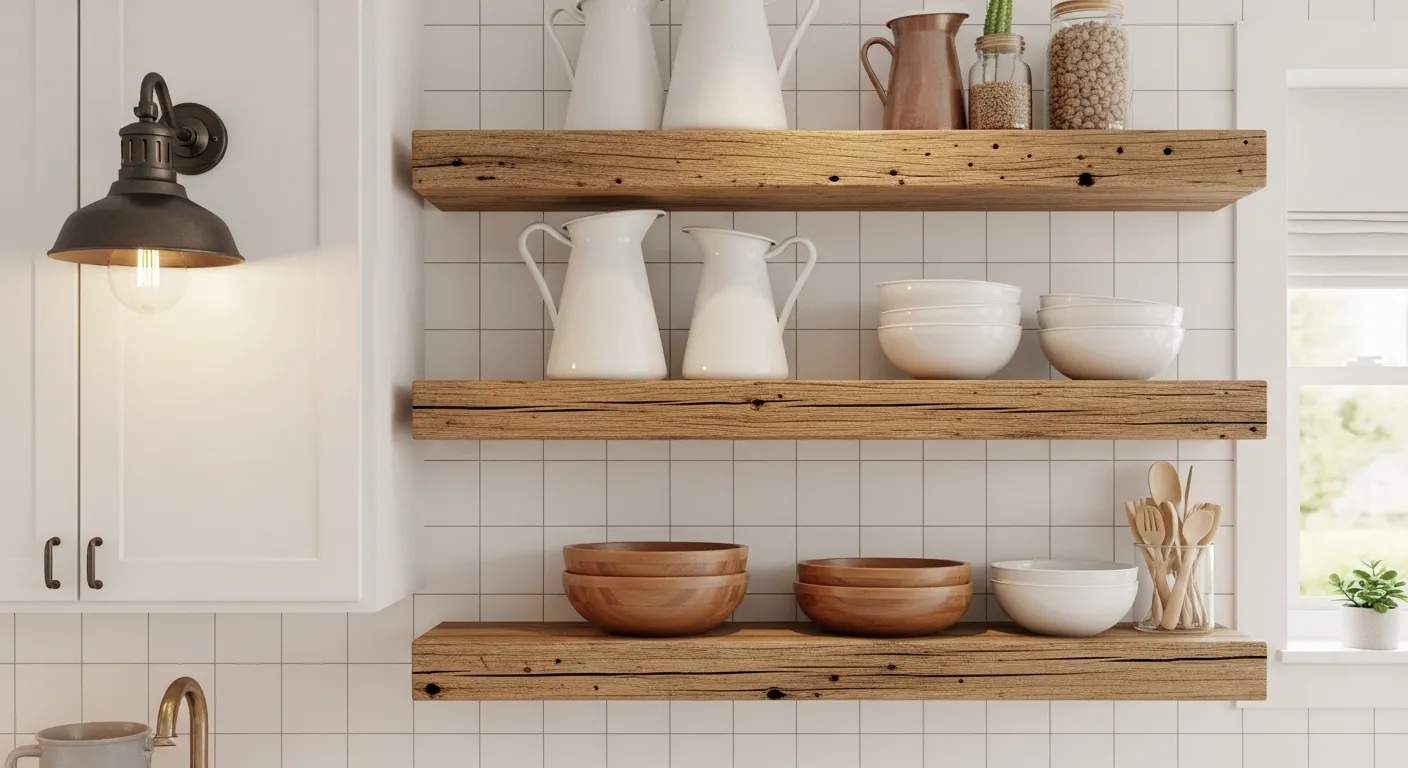
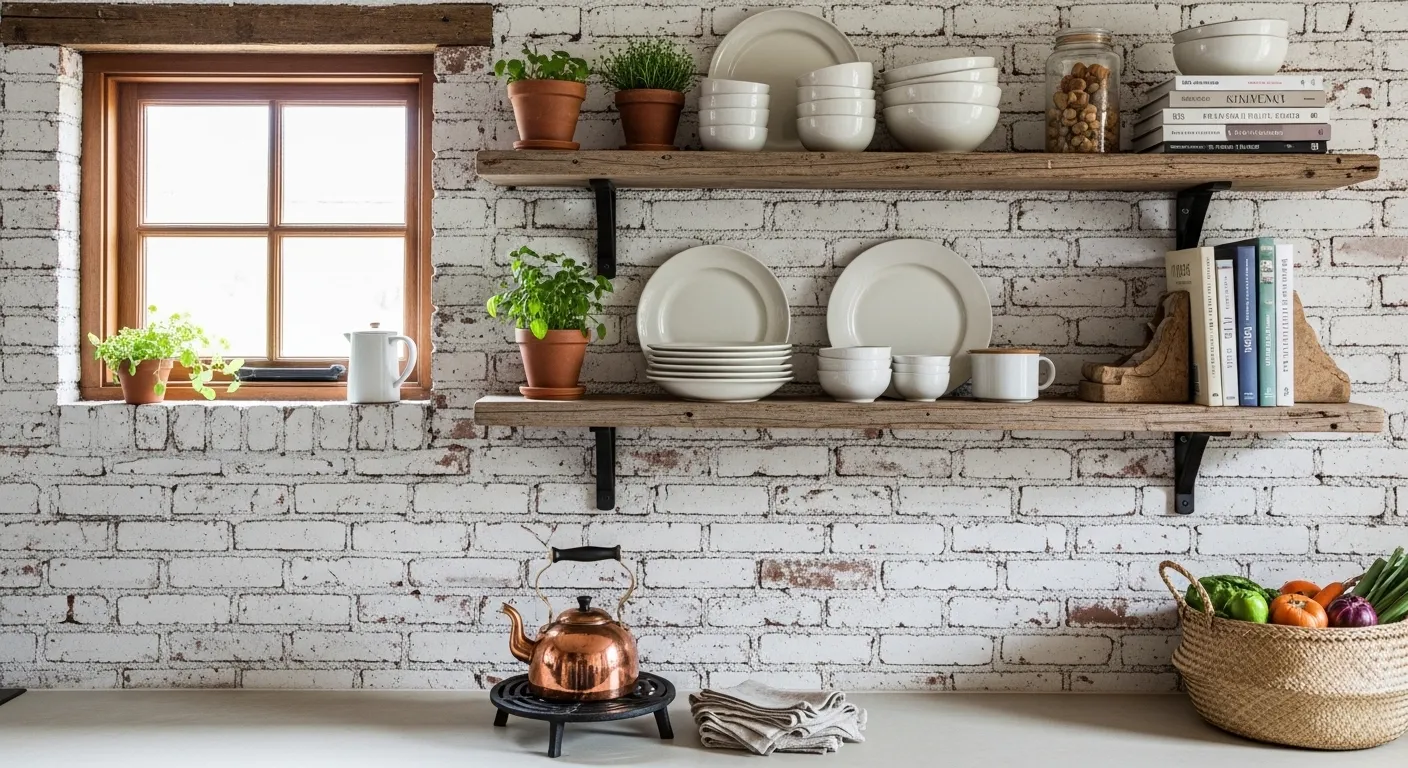
Open shelving is a staple of farmhouse design because it encourages a relaxed, accessible lifestyle. Instead of heavy upper cabinets, using thick planks of reclaimed wood allows you to display your favorite dishes and glassware. The beauty of reclaimed timber lies in its history—each shelf might feature original nail holes, knots, and a weathered patina that adds instant “soul” to a new kitchen. These shelves break up the visual weight of the cabinetry and provide an opportunity to layer in different textures, such as woven baskets or ceramic crocks. It creates a space that feels curated and artistic rather than strictly utilitarian.
Where to apply: Place shelves on either side of the range hood or above a coffee station for easy access to mugs. Small-space applicability: Removing upper cabinets in favor of floating shelves can make a narrow kitchen feel much wider and more open. Overall feeling: Casual, breezy, and warm; it turns your everyday plates and bowls into a beautiful wall display.
Pro Tip: Use matte black or raw steel brackets to give your wooden shelves a slightly industrial, high-end farmhouse edge.
4. Natural Butcher Block Countertops

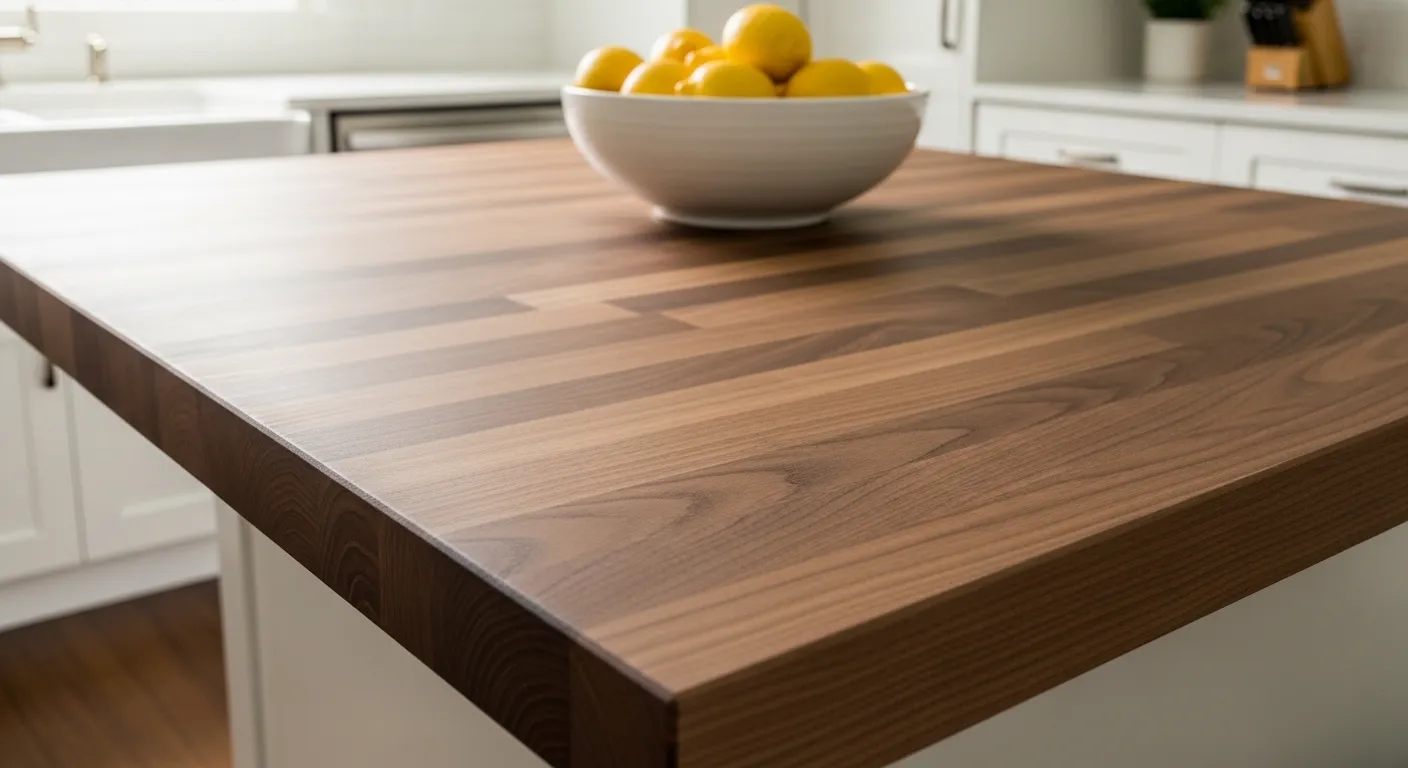
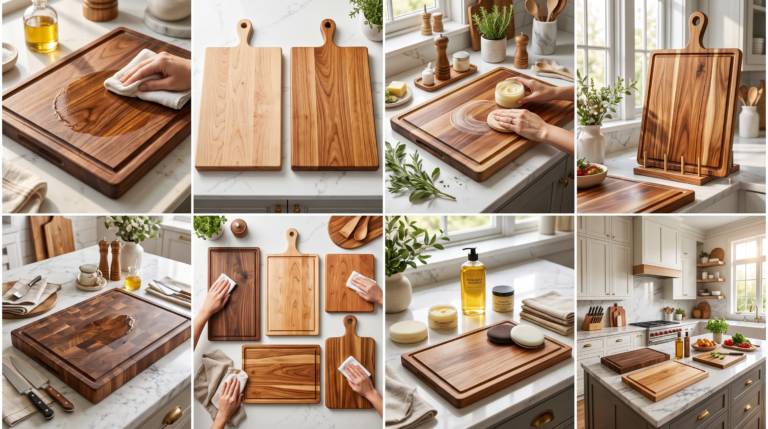
Bringing the warmth of wood directly onto your work surfaces is a classic farmhouse move. Butcher block countertops, typically made from maple, walnut, or oak, provide a soft, organic contrast to cold appliances and stone walls. Unlike stone, wood countertops are “quiet” to work on and provide a warm surface to the touch, making the kitchen feel more like a workshop than a sterile lab. They age beautifully, developing a unique character over time that reflects the life lived in the home. Whether you use wood for the entire kitchen or just for the island, it adds an unmistakable sense of rustic luxury.
Where to apply: Use a butcher block for the kitchen island to create a dedicated “prep zone” that feels distinct from the rest of the counters.
Maintenance note: To keep them food-safe and beautiful, sand them lightly and apply food-grade mineral oil every few months. Color combinations: Dark walnut butcher block looks stunning when paired with light sage green or cream-colored cabinetry.
Pro Tip: Avoid installing butcher block directly around a sink unless you are committed to keeping the wood sealed and dry.
5. Exposed Ceiling Joists and Beams

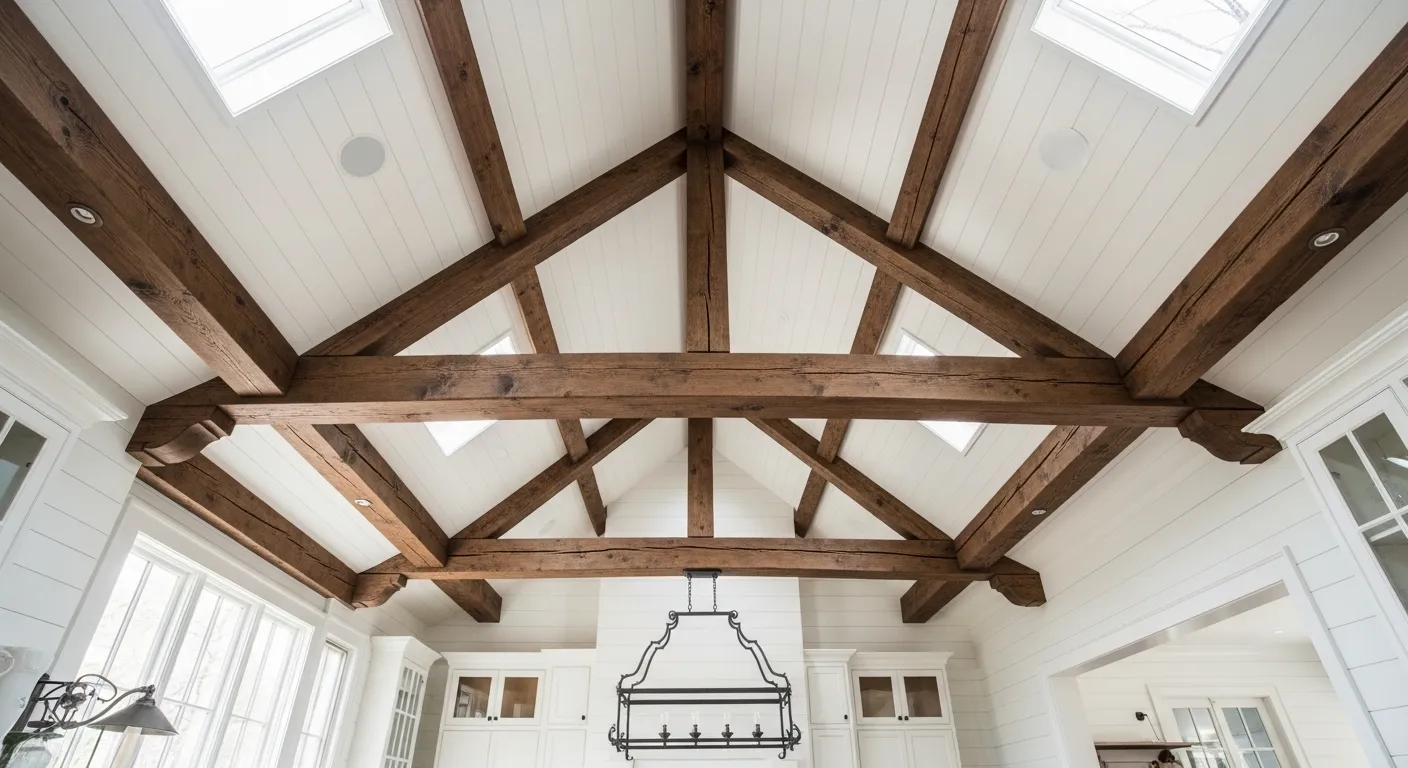
To give your kitchen an architectural “heart,” consider exposing the ceiling beams or adding decorative timber joists. In farmhouse design, these beams provide a sense of structure and height, often finished in a natural or slightly weathered stain. If your ceilings are painted a bright white, the addition of dark wooden beams creates a striking visual ladder that draws the eye upward. This feature mimics the look of old barns and farmhouses, providing an instant infusion of character to a modern build. It makes the room feel grander while simultaneously making it feel more protected and grounded.
Where to apply: Run beams across the main ceiling area, ideally aligned with the lines of your kitchen island or windows. Small-space applicability: If you have low ceilings, use thinner “rafters” painted the same color as the ceiling for a subtle, textural look.
Materials: Reclaimed oak or Douglas fir provides the most authentic texture, showing off the natural “life” of the wood.
Pro Tip: Paint the ceiling between the beams a soft “off-white” to prevent the wood from making the room feel too dark.
6. Industrial Metal Pendant Lighting

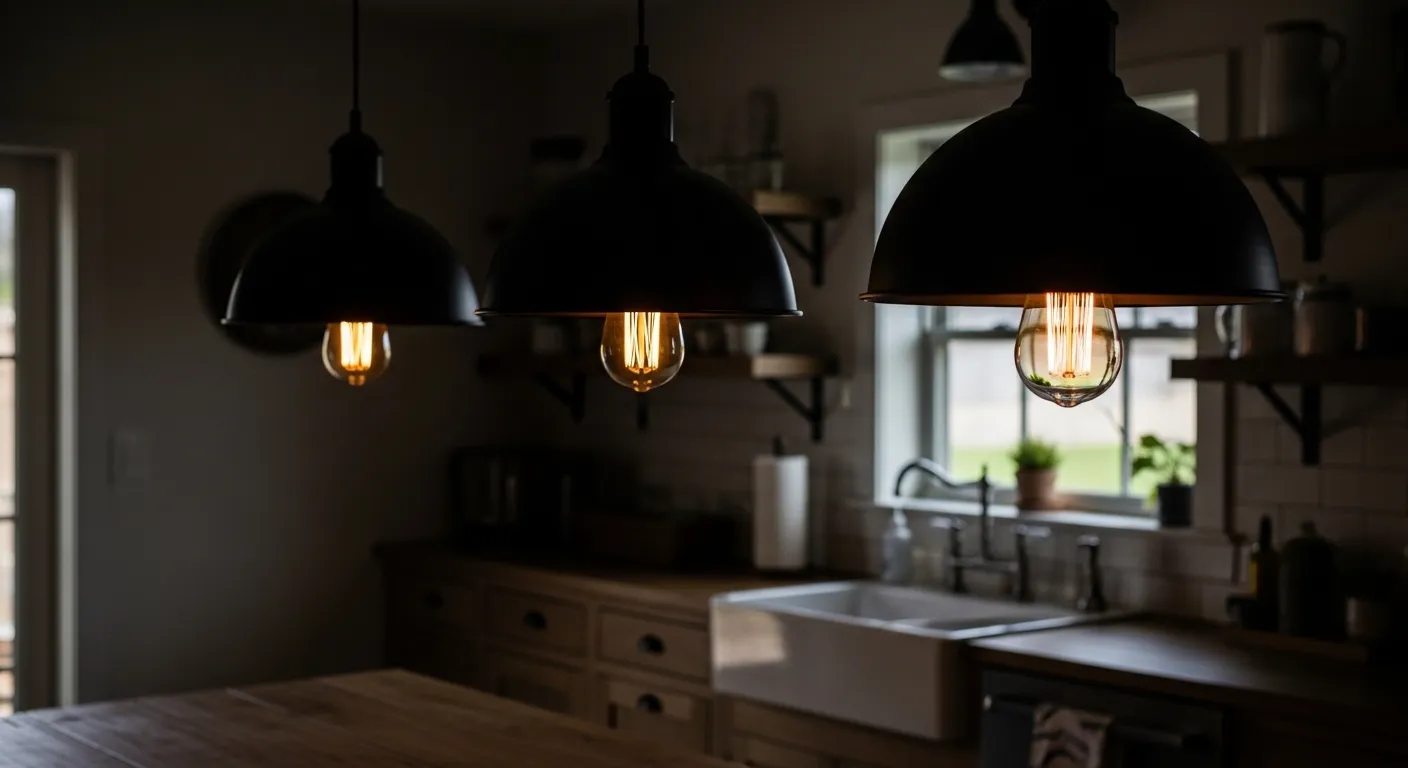
Lighting in a farmhouse kitchen serves as the “jewelry” of the room, often leaning into a vintage or industrial aesthetic. Oversized metal dome pendants in matte black, galvanized steel, or antique brass are perfect for hanging over an island. These fixtures provide focused task lighting while adding a touch of rugged, “factory-farm” charm to the space. Look for details like exposed bolts, chain links, or braided cords to enhance the rustic feel. The contrast between the cold metal of the lights and the warm wood of the countertops creates a balanced, sophisticated look that is a hallmark of the modern farmhouse trend.
Where to apply: Hang a pair or a trio of pendants over the kitchen island, ensuring they are spaced evenly for a balanced look.
Everyday usability: Metal shades are easy to wipe clean of kitchen grease and dust, making them a practical choice for high-use areas.
Pro Tip: Use Edison-style filament bulbs to add a warm, amber glow that enhances the vintage, cozy feel of the fixtures.
7. Sliding Barn Doors for the Pantry

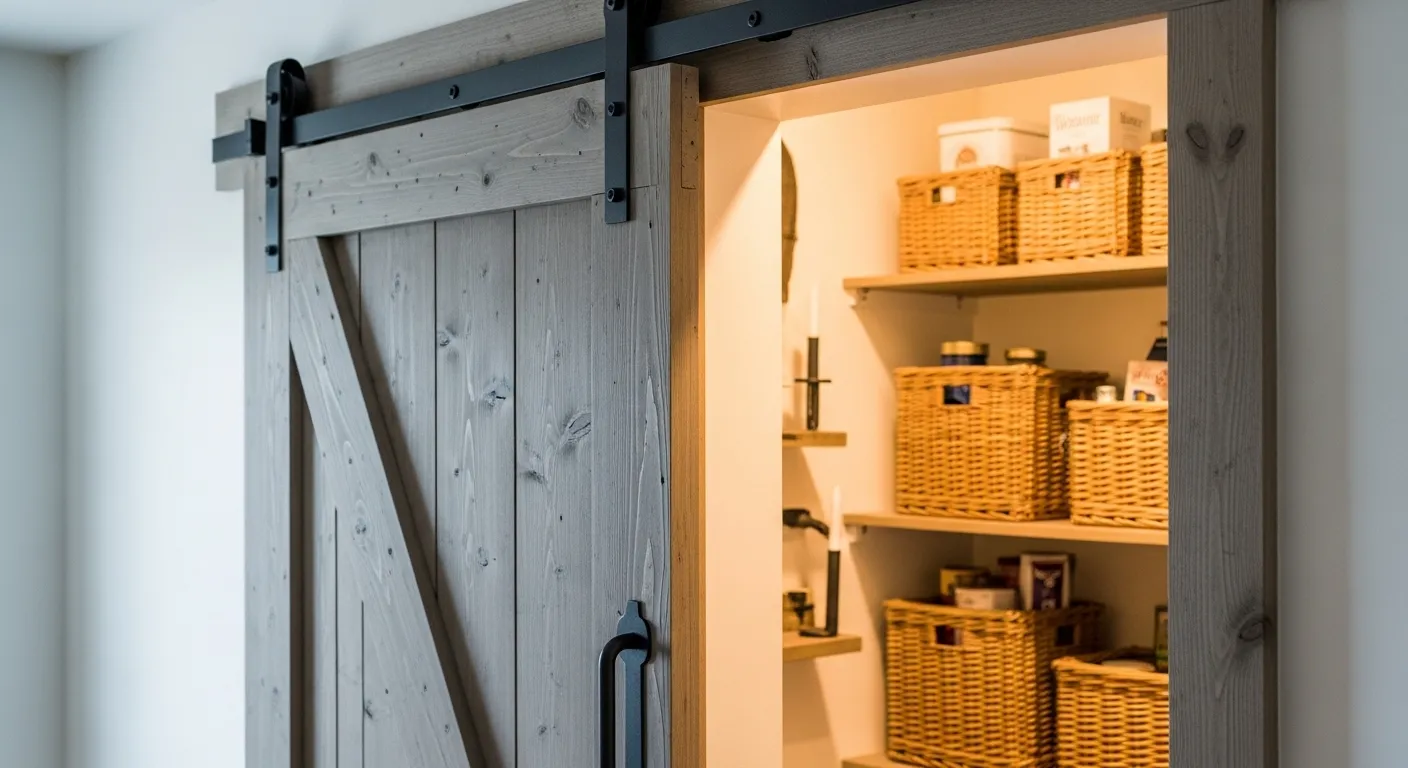
The sliding barn door is a functional piece of art that saves space while adding massive amounts of rustic character. Instead of a swinging door that takes up floor space, a barn door glides along a black iron track, making it a perfect solution for a pantry or a laundry room off the kitchen. You can use reclaimed wood for a very rustic look, or a painted “X-brace” door for a more polished farmhouse vibe. The heavy hardware and the rhythmic sound of the door sliding add a tactile, satisfying element to the kitchen’s daily use. It serves as a large-scale focal point that reinforces the country theme.
Where to apply: Use for the main pantry entrance or to hide a small mudroom or “messy kitchen” area from view. Small-space applicability: Because they slide flat against the wall, barn doors are excellent for narrow hallways where a swinging door would block traffic.
Overall feeling: Sturdy, clever, and nostalgic; it brings a piece of the outdoors inside in a very stylish way.
Pro Tip: Ensure you have enough wall space on one side of the opening for the door to slide completely clear of the entrance.
8. Mixed Metal Finish

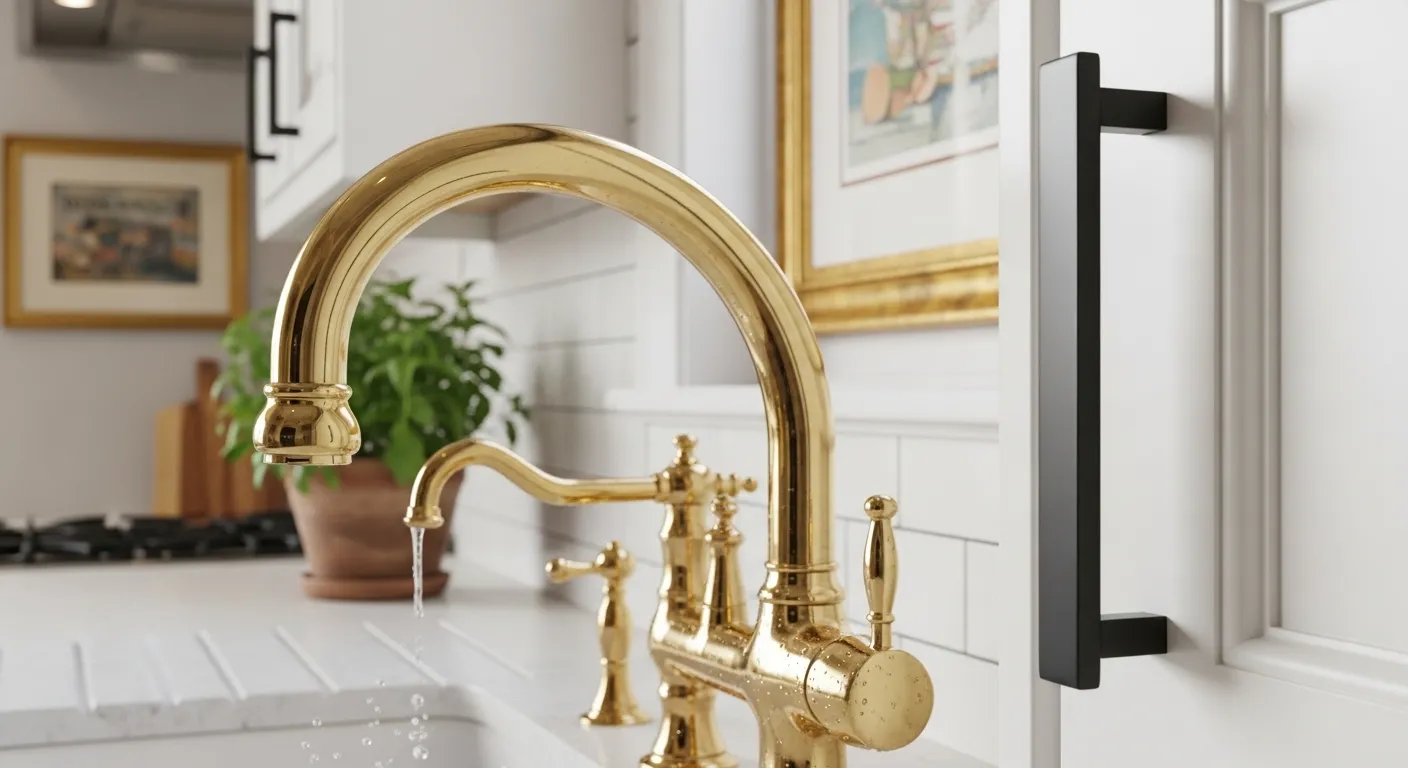
One of the secrets to a “human” and “lived-in” farmhouse kitchen is the art of mixing metals. Instead of having every handle and faucet match perfectly, a farmhouse kitchen looks best with a curated blend. For example, you might have a polished nickel faucet paired with matte black cabinet pulls and antique brass light fixtures. This “collected over time” look prevents the kitchen from feeling like a sterile showroom. The key is to keep a consistent “weight” to the metals—choose finishes that feel substantial and high-quality. This layering of metals adds depth and sophistication, making the design feel more organic and authentic.
Where to apply: Use one metal for your “fixed” plumbing and a different one for your “movable” cabinet hardware. Maintenance & Durability: Matte black and oil-rubbed bronze are excellent at hiding fingerprints compared to shiny chrome or gold.
Texture: Combine smooth polished surfaces with “brushed” or “hammered” finishes to create a rich, tactile experience.
Pro Tip: Limit yourself to three different metal finishes to keep the look intentional rather than chaotic.
9. Vintage-Inspired Tile Backsplash

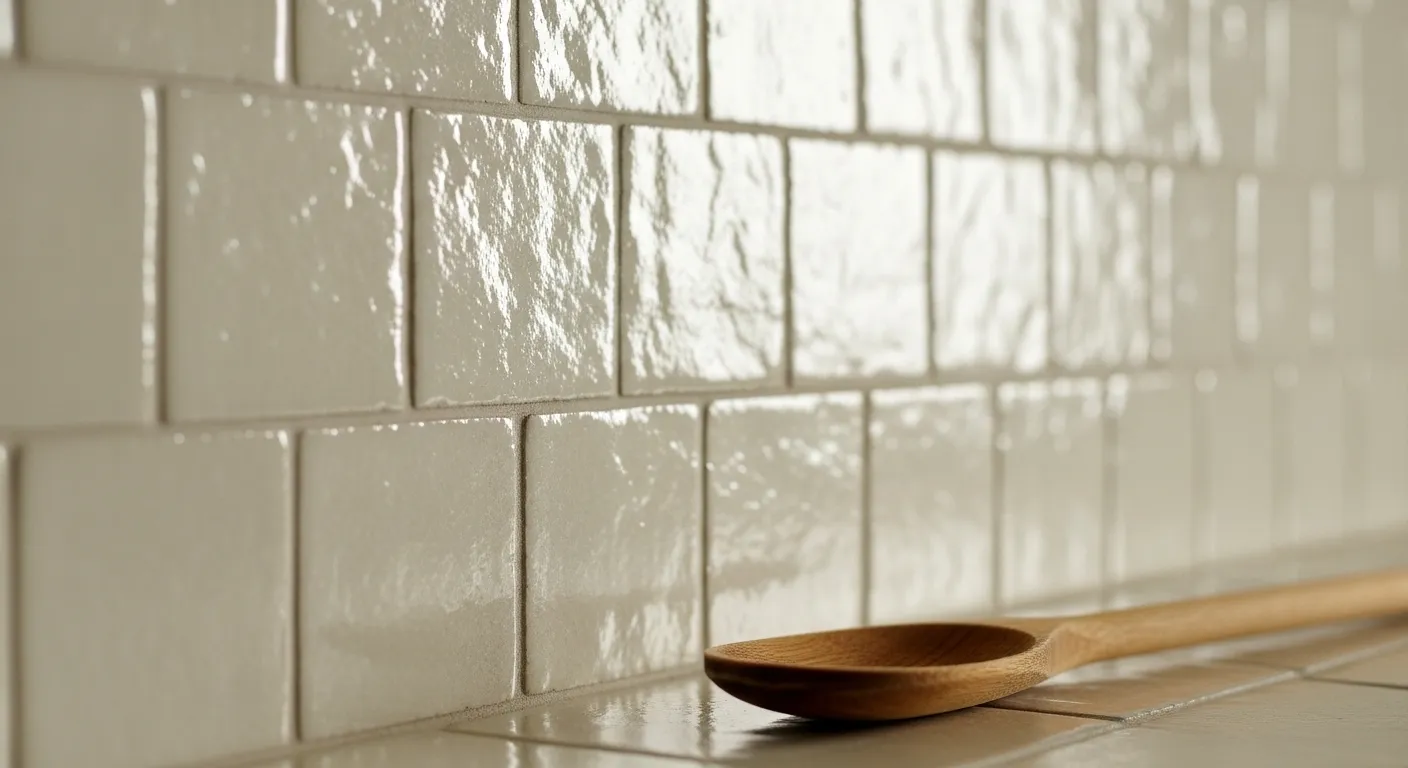
While many farmhouse kitchens use classic white subway tile, adding a vintage or “hand-pressed” tile backsplash can elevate the entire design. Look for “Zellige” or “hand-made” tiles that have slight variations in color and shape. These imperfections catch the light in different ways, creating a shimmering, textured surface that feels much warmer than flat machine-made tiles. If you want more pattern, a soft gray and white cement tile with a subtle botanical or geometric design can add a touch of “European farmhouse” charm. The backsplash is the perfect place to introduce a bit of soft color—like sage green or dusty blue—without overwhelming the neutral palette.
Where to apply: Install from the countertop to the bottom of the shelves, or take it all the way to the ceiling behind the stove.
Overall feeling: Artistic, soft, and historical; it adds a layer of “jewelry” to the wall that feels both clean and old-world.
Pro Tip: Use a slightly darker grout color (like light gray) with white tiles to make the pattern pop and hide kitchen grime.
10. Large Communal Kitchen Island

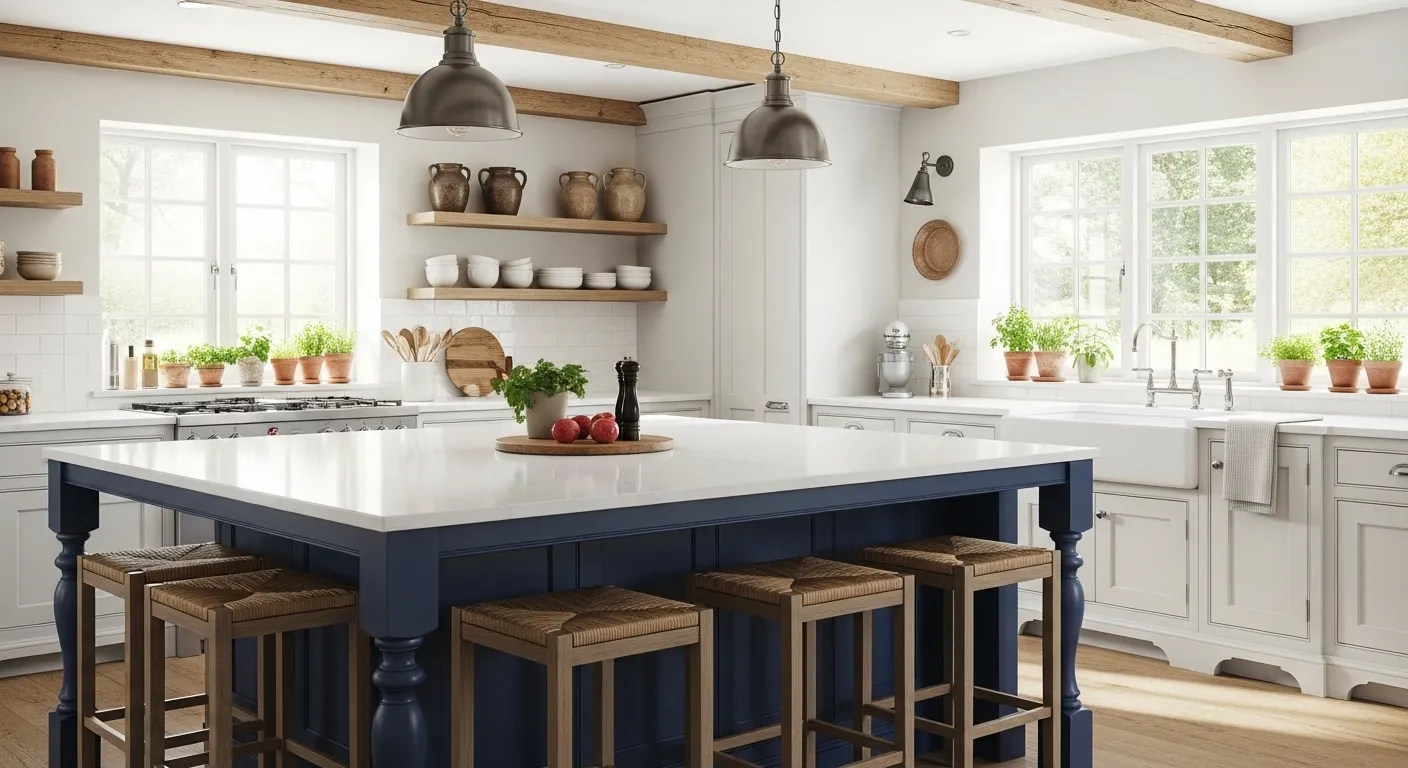
In a farmhouse, the kitchen is the hub of the home, and a large communal island is the heart of that hub. Often designed to look like a separate piece of furniture, these islands usually feature a different color or wood finish than the perimeter cabinets. Look for islands with “turned” legs, open shelving on the ends for cookbooks, and plenty of “overhang” for seating. This is where the family gathers for breakfast, where kids do homework, and where friends hang out during a party. The island should feel solid and inviting, serving as both a massive workspace and a social anchor for the entire house.
Where to apply: Position in the center of the kitchen with at least 42 inches of clearance on all sides for easy movement. Real-home applicability: If you don’t have room for a built-in island, a vintage harvest table can serve the same purpose with even more rustic charm.
Materials: A stone top on a wooden base provides a great mix of “cool” work surface and “warm” furniture feel.
Pro Tip: Add a built-in “trash pull-out” or microwave drawer to the island to keep the main counters clear of clutter.
11. Antique-Style Range or Hood

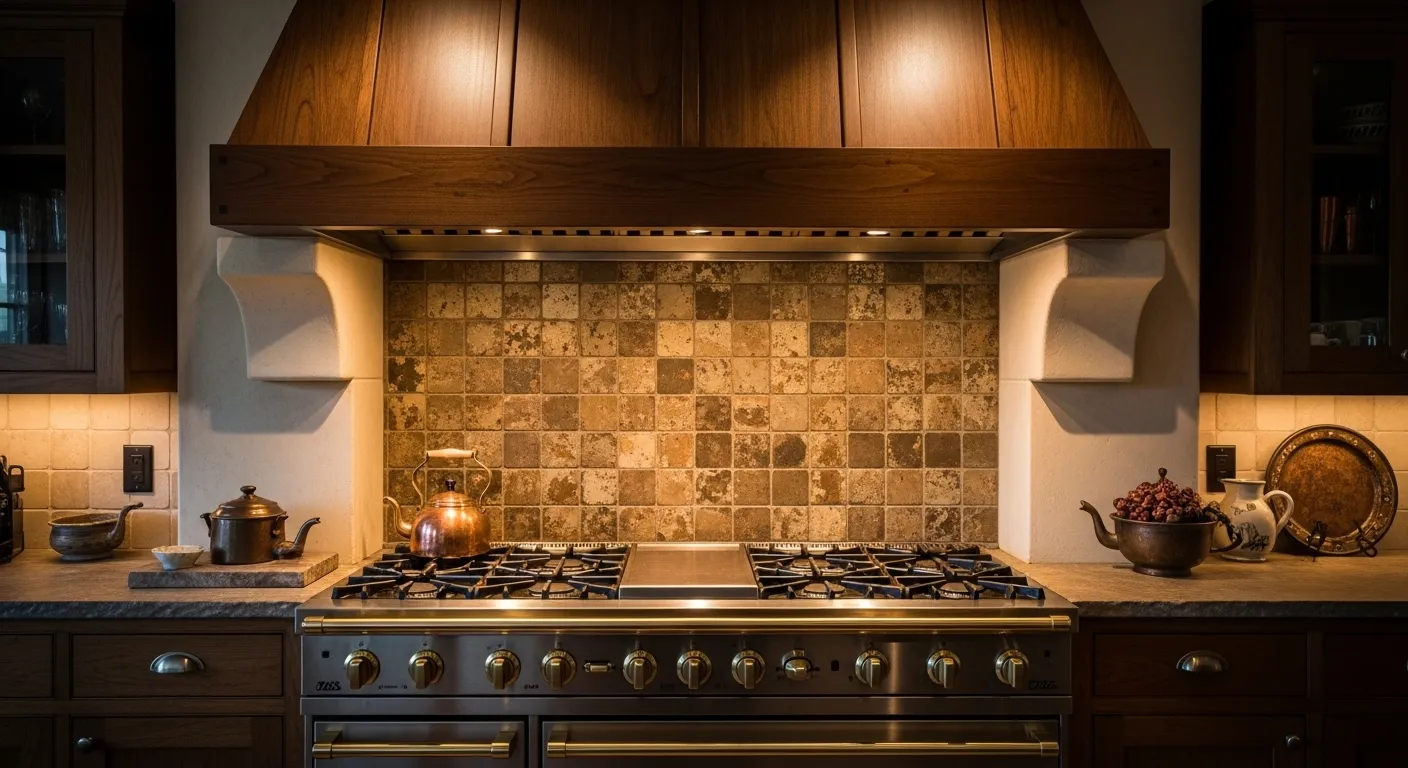
The cooking area should feel like the “hearth” of the farmhouse. Incorporating a range with a vintage silhouette—think brass knobs and a heavy, matte finish—instantly grounds the room in tradition. If a new vintage-style range isn’t in the budget, you can achieve the look with a custom wooden range hood. A large, boxy hood finished in reclaimed wood or painted to match the island creates a powerful architectural focal point. It draws the eye to the center of the room and the Timeless Spanish Style idea of the kitchen as a place of warmth and nourishment. Pair it with a simple pot filler faucet for a professional, high-end country touch.
Where to apply: Center the range on the main wall to create a symmetrical, balanced focal point in the room.
Maintenance: Wooden hoods should be finished with a heat-resistant, wipeable sealant to protect them from steam and grease.
Pro Tip: Use a “mantel-style” hood with a small ledge to display antique spice tins or small framed art pieces.
12. Woven and Natural Textures

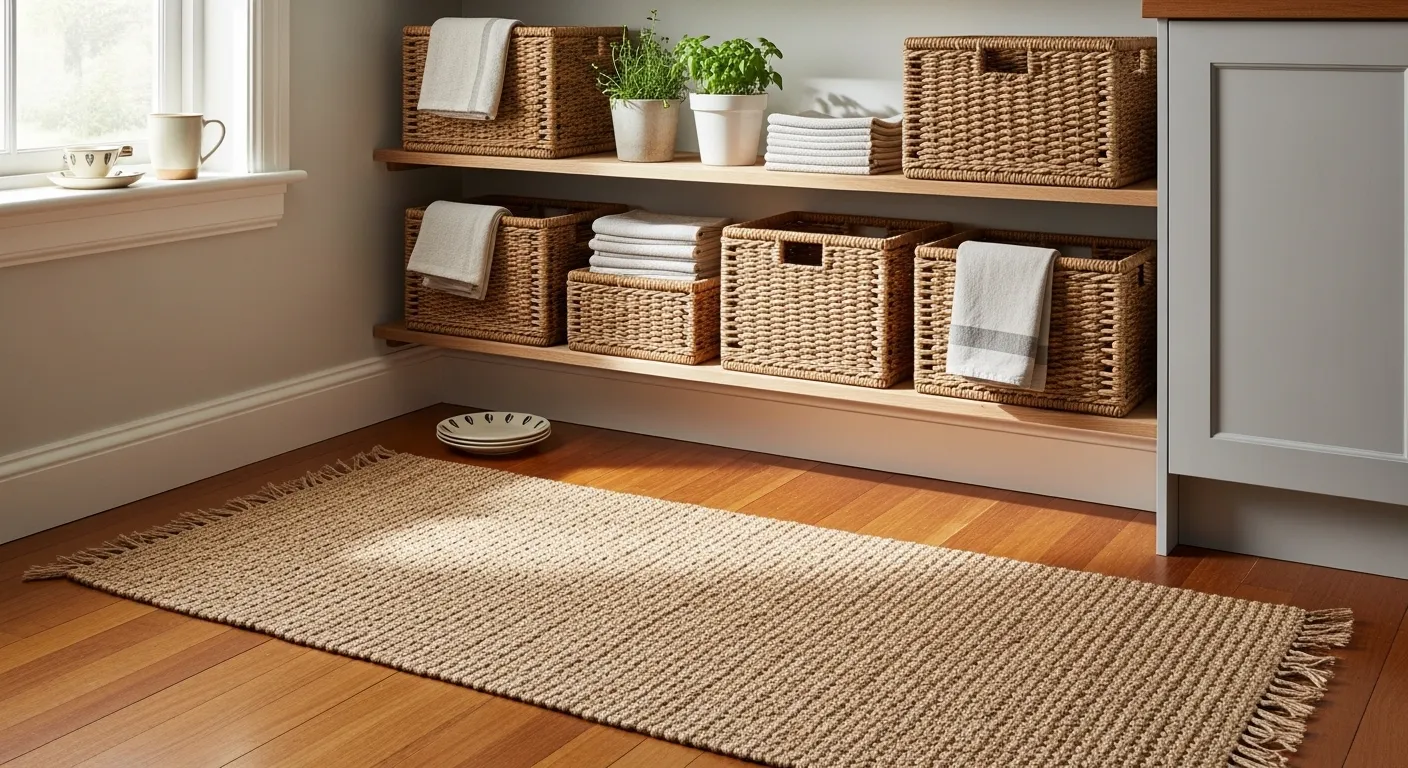
To soften the hard surfaces of a kitchen, farmhouse design relies heavily on natural fibers. Incorporating woven elements like seagrass barstools, wicker baskets, or a jute runner rug adds an essential layer of texture. These materials bring a “softness” to the room that makes it feel lived-in and comfortable. Use baskets on open shelves to hide cluttered items like snacks or linens, and choose window treatments in linen or cotton for a breezy, light-filled look. The combination of wood, stone, metal, and fiber creates a rich “sensory” environment that feels high-end yet completely unpretentious.
Where to apply: Use a long jute or sisal runner in the “galley” part of the kitchen to add warmth underfoot.
Overall feeling: Organic, soft, and relaxed; it bridges the gap between the “built” environment and the natural world.
Pro Tip: Hang a group of different-sized woven baskets on a blank wall to create a “gallery” of rustic texture.
13. Neutral Color Palette with Soft Accents
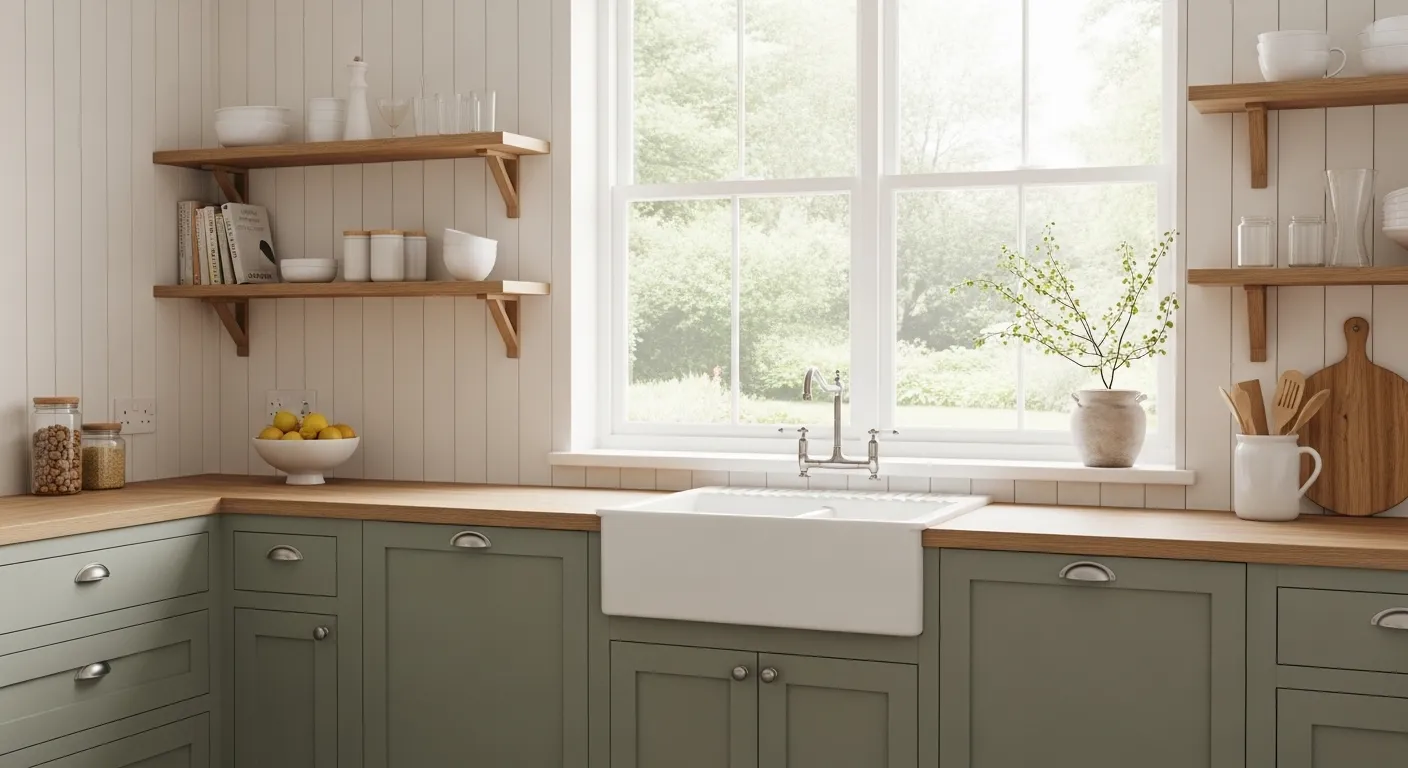
A true farmhouse kitchen is almost always rooted in a neutral palette of whites, creams, and grays. This keeps the space feeling bright and clean. However, the “rustic charm” comes from adding soft, “muddy” accent colors that feel pulled from a garden. Think of sage green, dusty blue, charcoal, or even a soft terracotta. These colors should be used sparingly—perhaps on the island, a pantry door, or the lower cabinets—to provide depth without making the room feel dark. The goal is to create a serene environment where the natural colors of wood and food can stand out. This palette feels timeless and allows you to change your decor with the seasons easily.
Where to apply: Use a “split-finish” look with white upper cabinets and a soft sage green for the lower cabinets. Small-space applicability: Keeping the walls and upper cabinets white helps a small kitchen feel much taller and more open.
Texture: Use “eggshell” or “satin” paint finishes; they have a soft glow that feels more premium than flat or high-gloss paint.
Pro Tip: Test your “whites” at different times of the day; a white that looks crisp in the morning might look yellow in the evening light.
14. Corner Breakfast Nook with a View

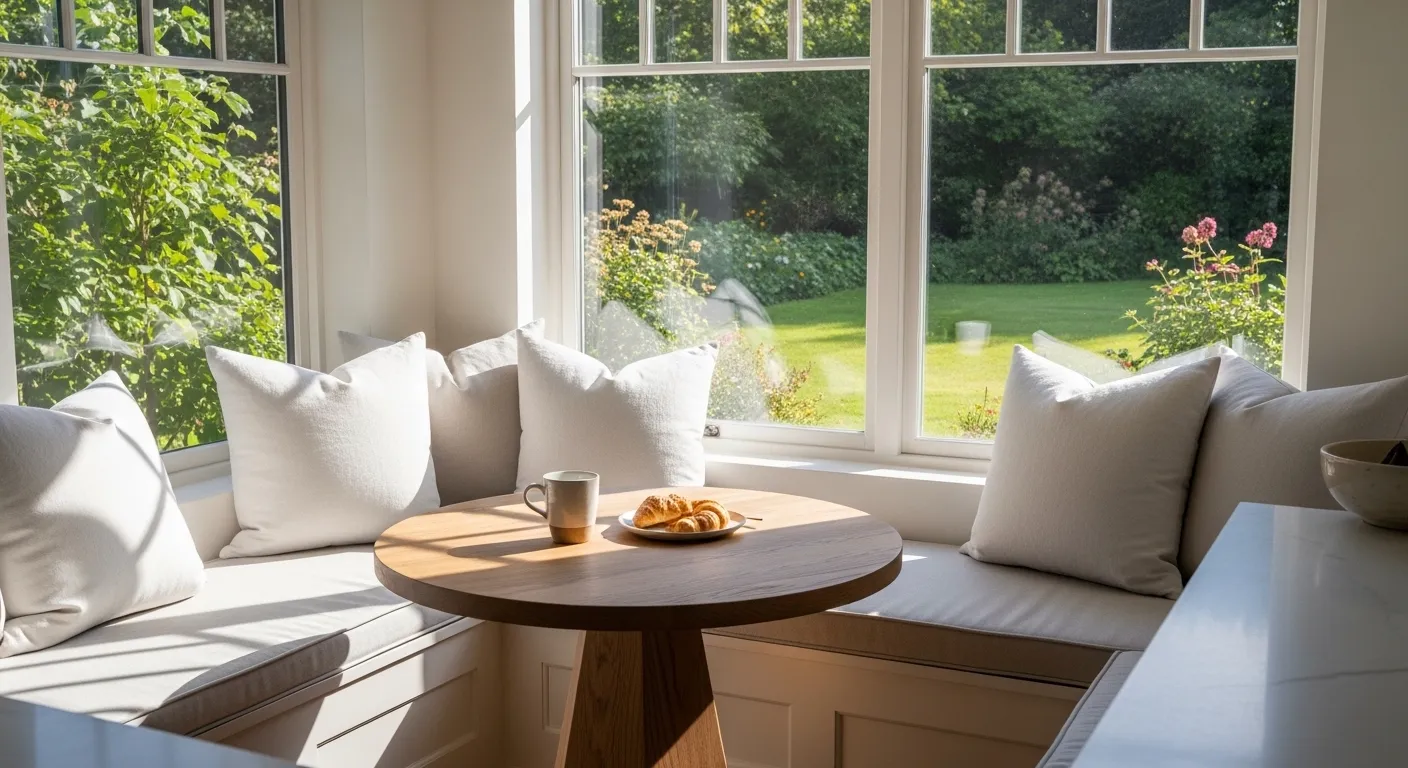
Farmhouse living is all about the “slow morning,” and nothing facilitates that better than a cozy breakfast nook. Instead of a formal dining table, a built-in corner bench (or banquette) tucked under a window creates an intimate spot for coffee and conversation. Use a rustic pedestal table to make it easy to slide in and out of the seating. Layer the benches with soft pillows and a washable throw to make it the most comfortable seat in the house. This setup not only saves space but also encourages the kitchen to be a multi-functional area where people want to spend time even when they aren’t cooking.
Where to apply: Tucked into a sun-filled corner or an unused “dead space” at the end of a cabinet run. Use a simple wooden bench against a wall with a few floor cushions if a built-in banquette isn’t an option.
Overall feeling: Intimate, sunny, and peaceful; a perfect retreat within the busy kitchen environment.
Pro Tip: Build “hinged” seats into the benches to provide extra hidden storage for seasonal linens or large serving platters.
15. Hardware with a Vintage Profile

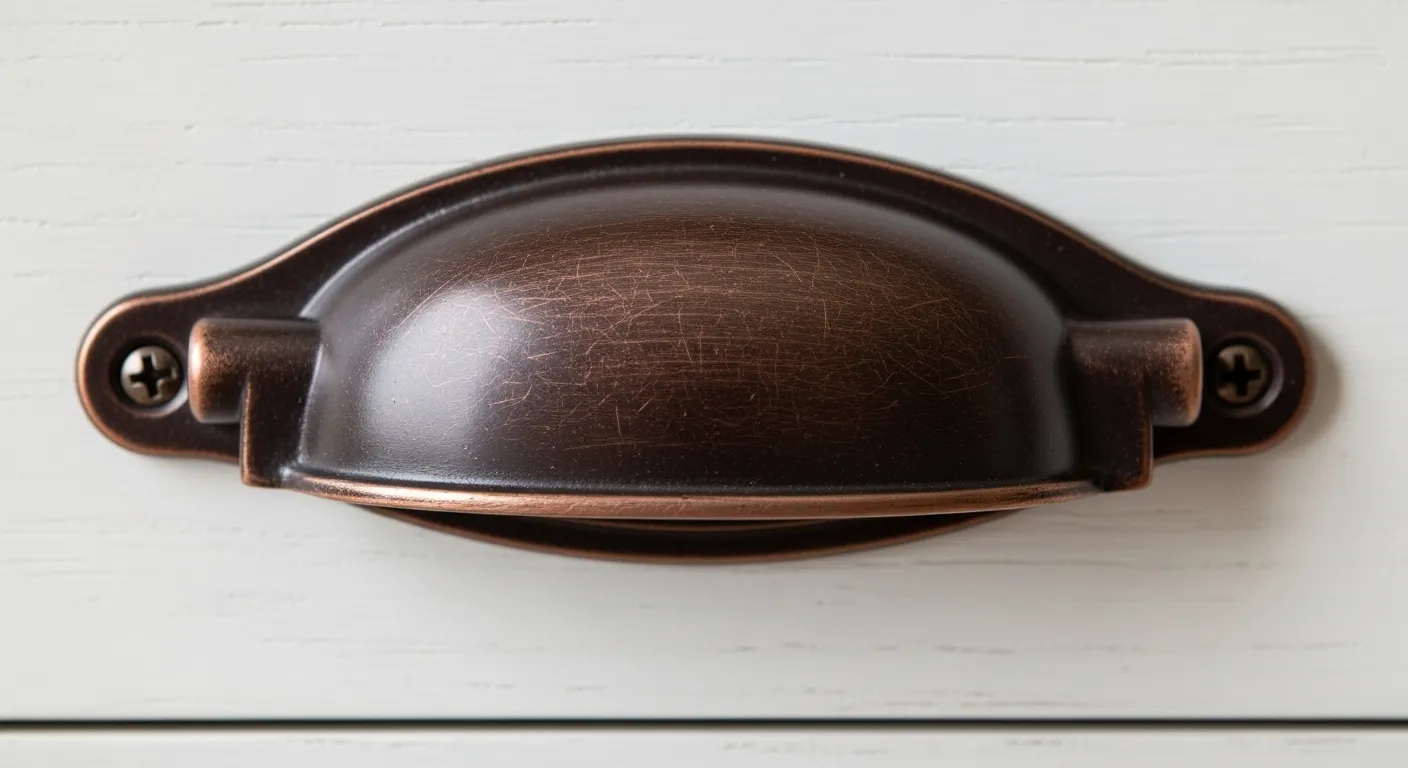
The “touch points” of your kitchen—the knobs and pulls—should feel substantial and old-fashioned. For a farmhouse look, steer away from sleek, modern “T-bar” handles. Instead, choose hardware with a vintage profile, such as “cup pulls” (also called bin pulls) for drawers and simple round “mushroom” knobs for doors. Matte black is the classic choice for a high-contrast farmhouse look, but unlacquered brass is a stunning “rustic luxury” option that will develop a beautiful patina over time. These small details act like the “buttons” on a fine coat, completing the look and giving the cabinetry a sense of historical character.
Where to apply: Use cup pulls on all lower drawers and simple knobs on all upper cabinet doors for a traditional look.
Visual Description: Imagine dark, cool-to-the-touch iron pulls that stand out sharply against creamy white wooden drawers.
Pro Tip: Mix your hardware sizes; use extra-long pulls for large pantry doors to add a custom, high-end architectural feel.
16. Window Over the Sink with Character

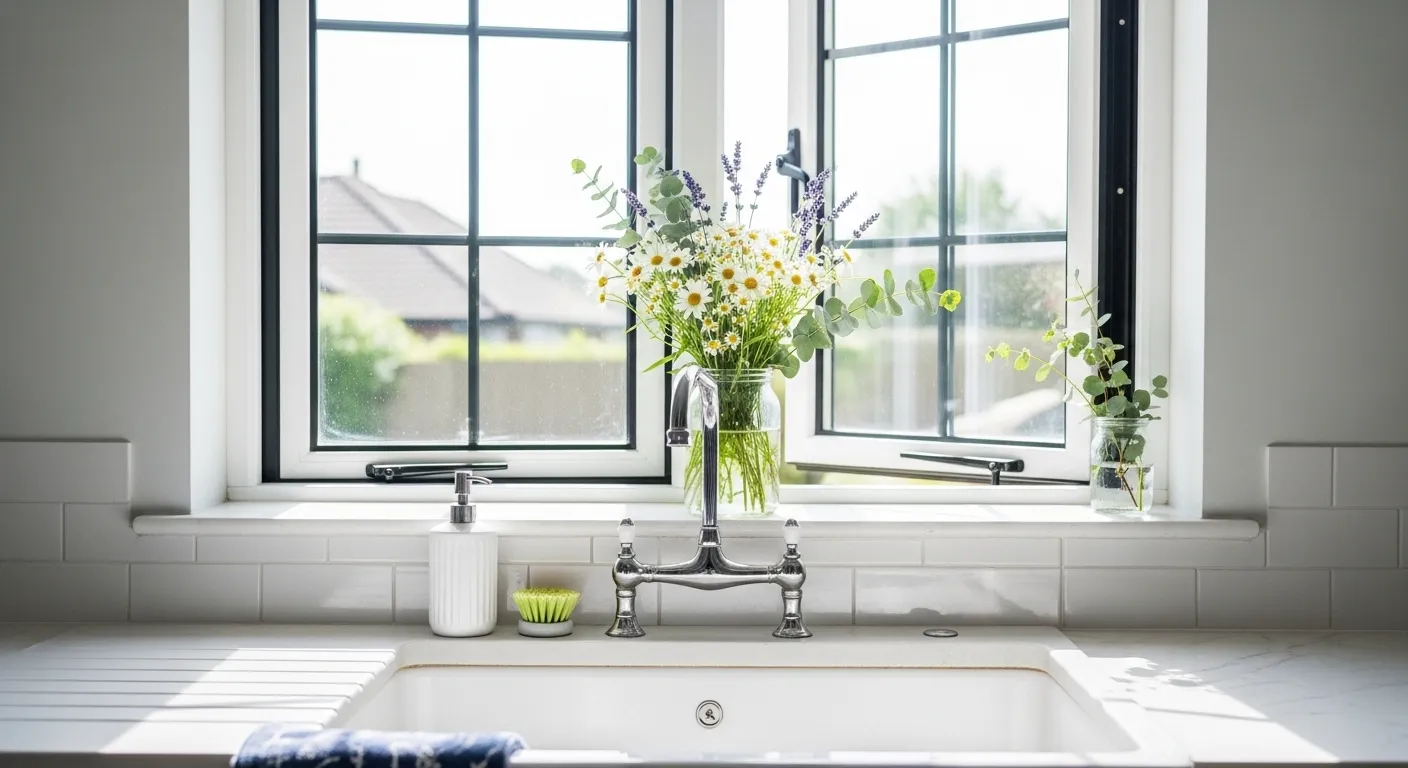
In many farmhouse designs, the area over the sink is treated as a major design opportunity. Instead of a standard modern window, consider a “black-grid” window or a vintage-style “casement” window that swings outward. This creates a beautiful frame for the view outside and floods the most-used area of the kitchen with natural light. Decorate the ledge with small potted herbs in clay crocks or a vintage glass bottle. This connection to the outdoors is a key part of the farmhouse philosophy, making the daily task of washing dishes feel more connected to nature and the changing seasons.
Where to apply: Center the window perfectly over the farmhouse sink to create a symmetrical and pleasing focal point. Real-home applicability, If you can’t change your window, add a decorative “mullion” insert to give a plain window a traditional grid look.
Overall feeling: Bright, connected, and fresh; it makes the kitchen feel larger by “extending” the view into the garden.
Pro Tip: Skip the heavy curtains; use a simple fabric “Roman shade” in a neutral linen to keep the window area clean and bright.
17. Plate Racks and Integrated Storage

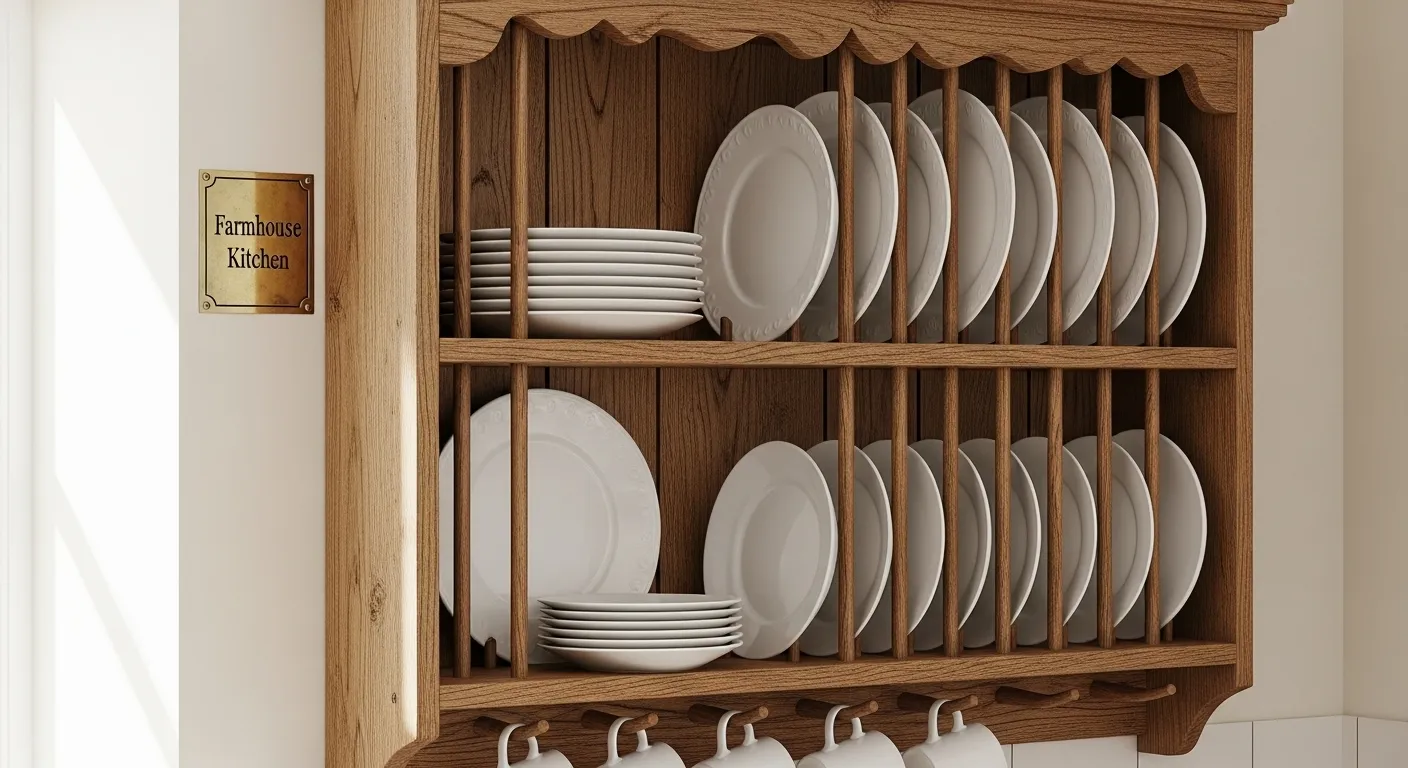
Traditional farmhouse kitchens often feature “integrated” storage that puts beautiful items on display. A built-in plate rack—where dishes are stored vertically in wooden slots—is a charming and practical feature. It makes grabbing a plate for dinner easy and turns your everyday dinnerware into a rhythmic, textural wall display. Similarly, built-in “cubby” holes for wine or wicker baskets for root vegetables add a layer of functional detail that modern flat-front kitchens lack. These features make the kitchen feel like a “working room” where everything has a designated, beautiful place.
Where to apply: Install a plate rack directly above the sink area for easy “wash-to-dry” storage. Maintenance & Durability: Ensure the rack is made of moisture-resistant wood (like teak or sealed maple) if it will be holding wet dishes.
Visual Description: Imagine a row of clean white plates standing neatly in a dark wood frame, catching the afternoon sun.
Pro Tip: Use the plate rack to display a mix of everyday plates and a few antique “statement” platters for extra visual interest.
18. Painted Brick or Stone Accents

To add a layer of “age” to a newer home, consider adding a painted brick or stone feature wall. A whitewashed brick backsplash or a stone-clad kitchen island gives the room a sense of “found” architecture, as if the kitchen were built into an old structure. Painting the brick a soft white or light gray keeps the texture prominent while ensuring the room stays bright and modern. The rough, uneven surface of the stone provides a beautiful contrast to smooth wooden cabinets and shiny appliances. It is a powerful way to add “heft” and historical weight to the room without needing a full architectural renovation.
Where to apply: Use as a backsplash, a focal wall in the breakfast nook, or as the “base” for a large kitchen island. Texture & Feeling: The rough, “crumbly” texture of the brick under a soft paint finish creates a tactile, earthy experience.
Budget-friendly alternative: Use “brick-veneer” panels that can be glued to drywall and then painted for a high-end look at a fraction of the cost.
Pro Tip: Use a “limewash” paint on the brick; it ages more naturally than standard latex paint and creates a beautiful, mottled look.
19. Apothecary-Style Glass Cabinets

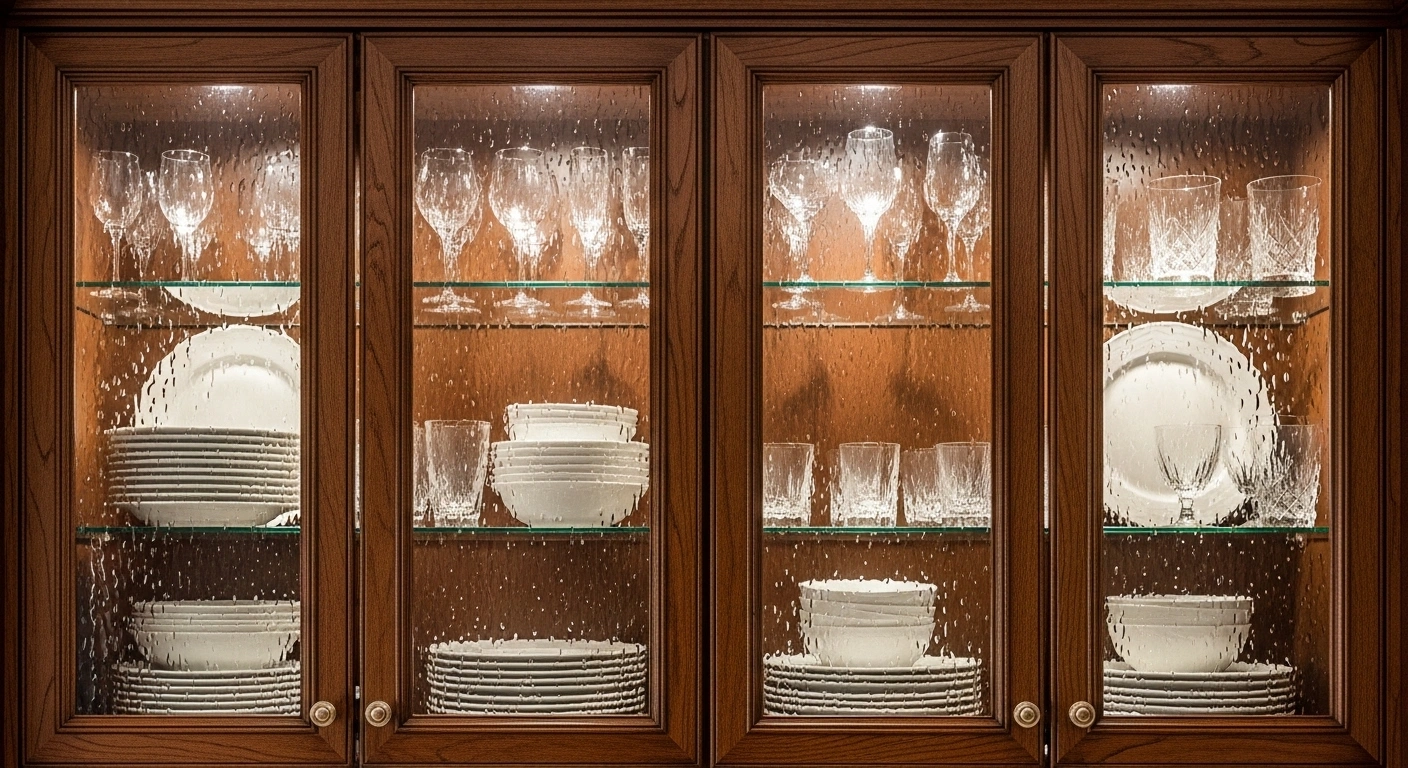
To keep a kitchen full of cabinets from feeling too heavy, incorporate a few “glass-front” or “apothecary-style” upper units. Using “seeded” or “fluted” glass adds a vintage texture that obscures the contents slightly while still allowing light to pass through. This is the perfect place to display your “best” items—heirloom glassware, white ceramic pitchers, or antique scales. Lighting the inside of these cabinets with warm LEDs creates a beautiful “lantern effect” in the evening, making the kitchen feel upscale and cozy. It adds a layer of “transparency” that makes the room feel more breathable and sophisticated.
Where to apply: Use for the highest cabinets in the room or for a dedicated “china hutch” area away from the main cooking zone.
Real-home applicability: If you have solid doors, you can often have the center panels cut out and replaced with glass by a local professional.
Overall feeling: Elegant, curated, and light; it turns storage into a display of your personal style and history.
Pro Tip: Paint the inside of the glass cabinet a contrasting color (like a soft blue or charcoal) to make your white dishes pop.
20. Lived-In Decor and Personal Touches

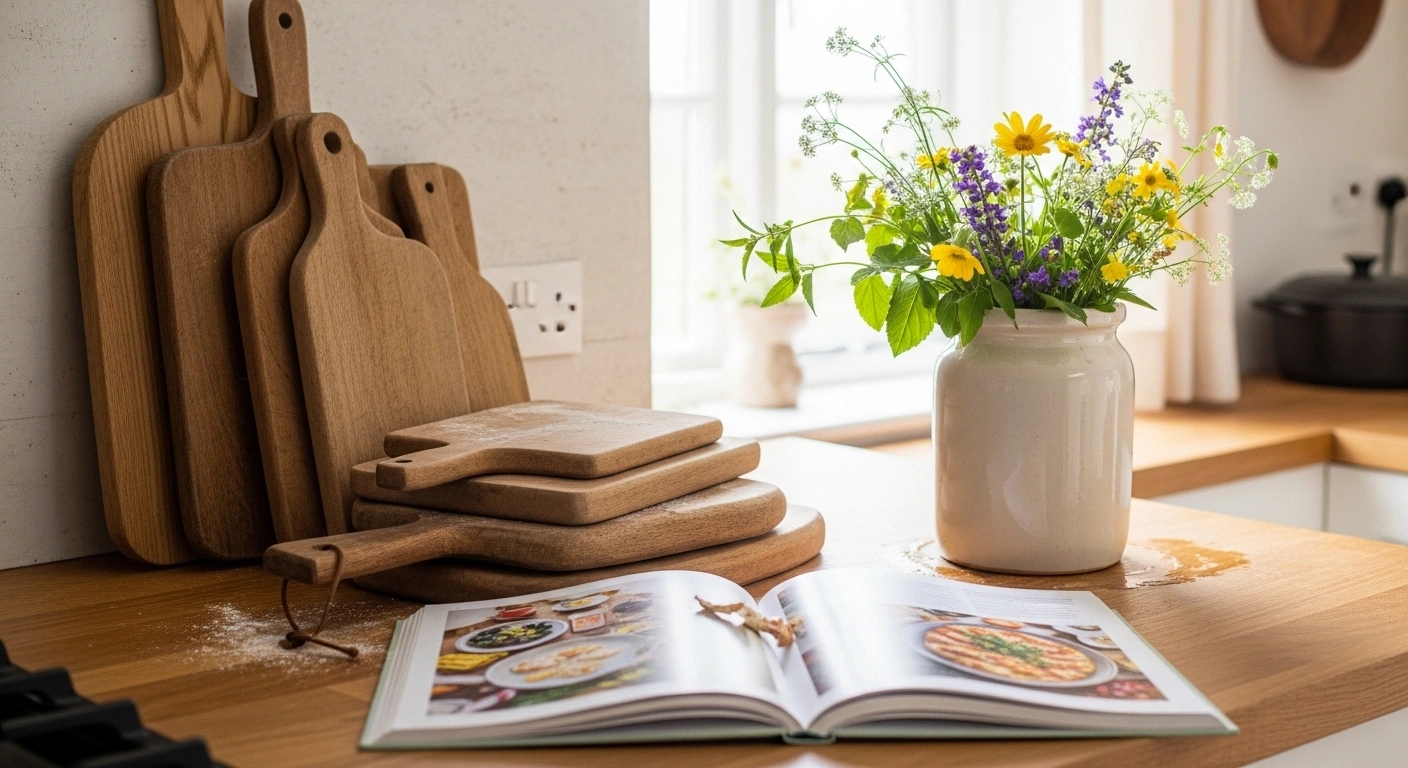
The final “ingredient” in a farmhouse kitchen is the decor that makes it feel like your home. Farmhouse design thrives on a “collected” look. Incorporate items like a vintage wooden breadboard leaning against the backsplash, a stack of antique cookbooks, or a ceramic pitcher filled with fresh wildflowers. Don’t be afraid of “clutter” as long as it is intentional and beautiful. These small, personal touches provide the “warmth” that makes people want to hang out in your kitchen. It is the opposite of a “minimalist” look; it is a “maximalist” embrace of home, family, and the joy of a well-used space.
Where to apply: Scatter these items across open shelves, the kitchen island, and the windowsill to create a “layered” look.
Overall feeling: Soulful, welcoming, and real. This is a kitchen designed for living, not just for looking at.
Pro Tip: Use “groups of three” when styling your decor (e.g., a candle, a plant, and a wooden bowl) for a professionally balanced look.
Final Conclusion
Creating a farmhouse kitchen with warm and rustic charm is about finding the perfect balance between practical function and Home Decoration beauty Ideas. By focusing on high-quality natural materials—like reclaimed wood, stone, and iron—and embracing a light, airy color palette, you can build a space that feels both modern and timeless. These 20 ideas show that farmhouse style is incredibly flexible; it can be “clean and modern” or “rugged and historical” depending on your personal taste. The most important rule is to design a kitchen that invites people in, encourages slow living, and serves as a comfortable backdrop for your family’s daily life. We hope these tips inspire you to create a kitchen that you truly love coming home to every day.