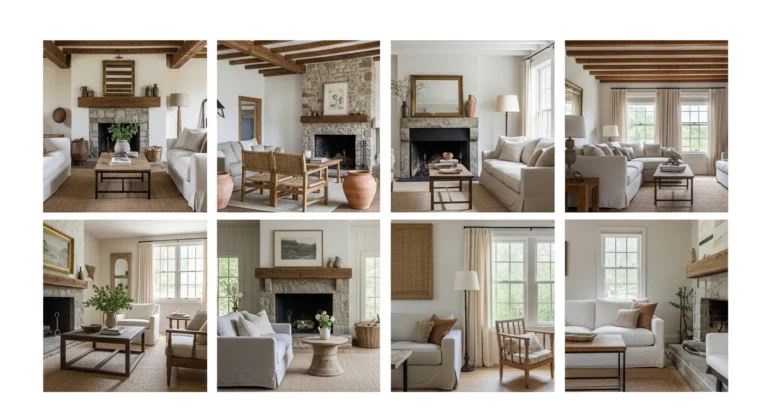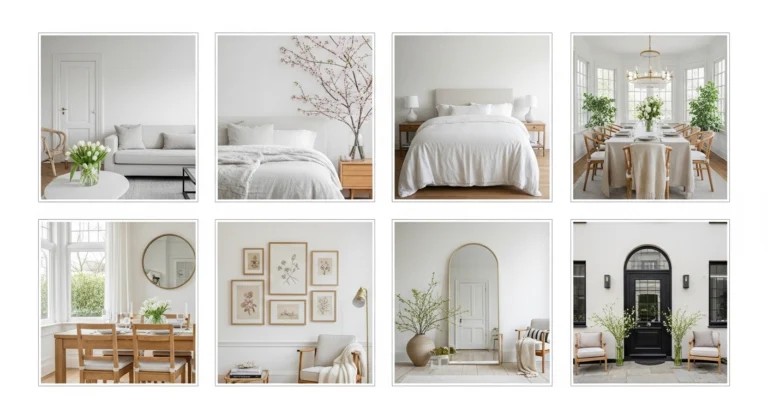
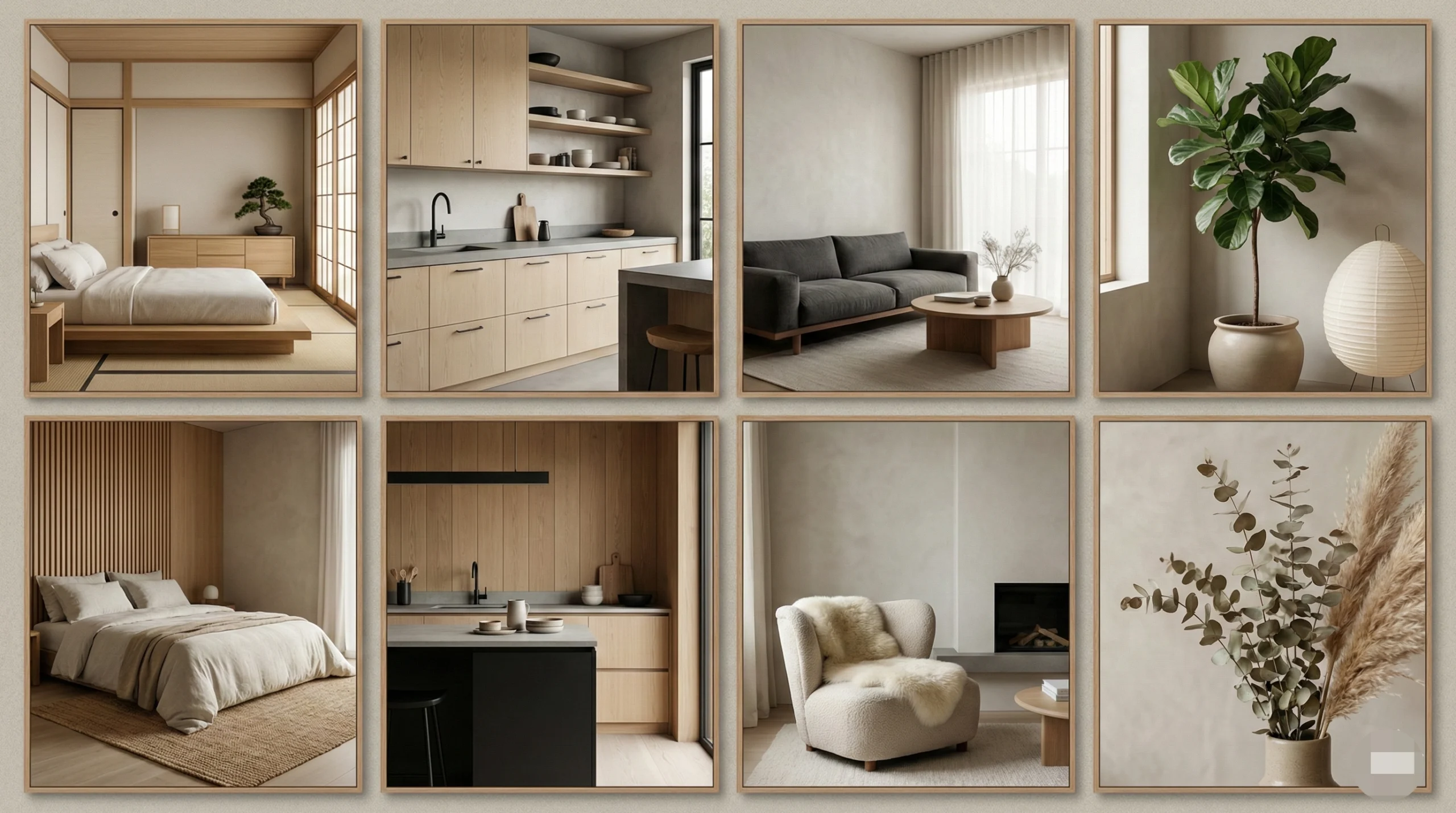
Japandi interior design blends Japanese simplicity with Scandinavian comfort to create a home that feels peaceful and functional. The goal of this style is not decoration but balance. Clean layouts, natural materials, and soft colors help reduce visual stress and make the home relaxing to live in every day. Instead of filling rooms with objects, Japandi focuses on meaningful pieces that serve a purpose. When done correctly, the space feels warm, modern, and organized at the same time.
Below are carefully explained Japandi ideas that you can easily apply in real homes, even small apartments.
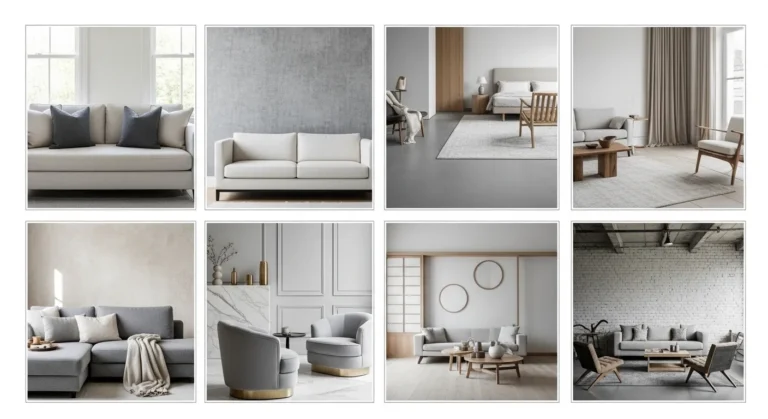
1. Neutral Earth-Tone Color Palette
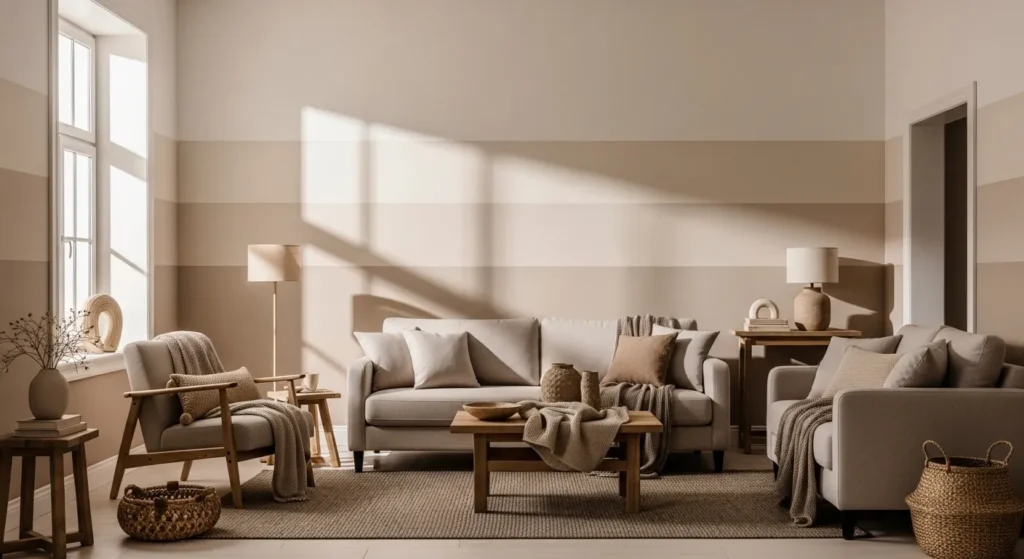
Japandi interiors always start with calm, natural colors. Shades like warm beige, cream, taupe, sand, and soft gray create a relaxing foundation for the room. These tones make walls feel gentle rather than empty and help light spread evenly across the space. Bright white or strong colors are avoided because they feel sharp and distracting. Layering similar tones keeps the design soft and harmonious.
Tip: Choose warm neutrals instead of cool whites to make the home feel comfortable.
2. Low-Height Furniture Layout
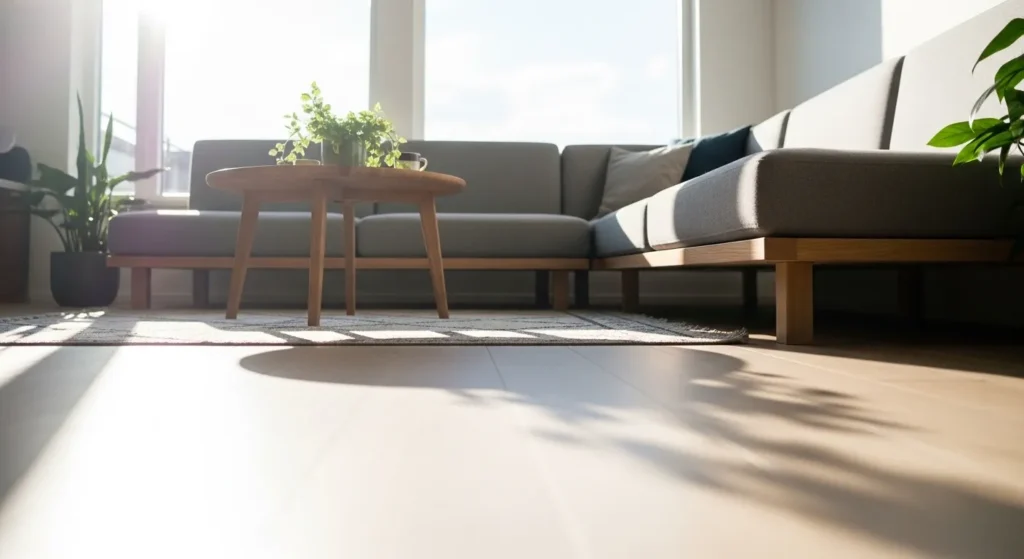
Furniture placed closer to the floor instantly creates a peaceful atmosphere. Low sofas, platform beds, and short coffee tables make the room appear more open and grounded. The visual line of the room stays clear, which helps small spaces look larger. This layout also feels more natural and relaxing for daily living. The eye moves smoothly across the space without obstacles.
Tip: Leave small walking gaps between furniture to maintain an airy layout.
3. Natural Wood Elements
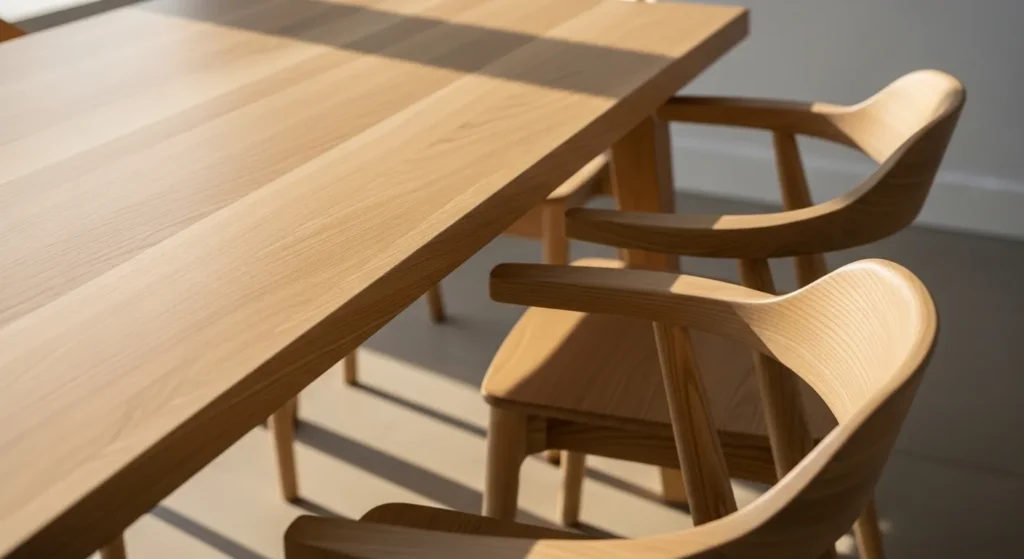
Wood is the heart of Japandi design because it adds warmth to minimal interiors. Light oak, ash, walnut, or pine furniture works beautifully in living rooms and bedrooms. Wood shelves, dining tables, and bed frames help soften modern spaces. Mixing two similar wood tones keeps the room interesting but still calm. Avoid glossy finishes so the material looks natural.
Tip: Matte or raw wood textures always feel more authentic.
4. Minimalist Wall Decor

Walls should feel intentional, not empty and not crowded. Instead of gallery walls, use one or two meaningful art pieces such as line drawings or nature prints. Thin wooden or black frames keep the design elegant. Large decorative items are unnecessary because simplicity is the focus. A single artwork can create a peaceful focal point.
Tip: Hang artwork at eye level and leave wall space around it.
5. Soft Linen and Cotton Textiles
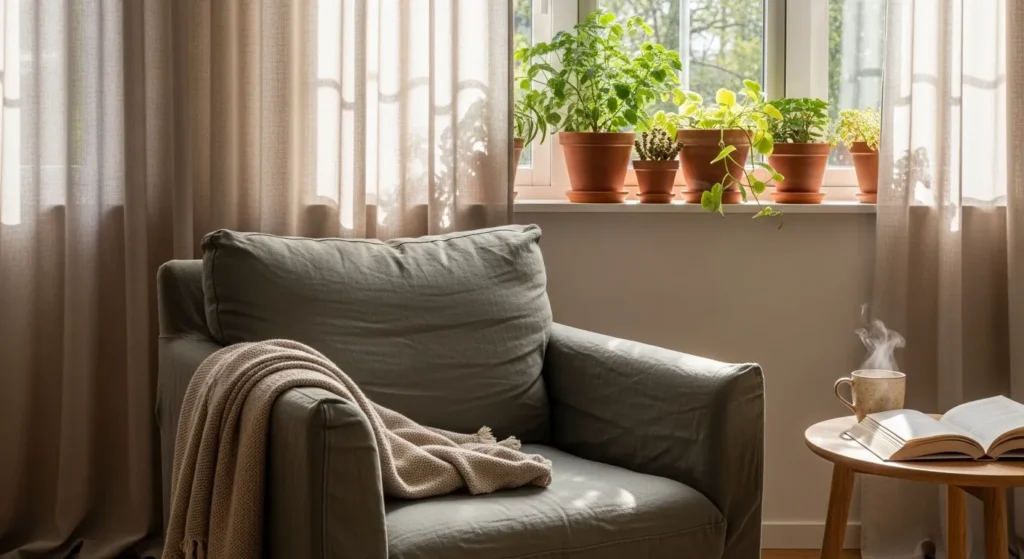
Natural fabrics bring comfort into Japandi homes. Linen curtains, cotton bedding, and woven throws add softness without clutter. These materials also improve the cozy feeling of minimal rooms. Stick to neutral shades like oatmeal, beige, and soft gray to maintain harmony. Avoid bold prints and shiny fabrics.
Tip: Slightly textured fabric adds depth without disturbing calmness.
6. Decluttered Open Space
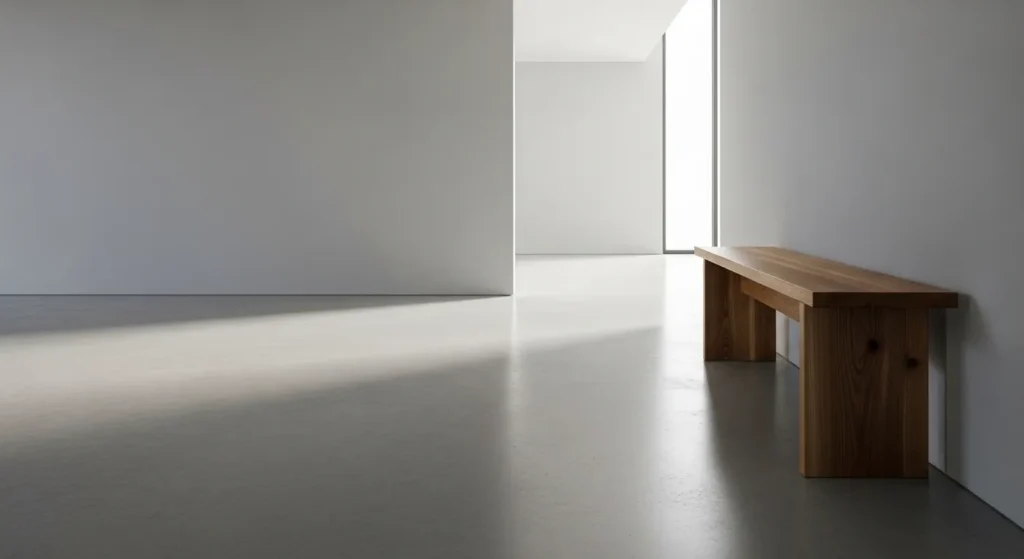
Empty space is an important design element in Japandi interiors. Rooms should never feel overcrowded with furniture or decor. Clear surfaces allow the mind to relax and improve focus. The home appears cleaner and more organized naturally. A simple layout also improves daily movement around the house.
Tip: Remove items that have no daily use or emotional value.
7. Warm Ambient Lighting
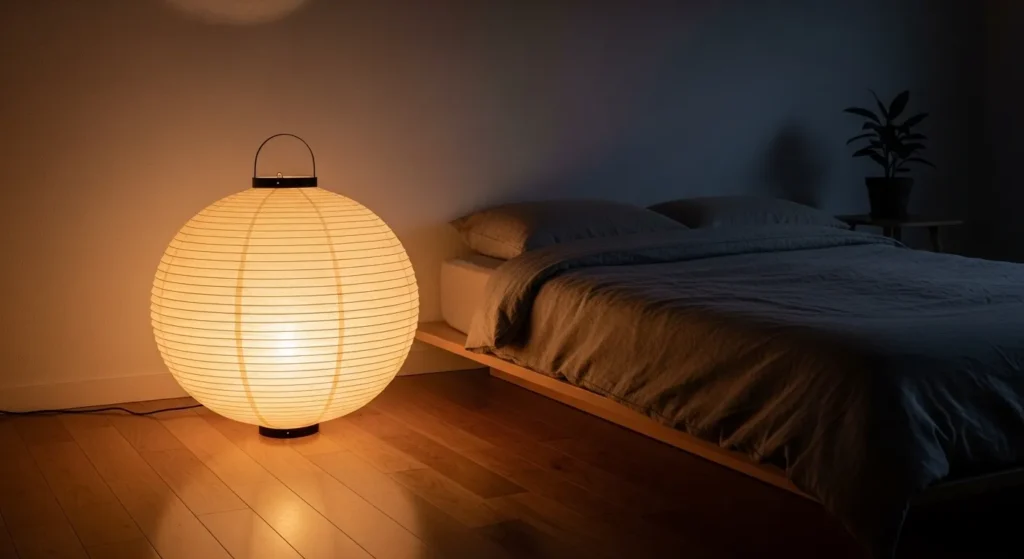
Lighting should feel soft and comfortable instead of bright and harsh. Table lamps, floor lamps, and warm bulbs create a relaxing environment during evening hours. Paper lanterns or fabric lampshades help diffuse the light gently. Overhead white lighting is usually minimized. Warm light improves mood and makes wood tones richer.
Tip: Use warm bulbs around 2700K.
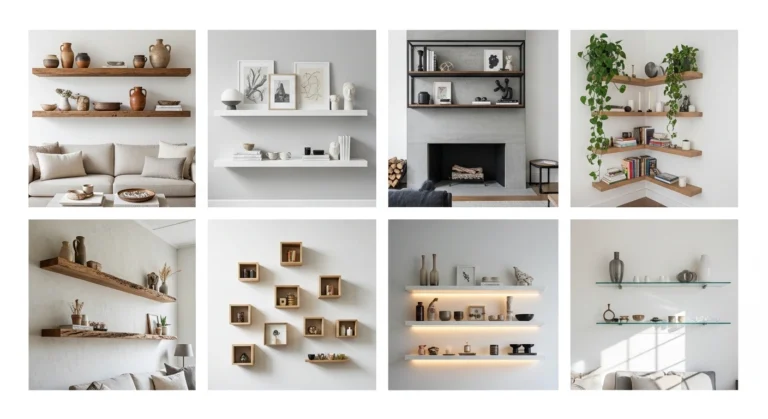
8. Simple Open Shelving
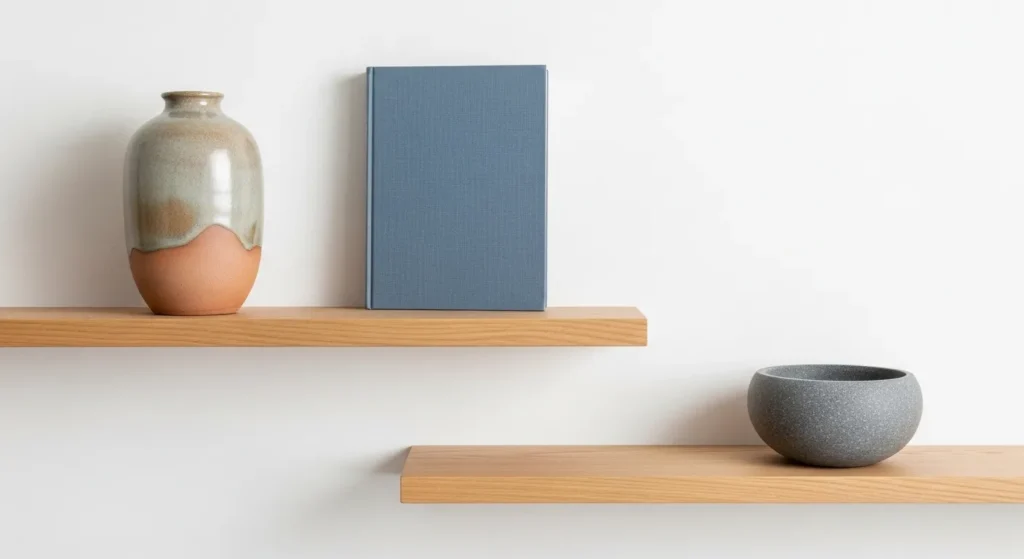
Open shelves look beautiful when styled carefully. Display only a few ceramics, books, or neutral decor items with space between them. Overfilling shelves creates clutter and removes calmness. The arrangement should feel balanced and intentional. This approach makes everyday objects part of decoration.
Tip: Keep shelf colors within the same neutral palette.
9. Indoor Plants
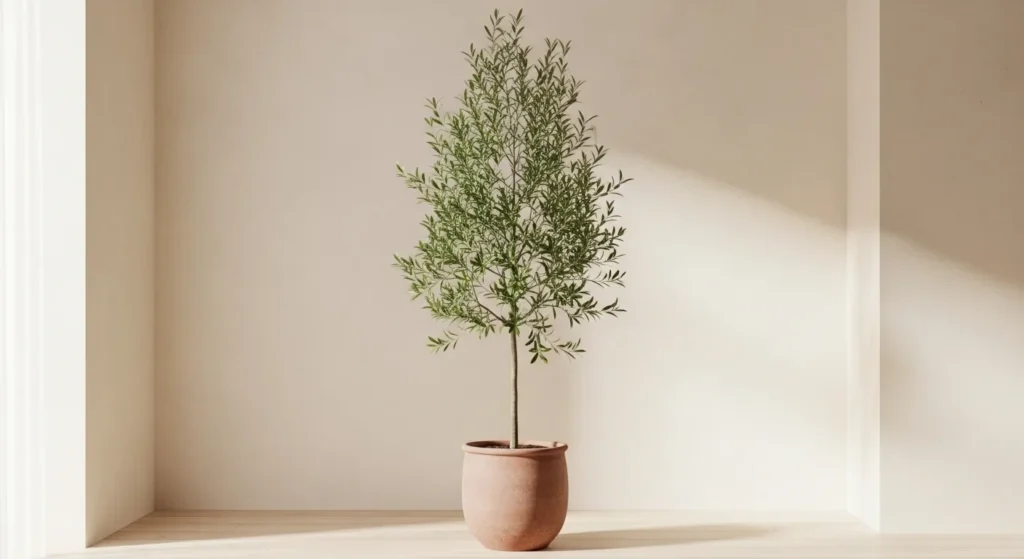
Plants add life and freshness to Japandi homes without disturbing minimalism. Choose simple greenery like snake plant, bonsai, olive tree, or ficus. Avoid overly colorful flowers because they break the calm mood. Plants connect the interior with nature and soften clean lines.
Tip: Use ceramic or clay pots in neutral colors.
10. Functional Multi-Purpose Furniture
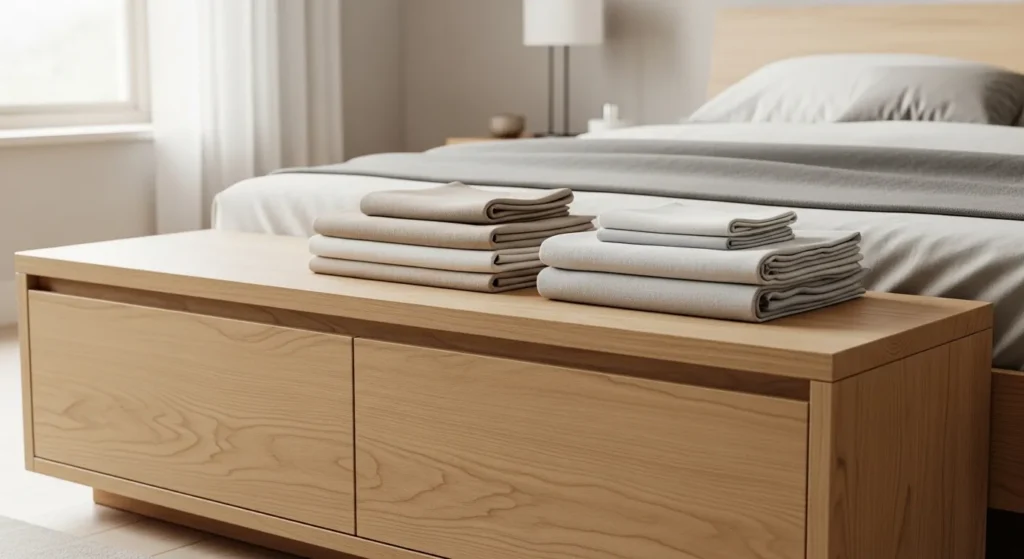
Japandi style values usefulness. Furniture should be both beautiful and practical. Storage benches, nesting tables, and hidden storage beds help keep rooms organized. Practical furniture reduces clutter and improves daily living. The space remains clean without extra cabinets.
Tip: Always choose the function first, then the decoration.
11. Natural Stone Accents
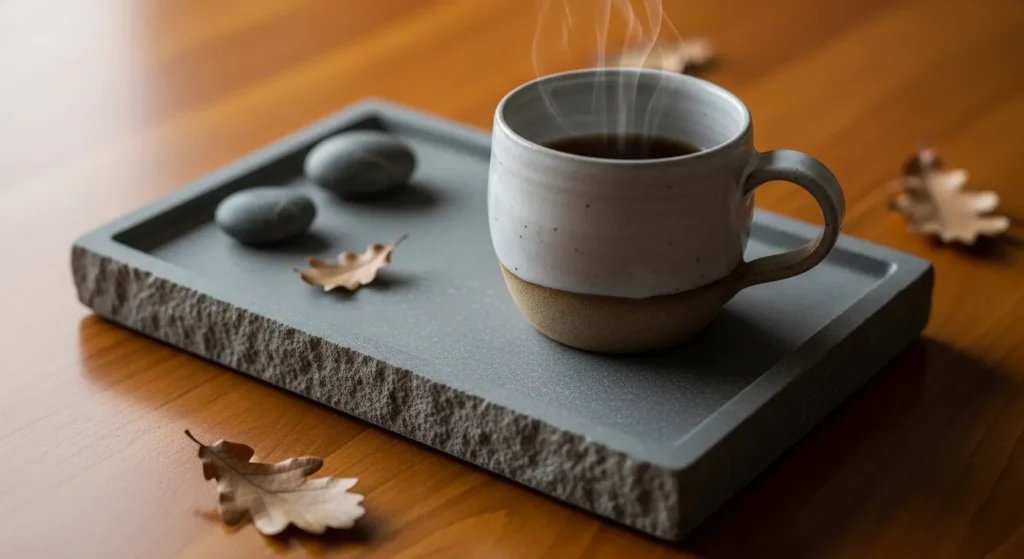
Stone surfaces add subtle texture and quiet luxury. Stone trays, countertops, and decor pieces work well with wooden furniture. The combination feels organic and balanced. Matte stone looks calmer than polished stone. Small accents are enough to enhance the space.
Tip: Use stone sparingly to maintain softness.
12. Calm Bedroom Design
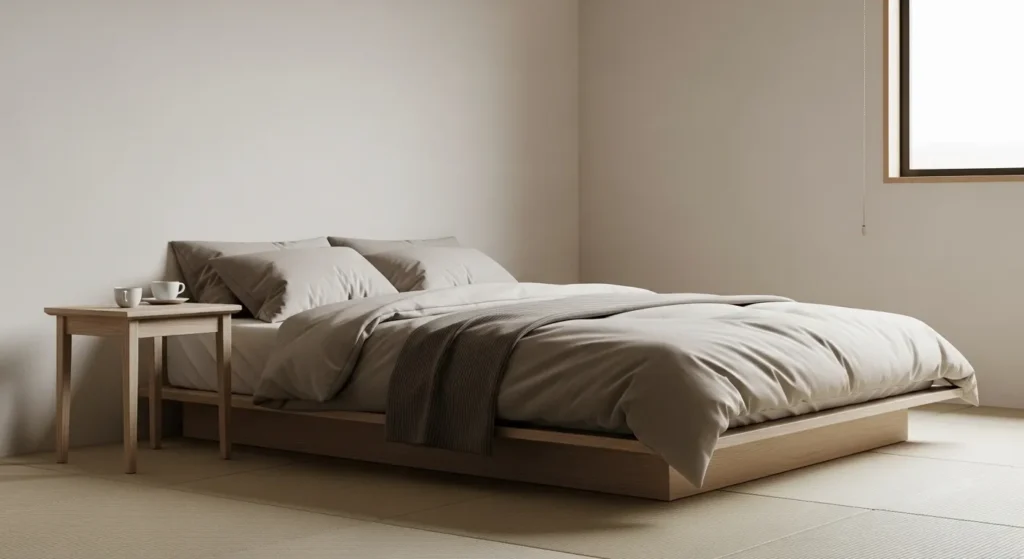
Japandi bedrooms are designed for rest and simplicity. Keep only necessary furniture such as bed, side table, and soft lighting. Neutral bedding and minimal decor improve sleep quality. Avoid heavy colors and excessive decorations. A clean bedroom helps create a peaceful mind.
Tip: Keep electronics away from the bed area.
13. Simple Dining Area
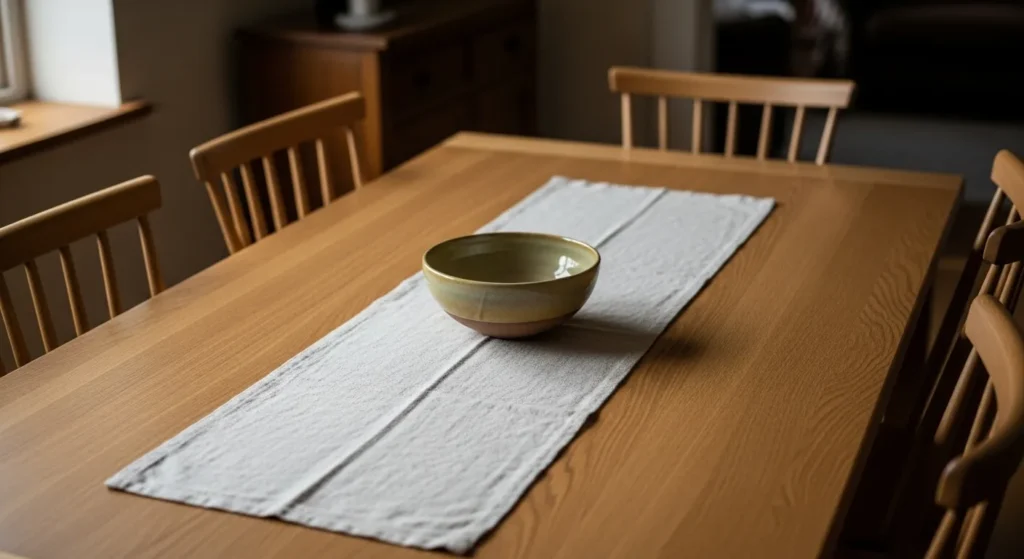
A wooden dining table with simple chairs creates a welcoming gathering place. The dining area should feel warm but uncluttered. Add a linen runner or ceramic dishes for gentle styling. Keep decorations minimal so the table stays functional.
Tip: Leave the table mostly clear when not in use.
14. Natural Fiber Rugs
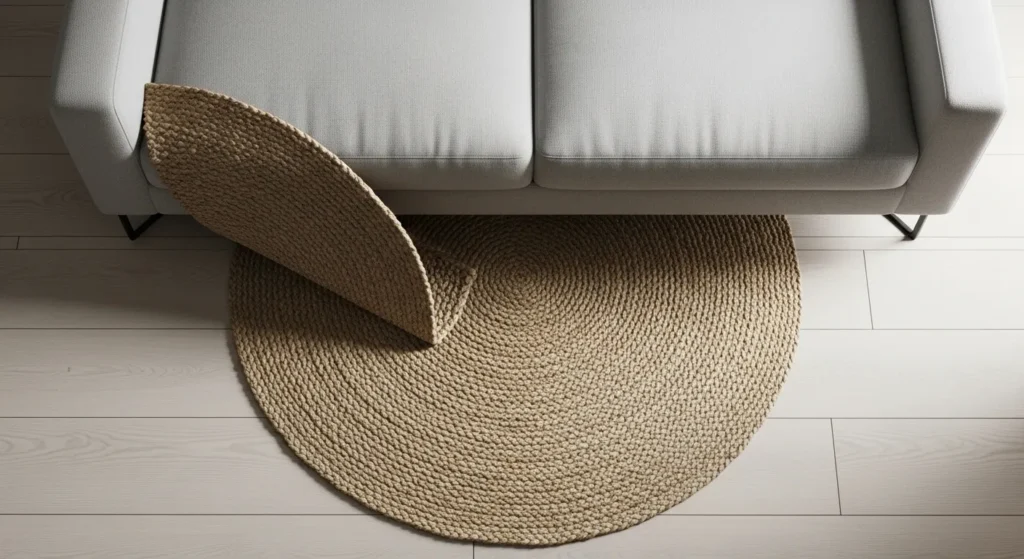
Jute, cotton, or wool rugs add warmth and comfort to floors. Neutral rugs help define seating areas while keeping the room simple. They soften echoes and make spaces feel cozy. Flat-weave designs suit Japandi interiors best.
Tip: Avoid bright patterns or strong prints.
15. Matte Black Accents
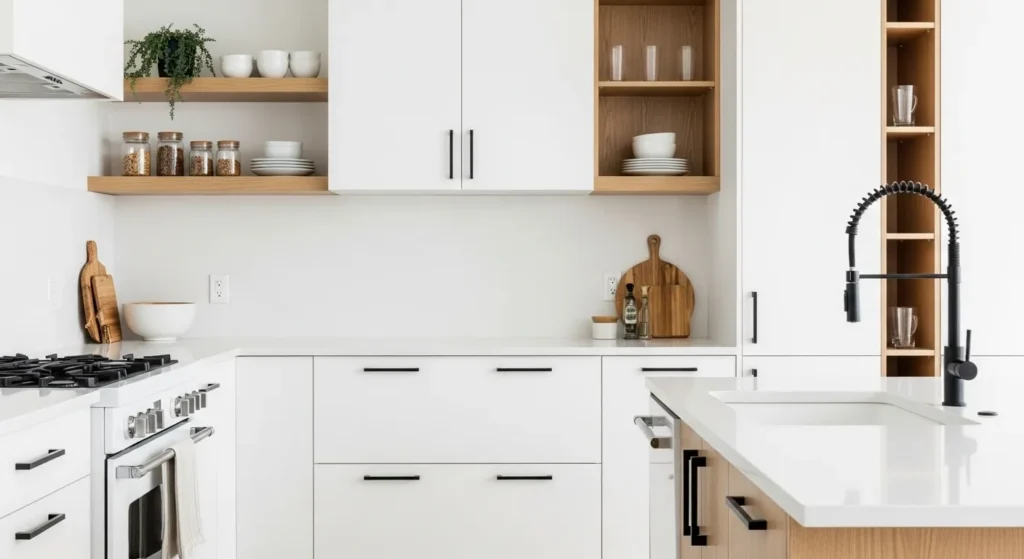
Small black details create contrast and modern balance. Use them in handles, frames, or light fixtures. Black anchors the neutral palette without overwhelming it. Repeating small black accents ties the design together.
Tip: Keep black touches minimal and consistent.
16. Soft Space Dividers
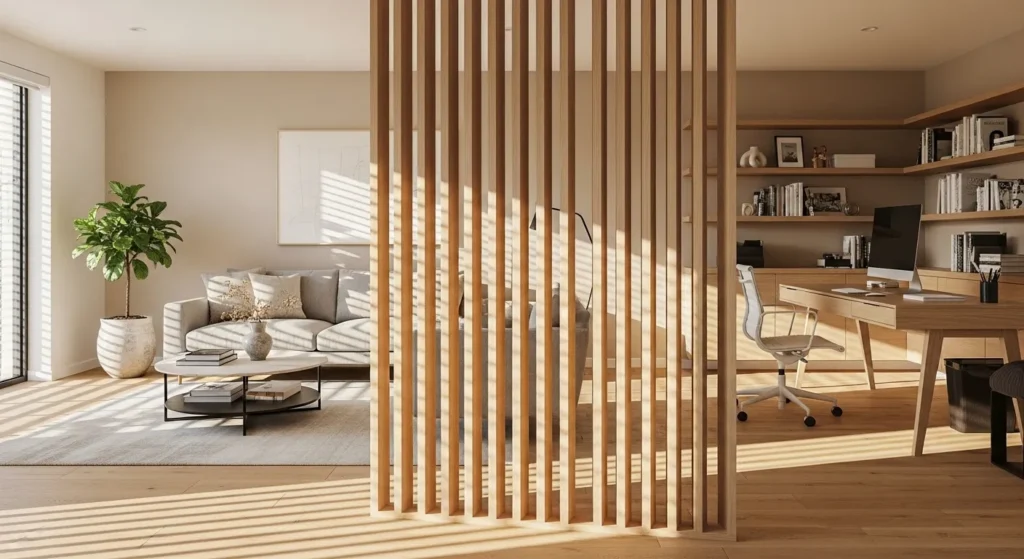
Instead of solid walls, Japandi uses light partitions like sliding panels, curtains, or wood screens. They separate areas while maintaining openness. This is very helpful for apartments and studio layouts. Spaces stay private but still connected.
Tip: Choose light wood or fabric dividers.
17. Handmade Ceramic Decor
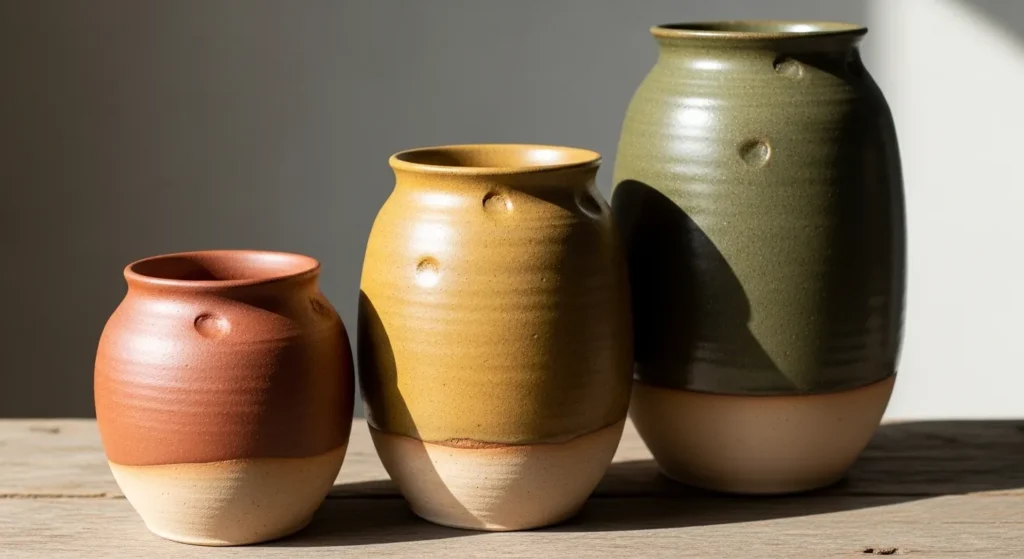
Handcrafted pottery adds personality and warmth. Bowls, vases, and mugs create a natural lived-in feeling. Small imperfections make the home feel authentic rather than staged. Group items in small sets for balance.
Tip: Display ceramics on shelves or coffee tables.
18. Clean Entryway
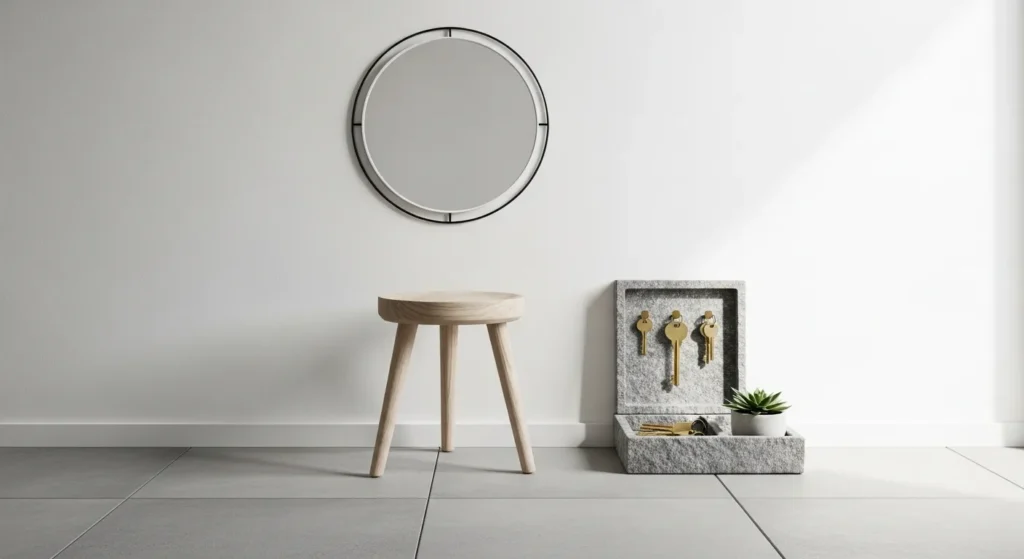
The entryway sets the mood for the whole home. A wooden bench, simple mirror, and small storage keep it organized. Shoes and bags should stay hidden when possible. A clear entrance feels welcoming and calm.
Tip: Add a small tray for keys.
19. Spa-Like Bathroom
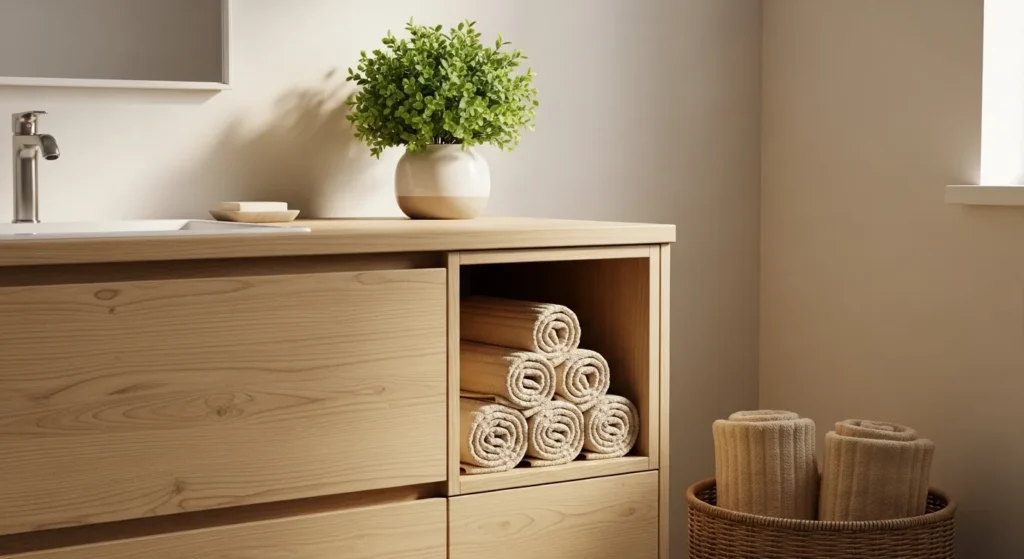
Japandi bathrooms feel relaxing and clean. Neutral towels, wooden accessories, and soft lighting create a spa atmosphere. Keep countertops uncluttered. Natural textures improve comfort.
Tip: Add one small plant for freshness.
20. Intentional Living Approach
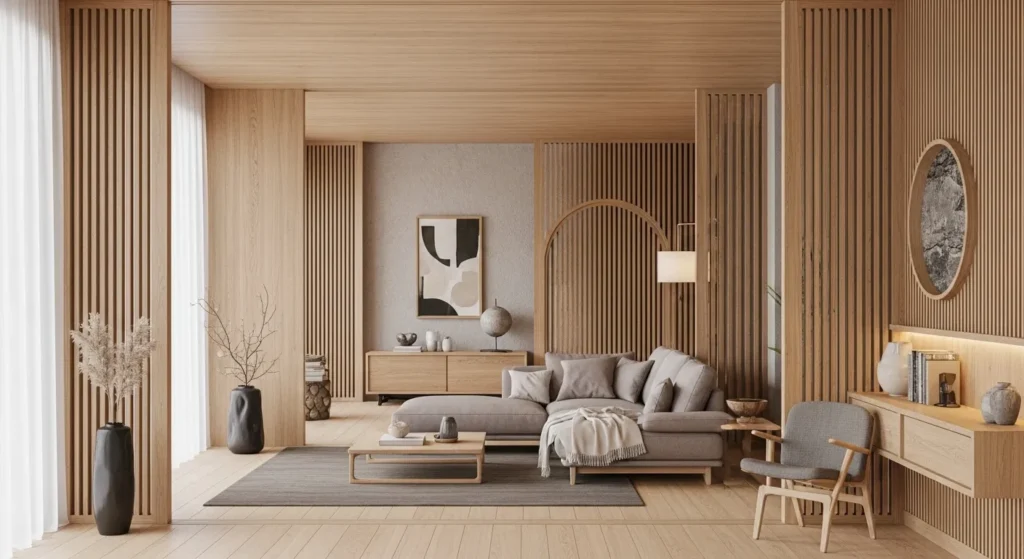
The true meaning of Japandi design is mindful living. Keep only items that you truly use and appreciate. Avoid buying decor without a purpose. Quality is more important than quantity. A calm home supports mental peace and daily comfort.
Tip: Before adding decor, ask if it brings calmness.
Conclusion
Japandi interiors show that simplicity can feel warm, not empty. By combining natural materials, soft lighting, neutral colors, and practical furniture, you can create a modern home that is peaceful and functional. Even small changes like decluttering, adding warm lamps, or choosing natural fabrics can transform your living environment. This style is not about perfection — it is about comfort, balance, and living calmly every day.